Another way out: Building resistance when passivity is the norm
By now, the COVID-19 pandemic should have shown us that we’re supposed to rise to the occasion by meeting needs, not fall in line behind fascist incursions
Many people are asking how the U.S. public got to a place where we find it acceptable to watch collapse, catastrophic crises, and even genocide passively. The reality is that this society has been conditioned to simply watch, leaving many among us feeling completely dejected and isolated. The ongoing COVID-19 pandemic was a litmus test people in the U.S. failed miserably, and we’re all still reeling from it. The results revealed to the ruling powers just how much they could get away with. It was a perfect storm of problems to determine how much punishment the masses would accept, leaving us in a badly beaten-down state, primed for fascism. Now, as tyrannical incursions increase, it’s helpful to recall how the sacrificing of vulnerable people, attacks on the public good, and anti-intellectual conspiratorial information have numbed us to this nightmare.
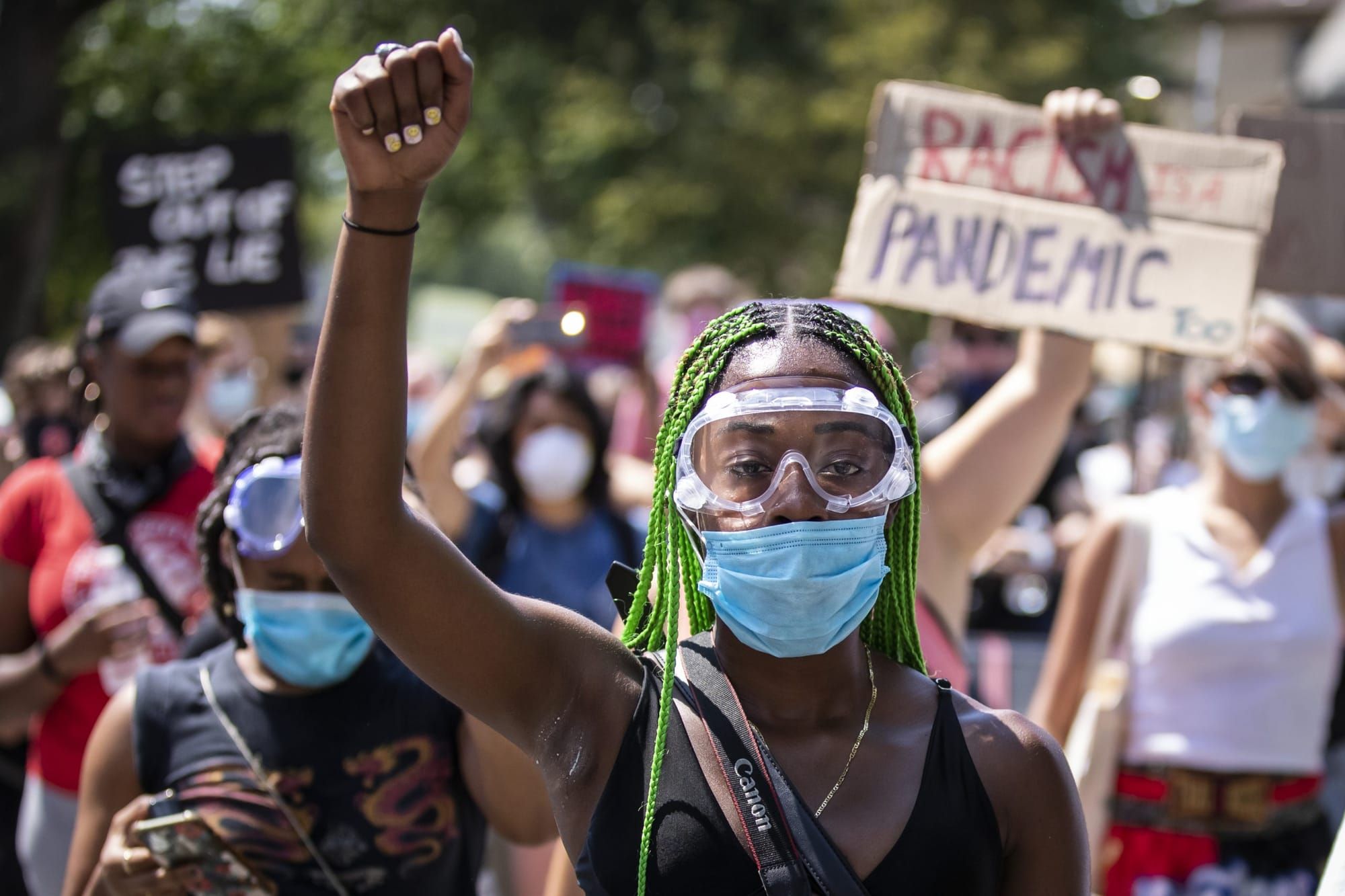
What happened in the U.S. at the expense of abandoned populations during the height of the pandemic foreshadowed what has come upon us now. The poor, the disabled, the incarcerated, communities of color, and more bore the brunt of the pandemic. It was hard to navigate the uncertainty of an unrestrained disease, taking life all around, as mitigation efforts, like the lockdowns, took effect, all while relying on an anti-science and untrustworthy presidential administration and other government institutions. We found ourselves at the mercy of the very powers that attempt to destroy us daily in myriad other ways. Then, when things got bad enough and people rose in response to the killing of George Floyd, it felt as if an experiment was being completed. Perhaps one of the final questions was, would we allow our rage to be funneled back into the dead ends of electoralism? For many, if not most, the answer was a resounding “yes,” and by that time, a great robbery codified in “economic stimulus” had also taken place. Among wealthy countries, the U.S. public received weak financial support, while corporations cut jobs and gave themselves millions.
After initially denying the pandemic and then letting countless people suffer and die, the first Trump administration’s actions signaled to the ruling establishment that they could get away with just about anything. There would be no great change or New Deal coming to provide people with health care, housing, and infrastructure, which the pandemic exposed as woefully under-distributed. There was more exploitation in our future, and the chaos that defined Trump’s first presidency would end up seeming quaint by comparison to the start of his second term. However, the seeds had been planted. The denialism surrounding public health and vaccination was just one part of a downward spiral toward the rule of conspiratorial fascists. The right-wing establishment had been working to dismantle everything that was considered a public resource for decades, and now almost all of it is being quickly decimated. And even though liberals attribute much of this to the design of Project 2025, we must remember that the likes of Reaganomics, Clintonism, and post-9/11 Bush policies preceded the goals of this project. It’s not the first time that professional politics has ushered in fascism.
The noteworthy anarcho-syndicalist Rudolf Rocker recounted this in his 1937 text, “Nationalism and Culture.” Denouncing the “pitiful behavior” of “so-called ‘democratic’ states,” he recalled that “in their defensive struggle against the flood of fascism,” they were “swept inevitably further and further into the current of fascist tendencies.” Rocker wrote:
Here is being repeated on a large scale the situation which helped Hitler to his victory in Germany. In their efforts to put a check on the “greater evil” by means of a lesser one the republican parties in Germany kept restricting constitutional rights and privileges more and more until at last there was hardly anything left of the so-called “constitutional” state. … Thus, the antagonism between democracy and fascism gradually faded away until at last Hitler emerged as the joyful heir of the German Republic.
But the democratic countries have learned nothing from this example and are now traveling with fatalistic submissiveness along the same path.
Unfortunately, lesser-evilism and “fatalistic submissiveness” should sound eerily familiar to us today. Here we are again. Now, as corporations, politicians, and other governments largely fall in line with the dystopian fascist scene we currently inhabit, we’re challenged to be more than spectators. Yet, for us to be more than that, we have to decondition ourselves to be what a society that sacrifices the disabled, poor, and vulnerable would have us be. As the genocide in Palestine flows uninterrupted, many wonder how the world can just watch. It’s easier not to care about the world when your society has conditioned you to not even care about yourself and those around you. The way the U.S. hoarded (and wasted) vaccines, and self-centered people hoarded goods throughout the pandemic is a testament to this. For many, the idea is to self-preserve in order to be a bystander after the fact. It’s not that everyone doesn’t care; it’s just that some people do and don’t know what to do, or have some idea of what to do but are scared to do it. So, they watch from a place of frustration. People have taken action in similar scenarios before.
It’s easier not to care about the world when your society has conditioned you to not even care about yourself and those around you.
The Marxist-humanist philosopher Raya Dunayevskaya described other parallels with the present in “Philosophy and Revolution” that are similar to those of Rocker. Reflecting on the Great Depression and the rise of fascism, she wrote that, “Civilization had evidently reached the end of something. Everything was being transformed into its opposite. With Nazism’s victory in 1933 it became clear where the highest barbarism was being perpetrated.” That, too, feels eerily similar to the place we’re in. She also draws the comparison between “democratic” and fascist states, stating, “Economically, the chaos was so overwhelming—and the army of millions, tens of millions of unemployed so rebellious—that competitive capitalism, in democratic and fascist states alike, gave way in one country after another to state intervention in the economy.” The response of radical workers during this time were the “great sitdowns strikes” in France and in the U.S., which brought about the creation of the Congress of Industrial Organizations. She also mentions several other examples to illustrate a crucial intervention.
Dunayevskaya’s historical analysis of this period, which encompasses people’s resistance from Austria and France to the U.S. and Spain, highlights a notable shortcoming. She states that revolutionary theoreticians “failed to create a new category from the spontaneous actions from below.” Furthermore, she clarifies, “None thought that the way the Spanish workers occupied the factories during the very heat of the struggle against fascism disclosed a new dialectic of liberation, that that combination of economics and politics was the new form of workers’ rule and must become the ground for new theory as well.” If we listen to this observation, then there’s some instruction to create theoretical innovation based on the happenings around us, at a time of great indecision about how to proceed forward.
By now, the COVID-19 pandemic should have shown us that we’re supposed to rise to the occasion by meeting needs, not fall in line behind fascist incursions. The same forces that encouraged us to sacrifice the disabled, poor, and unhoused to a distorted idea of “natural selection” now instruct us to ignore the genocide of Palestinians. The same forces that pushed conspiratorial misinformation about public health and vaccination want us to give up on practicing collectivity. It’s connected because if we cannot be relentless in our determination to interrupt what’s unfolding before us, then we risk it becoming a disturbing norm. It cannot be overstated that this situation and the fight in front of us are unprecedented. There are old, predictable solutions we can look to. But what’s required of us in a time of unbelievable tech advances, climate crisis, and tyrannical governance is what many of us failed to do during the earlier stages of the pandemic.
The communist dissident Rudolf Bahro considered how left movements were severely unprepared to respond to challenges like the ones we’re in. In “Socialism and Survival,” he wrote:
The binding of our forces to an illusory perspective is all the more serious in its effects in so far as we really do find ourselves in a new situation. … In the past the threat of a ‘decline of the West’ was the pessimistic perspective of terrified bourgeois who confused the general crisis of capitalism with the apocalypse of our civilisation itself. Today we must recognise that capitalism really can pull with it into the abyss the entire basis on which we are standing (and not only we ‘Westerners’), unless there is a massive counter-movement against this.
A countermovement must counter, not just in rhetoric and ideas, but in our day-to-day actions and within the movements that illustrate our radicalism.
Editorial Team:
Lara Witt, Lead Editor
Carolyn Copeland, Top Editor
Rashmee Kumar, Copy Editor
Author
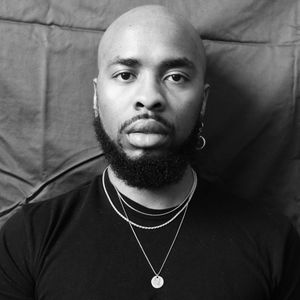
William C. Anderson is a writer and activist from Birmingham, Alabama. His work has appeared in The Guardian, MTV, Truthout, British Journal of Photography, and Pitchfork, among others. He is the auth
Sign up for Prism newsletters.
Stay up to date with curated collection of our top stories.