Cornell University student faces deportation over Palestine activism
Momodou Taal, a Black Muslim international student from the U.K., is appealing his suspension over a career fair protest targeting weapons manufacturers complicit in Israel’s genocide in Gaza
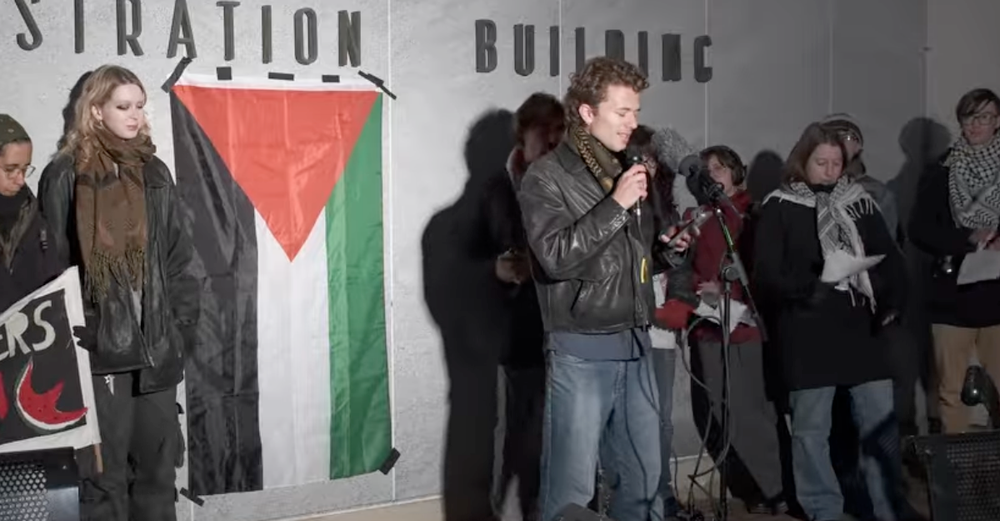
Momodou Taal, an international student at Cornell University, is facing potential deportation over his pro-Palestine activism on campus in a case that could set a precedent for repression against other international student organizers.
Taal, a Black Muslim student and graduate worker in the Africana Studies department from the United Kingdom, was suspended on Sept. 23, effective immediately, for participating in a career fair protest against weapons manufacturers. He was also told his F-1 student visa would be terminated.
Taal, who is fighting the disciplinary actions against him, posted on X Thursday morning that university Vice President of Student and Campus Life Ryan Lombardi rejected his appeal after one business day, and that Taal will have until 5 p.m. Friday to appeal to the provost. If the provost rejects the appeal, Taal said he believes he will be de-enrolled from the university and lose his legal status in the U.S.
“This demonstrates once again that my ability to stay in this country is being hastily handled without due process in a continued attempt to silence me,” Taal wrote in his post.
He told Prism he suspects that he was targeted as a Black Muslim heavily involved in Palestine-related activism, since no other students have been suspended over last week’s career fair protest, which involved dozens of students.
“They’re trying to make an example out of me, and then hopefully it scares our people from wanting to be involved,” said Taal, who also faced suspension earlier this year over the student encampment at Cornell.
The latest action against Taal came in an email on Monday from Christina Liang, who directs the Office of Student Conduct and Community Standards. The email, obtained by Prism, stated that Cornell University Police Department had reported Taal for not complying with orders from officials at the career fair on Sept. 18, when students protested representatives of Boeing and L3Harris, two of the manufacturing companies listed in a ceasefire and divestment referendum a majority of student voters supported in April. (Cornell President Martha Pollack declined to recommend the divestment proposal to the Board of Trustees.)
According to the police complaint, Taal and other students entered the career fair despite being warned not to by the university, and their chants were “unreasonably loud.” In the email, Liang wrote that Taal’s behavior demonstrated “escalating, egregious behavior and a disregard for the University policies,” and called Taal to a same-day noon meeting at Day Hall.
At the meeting, Taal said he was informed that he was persona non grata and was handed a no-trespass order barring him from entering campus. He was also told that his F-1 visa would be terminated and referred to a senior immigration advisor.
According to a statement by the Cornell Graduate Workers’ Union, this suspension also effectively fires him from his graduate student job. “The university is threatening to rescind his visa status. As a result, he will have to leave the country immediately once the University notifies the Department of Homeland Security (DHS) of their choice to de-enroll him,” the statement reads.
If de-enrolled, Taal may have as little as 48 hours to gather his belongings and leave the country.
Students and professors both within and outside the Cornell community are criticizing the university’s actions as disproportionate and targeted.
According to Cornell’s Student Code of Conduct Procedures, temporary suspension should be used as a last resort when other, less restrictive measures, are deemed “insufficient to protect the Complainant or the University community.” The type of temporary suspension imposed should also be the least restrictive option necessary for protecting students and the community, the code states.
Taal’s suspension “constitutes an extreme and disproportionate punishment imposed without just cause and without due process and violates academic freedom and freedom of expression,” The Cornell Chapter of the American Association of University Professors said in a statement, as reported by the Cornell Daily Sun. The group called on the university to rescind its order.
“There is no evidence that Momodou Taal used violence or a threat of violence or harm to anyone’s health or safety,” the statement read, adding that Cornell has a long history of student protesters targeting recruiters from businesses engaged in unethical practices. “For the administration to escalate its treatment of such protests into allegations of dangerous and violent disruptions is a serious abuse of Cornell’s disciplinary power over students—and against faculty and staff who join them in their protests.”
Further, according to a Memorandum of Agreement that the university signed with Cornell Graduate Students United-UE this past July, “The University agrees to bargain with the Union over the effects of any decision to discipline a bargaining unit member to the extent that such decision impacts their terms and conditions of employment.” De-enrollment and suspension are listed as examples of such.
“It’s a fundamental right that grad workers, and really any worker, should have the right to due process,” said Jawuanna McAllister, a graduate worker in Molecular Biology and Genetics and member of CGSU-UE’s bargaining committee. “And the right to freely participate in American democracy, participate in the democratic process, have freedom of thought. All of these things are really core values that underpin the American university, and so it’s really egregious that the actions that the university has taken are in blatant violation of these very fundamental freedoms.”
Cornell University did not respond to specific questions on this issue, but Joel M. Malina, vice president of university relations at Cornell University said in an email statement to Prism, “International students attending college in the U.S. on F-1 visas are obligated to comply with federal requirements to maintain their visa status. These federal requirements include remaining enrolled as a full-time registered student. Universities are required by federal regulation to terminate the F-1 status for any student who is not permitted to be enrolled due to a disciplinary action.”
While the university does not have deportation powers, its actions will ultimately result in this outcome if Taal is de-enrolled.
The case is one example of a pattern of colleges targeting student activists on more than 100 campuses across the country calling for their institutions to divest from companies benefitting from Israel’s genocide in Gaza. Tactics have included suspensions, academic probations, and criminal charges.
Despite the university’s complaints about “loud” protests, Taal said it’s clear the real issue is that he was advocating for Palestine. “I think you cannot divorce this issue from Palestinian advocacy. I think the extreme oppression the university is doing is because they want to stop any talk about Palestine,” he said.
Author

Nayanika Guha is a journalist who focuses on writing about social justice, health, and politics. She has a MFA in journalism from NYU and a background in psychology and social work, which informs her
Sign up for Prism newsletters.
Stay up to date with curated collection of our top stories.