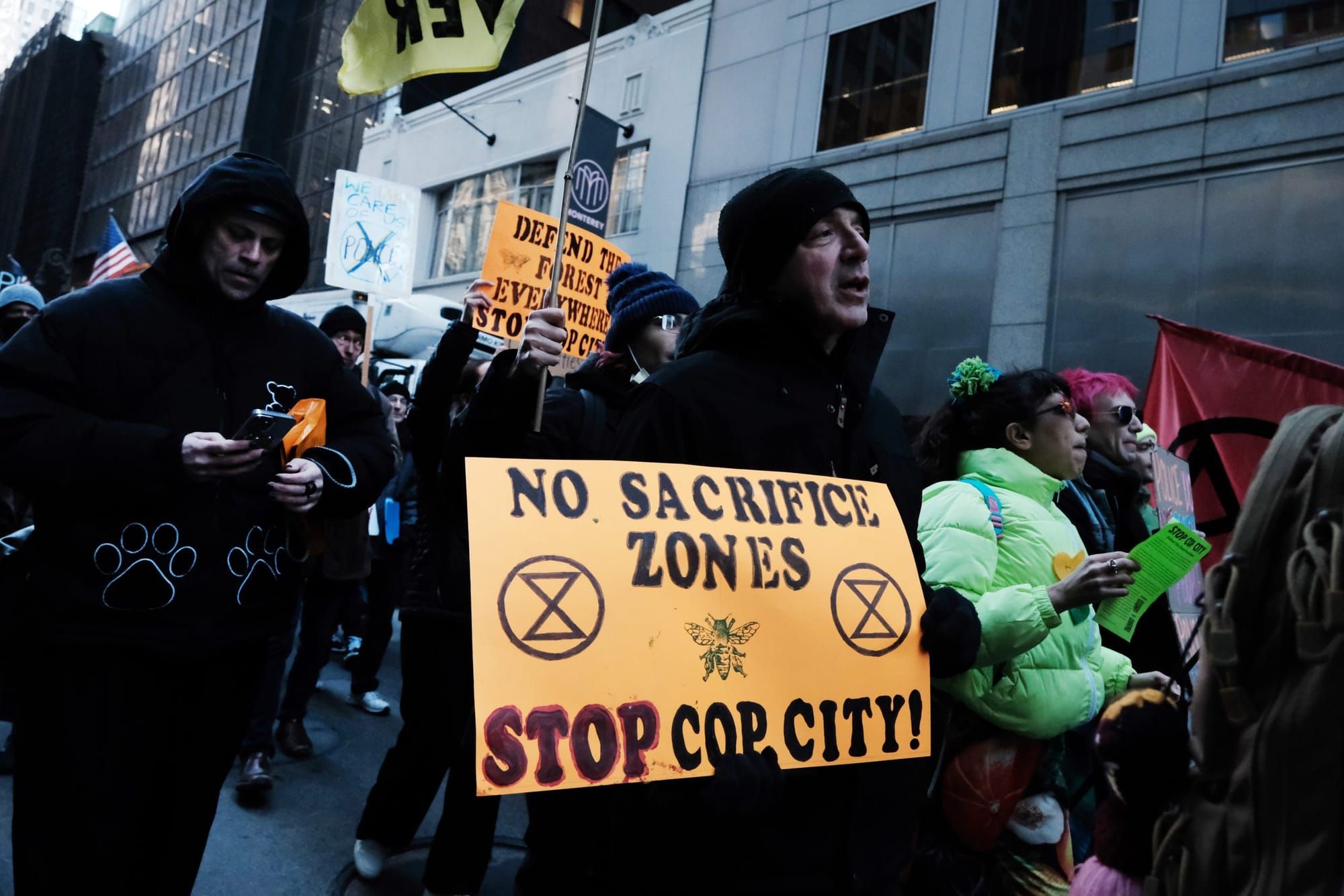
The anticipated racketeering trial of Ayla King has faced another delay, prompting legal and public scrutiny from Cop City protesters. The trial, part of a broader crackdown on the “Stop Cop City” movement in Atlanta, involves 61 defendants indicted under Georgia’s Racketeer Influenced and Corrupt Organizations (RICO) law. King, a 19-year-old activist from Massachusetts, is the first defendant to face accusations of criminal conspiracy.
King was among 23 people arrested during a clash between protesters and police at the training center site on March 5, 2023. Georgia Attorney General Chris Carr indicted 61 individuals under RICO, alleging various acts of violence related to the protests. King’s single RICO charge carries a potential sentence of five-to-20 years in prison.
Fulton County Superior Court Judge Kimberly Esmond Adams finalized the jury selection by Dec. 12 but then postponed the trial for several weeks to make time for the holidays. King’s defense attorney, Surinder Chadha Jimenez, filed a motion to dismiss the case based on the alleged violation of the speedy trial deadline. Opening arguments were scheduled for Wednesday, Jan. 10, but were superseded by the announcement that the trial would be delayed further.
Judge Adams rejected the defense’s motion but granted Jimenez the opportunity to make an interlocutory appeal, which asks for the issue to be decided by the Court of Appeals immediately rather than after the case. The legal dispute centered on whether the trial should have commenced within the court term following King’s demand for a speedy trial is still in deliberation.
Prism spoke with Matt Scott, an Atlanta-based journalist for the Atlanta Community Press Collective, to discuss the in-limbo trial and its place in the legal front of the Cop City movement.
This interview has been edited for length and clarity.
Prism: What were your initial expectations when you first entered the courtroom?
Matt Scott: I expected that we would be having court all day and then we would have court for the next several weeks. I was taken by surprise that we quickly started and then stopped on the same day.
Prism: What was the general makeup of the courtroom?
Scott: As far as I am aware, everyone who wanted to be there was inside the courtroom itself. It is a smaller courtroom, about half were press and attorneys. And then the other half were [Cop City] movement folks. It was an interesting blend of anarchist chic and business casual. I was in the back row in the middle. Which has been my traditional spot every time I’ve been in the courtroom.
Prism: How accessible is this trial to the public?
Scott: During jury selection, the judge actually closed the courtroom, she said, because of the total number of jurors in the small courtroom. She wouldn’t be able to fit everyone in the media. It took a while to do so, but they set up an overflow room for us to watch or, rather, listen to the proceedings that day. Now the courtroom is open. However, it is not being live-streamed. Judge Adams explicitly said that she had not granted any permission to record the proceedings. So it is physically accessible. But it is not accessible to the extent where everyone who wants to follow along would be able to do so.
Prism: After they had announced the delay, what were some of the conversations that you had with other people?
Scott: It was very much “What just happened?” I didn’t talk to [King]. I didn’t have a chance to talk to any of the movement folks who were there. My conversations were just with other journalists, but we were all taken aback and confused. I immediately reached out to my attorney friend to figure out what had been going on while trying to live-tweet it while it was happening.
Prism: Was Judge Adams also confused by the announcement?
Scott: She wasn’t confused. She was apologetic to the jury for the surprise delay. I sensed that she respected the legal strategy that was at play, but she wasn’t able to explain to the jury exactly what happened. She couldn’t say that there was a motion being made to dismiss the case on such and such grounds because that might influence their decision.
Prism: Did you get a chance to speak with King’s council?
Scott: No. The various councils and parties, Ayla and her attorney Suri, as well as the attorney general’s office were put under a gag order by the judge. They are not allowed to talk to the press.
Prism: Is the jury also under a gag order?
Scott: The jury is under a gag order. They’re also under explicit instructions not to look up anything about the case. If they come across it because this is such a large story, if they come across a news story or something like that, they’re asked to change the channel or not read about it.
Prism: What are your thoughts about this trial and how it relates to the rest of the Cop City movement?
Scott: The general understanding of folks within the movement is that these court cases are meant to chill protest activity. I think King’s trial being before everyone else’s will be of interest because people are going to treat it as a bellwether for how the rest of these cases are going to go. Those arrests were questionable in many cases, not all cases. I think there’s a higher likelihood of success or a high likelihood for King to win this. But the actual trial itself could be a moot point if the appeals court finds in favor of King.
Author
Jocelyn James is an African-American writer based in Atlanta, GA. She covers beats in sustainability, politics, identity, and art.
Sign up for Prism newsletters.
Stay up to date with curated collection of our top stories.