Cooked in custody: Four incarcerated people describe dangerous conditions in Texas state prisons
In this collection of testimonials, Kwaneta Harris and others incarcerated in Texas state prisons describe their unsuccessful daily attempts to evade being cooked in custody
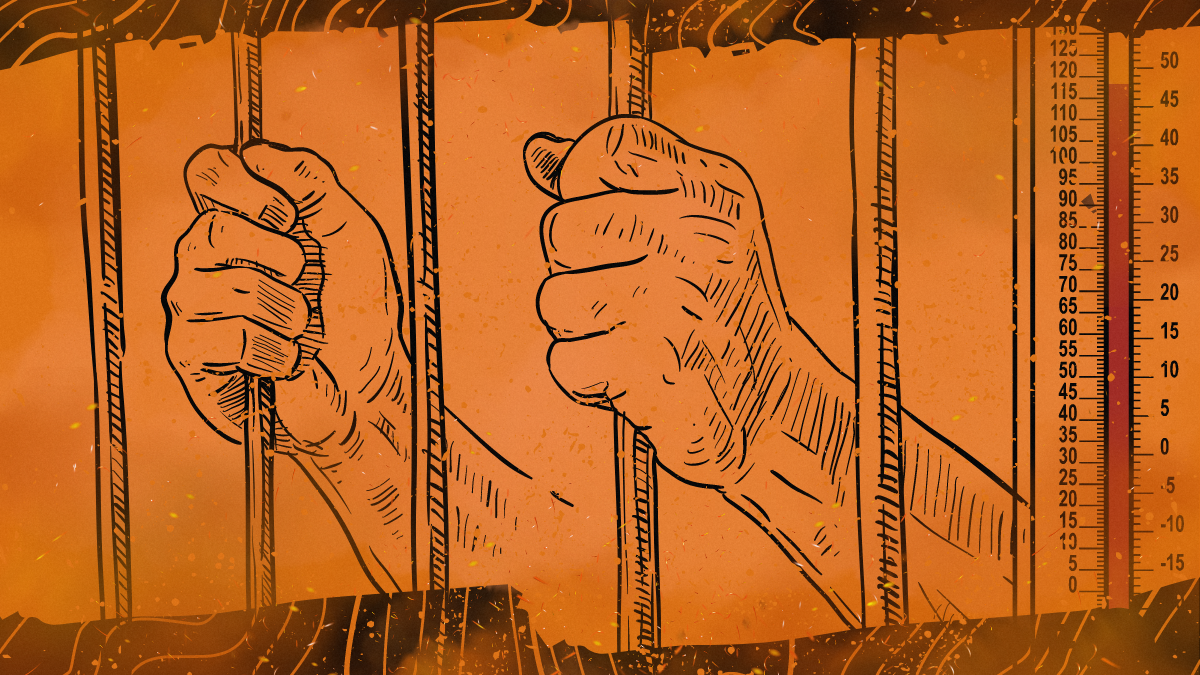
Climate change continues to warm the planet to record-shattering levels. This August, temperatures reached a boiling 120 degrees Fahrenheit heat index in Texas. Without intervention, we can expect more preventable heat stroke deaths like those in Central California Women’s Facility to multiply—transforming America’s non-air-conditioned prisons into death chambers. In this collection of testimonials, Kwaneta Harris and others incarcerated in Texas state prisons describe their unsuccessful daily attempts to evade being cooked in custody.
Lanae Tipton
A chorus of strained shouts and frustrated cries echoes down the vacant hallway outside of my cell door. A waterfall of sweat streams from my pores. We are all suffering under the unbearable heat, not only because of our extreme discomfort but also because of the silence with which our complaints are met. But here in the Patrick O’Daniel unit where I’m incarcerated, unless something’s fatal, we will continue to be ignored.
Out of the 15 women’s prisons in Texas, only four are equipped with air conditioning. According to the Texas Department of Criminal Justice (TDCJ) website, there are 32 fully air-conditioned units and 55 partially air-conditioned, with the agency implementing “enhanced procedures to lessen the effects of hot temperatures for those in our facilities.” The O’Daniel unit is supposed to be one of the fortunate units, but I can attest that my living area is neither equipped with AC nor implemented with provisions to combat the heat.
I’m incarcerated in the restricted housing area of the prison, also known as the solitary confinement area. Here, we aren’t offered many relief options from the heat, and due to staff shortages or officer inaction, the salubrious shower we are supposed to have access to once a day is often denied. There is a policy in place to ensure that people in solitary have hourly access to ice water, but this is also seen as a burden by the officers, so instead they ignore our pleas, sip from their own containers of cool water, and lounge in front of the huge industrial fan that’s meant to cool down our hallway.
Through my door of metal mesh, bars, and plastic plexiglass, I am frequently forced to watch uselessly as my friend Kira, who occupies the cell across from mine, passes out from the heat or is so delirious from dehydration that she can hardly function. In addition to the harm Texas heat causes us physically, it also creates burdensome obstacles around our cell. Humidity will condense on our floors and other surfaces and has caused me many falls, as well as injuries to others. Lotions, ointments, and toothpaste melt and liquefy, air-sealed bottles and soda cans will randomly combust, and packaged meats spoil quickly in the heat.
At TDCJ, there is a policy known as “respite,” which requires that all people incarcerated in non-AC units must be offered relief in extreme heat. We can either get a short break in an AC-equipped area or have a cold shower. Since the O’Daniel unit claims to be equipped with AC, respite provisions aren’t offered or provided when requested, even if our health depends on it. Those of us in restrictive housing are also not offered respite luxuries, leaving the people in solitary confinement to face the constant and torturous heat alone. Both the officers assigned to our area and the people who occupy the cells suffer from the inequality presented by the absence of AC. Some officers advocate that AC should be provided in the inhumane Texas heat, but other officers remain unsympathetic and even antagonistic. Many attempt to justify our suffering, believing we deserve crueler conditions since we’ve been sent to prison.
Upon request, a sweat-riddled officer did a temperature check in a barren cell in the wing where I am located. The request was made at 12:27 a.m. and the cell was 99.6 degrees. Suffocating air overheats all electric devices, including the seven-inch personal fan that I purchased from the commissary. From constant use, the motor will quickly reach a scalding temperature and further intensify the hot air being blown around. When the sun overpowers the cell, anything metal will also absorb all the heat, causing blisters and burns when touched. For example, the metal toilet, which gets piping hot in the afternoon, makes it unusable or curse-worthy when accidental contact is made from urgency.
Often profuse with sweat, even in minimum clothing, and covered with painful and swollen sweat rashes in the creases of our bodies with sensitive-to-the-touch peeling patches of skin, we’re forced to find DIY ways to stay comfortable. Options include keeping our thin white undergarments, shirts, and shorts wet throughout the day, leaving nothing to the imagination, and attracting unwanted lingering attention from male officers who freely offer sexual comments. We also flood our cell floors to lie in the water or take bird baths in our cell’s sink. But since covering your door results in disciplinary action, we perform these attempts at cooling without any privacy, and with showers offered only once a day, if that, we must risk exposure or disciplinary action just for relief.
The people incarcerated in TDCJ are kept hidden and ignored as we suffer from heat exhaustion year to year. Even in a unit advertising that all of its buildings have AC, it is a kept secret that the only people who actually have full access to AC are the staff—leaving us begging for reprieve against the heat and inequality.
Marissa Leanne Potts
Uncomfortable is an understatement when it comes to life inside of a cellblock. I’m housed in a large three-pod concrete brick building called J1, and it has no ventilation.
My day begins with a shower to wash off all the sticky sweat I accumulated just from sleeping. I pull my long hair into a tight ponytail, then dress in a thick white collared shirt and pants. This state uniform doesn’t help anyone in Texas summer temperatures. Its thick fabric adds to my discomfort in the suffocating heat. I grab my water bottle, lime electrolyte packet, and wrap my black towel around my neck. These are the tools I carry for survival working my job.
Ice Water Distributor is my official title. I’m also known as the water girl.
I provide water for up to 128 incarcerated women inside the J1 cellblock. From cell 1 to 43, I distribute water through the door with a tool that resembles an oil funnel. This job is vital because these ladies are locked in their cells and are restricted from getting cold water despite the high, risky temperatures. After leaving one cell happy and hydrated, I may approach the next and see someone having a seizure on the floor due to heat exhaustion.
Coming on shift, you never know what you are walking into. I have to approach each cell to deliver water to women who have been denied respite for 2 to 10 hours. A common reason for being denied respite is the staff shortage, yet somehow there is always enough staff to carry out use-of-force procedures.
During a shift change, a guard decided his form of communication would be to use the huge commercial fans to control us. When one person failed to obey his order, he left the fans off. When some people in the room quickly expressed their anger, the guard made a routine walk and announced to the dorm that because of one person’s failure to listen, the fans would remain off. Soon after, a group retaliated against her. This fight was caused by the mix of abuse of power and the lack of air conditioning in each dorm. AC is used as a privilege, not a priority.
One day at work, I decided to ask a guard why the whole unit wasn’t provided AC like the incentive dorm. That dorm houses up to 80 women and is used to motivate people behind bars, telling them they can live better if they do better. His response was, “Prison isn’t a place for your comfort. Besides, it would cost the state too much to install and provide AC for the 1400 people in this unit.” He explained that a church had donated $130,000 towards the incentive dorm, providing them with kitchenettes, spring mattresses, washers and dryers, flat screen TVs, and patio sets.
Personally, I wouldn’t be able to sleep with a clear conscience on a spring mattress when I knew those funds could have gone to improving the entire unit and focusing on more important things.
I spoke with Cynthia Sandoval, who has been behind bars since 2011, about her concerns about the heat after experiencing the deaths of six friends who were with her over the years. She said, “I feel sad, it’s like our lives are being swept under a rug and the officers don’t care because they get to go home at the end of the day.” The ideas she had for positive changes were to provide AC for the entire unit so it wouldn’t be possible to deny respite.
After an 8 to 10-hour shift, I return to my housing area and begin my sleep routine.
I take my second shower of the day. I gather all my empty water bottles and refill them with fresh water and enter my cell, closing the door for the night. Living with a roommate, all modesty flies out the window as I strip down to my sports bra and underwear. I place my fan on the top of my bunk, facing under a table so air hits the place where I fall asleep every night. I soak my sheet in water and lay down with the sheet on top of my body to provide just enough comfort in the heat so I can fall asleep. It never lasts long and I frequently wake up and splash cold sink water on my body just to go back to sleep on the ground.
Kwaneta Harris
Quis custodiet ipsos custodes? Who guards the guards? I’m hot, sticky, and thirsty. According to the Texas Department of Criminal Justice, a respite policy exists to prevent heat exhaustion and heat stroke. I should be able to request ice water, a cold shower, or sit in an air-conditioned space.
In reality, this prison frequently denies us respite. Today is Saturday, August 3, and NPR predicts the weather will feel like 110 degrees Fahrenheit. At 1:55 p.m., this cauldron of a prison began to simmer 86 people. A guard wearing long sleeves and a jacket ordered everyone inside their cell, eager to return to his air-conditioned bubble called a picket. A long line had formed at the ice water cooler so people could fill their cups. My neighbor had her shower gear in hand when she was ordered to return to her cell. Instead, she joined the line for water too. The guard, furious, yelled again for everyone to get into their cells. No one moved from the line. As people continued to fill their cups, the officer shoved them aside, snatched the cooler, and emptied ice-cold water all over the floor.
That wasn’t the first time I’d seen this. Two months ago, I moved into this building and witnessed another officer’s tantrum. He threw a bag of chips at a woman, then dumped both watercoolers on the tier because we didn’t go inside our cells. This is what the guards do. They empty the water cooler, hide the water cooler in the shower, or lock them up.
After Officer Long Sleeves dumped the water cooler, a few folks sat on the steps, heads in their hands. Some sat on the tier and others on the bench, all demanding a respite shower. The guard radioed his partner and both stood shaking their tear gas canisters. The Sergeant appeared and stood silently as Officer Long Sleeves cursed us. I watched this all unfold from inside my cell, sweating in my bra and panties—the prison bikini.
People began telling the Sergeant that water was only distributed once. The person assigned to distribute our water said she’s off today. I watched the Sergeant, a man I’ve never heard swear or yell at us. He looked tired and apathetic. With staffing levels for only half the prison population, supervisors don’t want to anger the remaining guards. TDCJ hires hundreds of guards every month but only retains a few dozen.
Tempers often flare in extreme heat. These cells are too crowded for two adults. Tear gas is deployed frequently, just because people want cold water, a shower, or to sit in AC as the policy states we have a right to. People have even received disciplinary infractions just for walking outdoors with ice water in cups.
In early August, Texas was in federal court defending itself against the lack of air conditioning in two-thirds of its prisons. They threw everything at the wall to justify cooking us. They have immunity from lawsuits and can’t be sued, so they will install air conditioning, but not until 2031. The latter argument is confusing because Texas forces us to do unpaid labor and sells those goods while pocketing millions from Texas Correctional Industries in 2022. Even the agricultural labor we’re forced to do is sold to major grocery chains. They have the money. Our sweat has paid for it.
As I write these words at 3:12 p.m., my background noise is:
…Officer! I need medical. I have seizures and I feel like…!
…Officer! I need a shower! Please I’m on my period!
…Sir, bring me some tampons? They only gave us pads!
…My roommate’s throwing up!
It’s been about a year since Elizabeth Haggerty died of a heat stroke a month prior to her scheduled release. I wonder if TDCJ Executive Director Brian Collier has a script for the families of people who have been cooked in the prisons he oversees. I imagine he recounts the “respite policy available to all inmates upon request” spiel. I don’t believe he isn’t aware of our conditions. The powerful always know the cruelty they inflict. They just ignore it.
Xandan Gulley
I’m sweating profusely in my 9-by-6 cement and steel solitary confinement cell. My heart is pounding! My heartbeat is racing against my chest! It’s hot! Sweat drips down my forehead onto the concrete as I lay on the floor. I’m drenched all over, lying under a commissary-purchased fan that is uselessly blowing the hot air that circulates repeatedly inside my cell.
Another day of triple-digit heat-indexed weather this week. Another day of hell. Another day of unbearable heat. It’s hot everywhere all over Texas! And Texas prisons are feeling the heat the worst.
With no air-conditioning and limited channels of respite, I feel like bacon frying in a skillet. Sometimes it’s hard to breathe. Sometimes I want to cry because I’m so hot and my body feels like it’s melting. Every day is a battle against heat exhaustion, heat stroke, and dehydration.
To appease the courts and pacify activists protesting the heat-induced illnesses and deaths inside Texas prisons, last year, the Dr. Lane Murray unit decided to experiment with gasoline-fueled portable air-conditioning units that run feeding tubes through the ventilation systems of the prisons’ century-old buildings.The heat has not been alleviated.
Firstly, the gas-fueled portable air-conditioning units do nothing but push exhaust fumes throughout the vents, bringing more heat into the buildings with the already boiling temperatures. Secondly, the windows are bolted and nailed shut, denying incarcerated people the opportunity for fresh air and evasion of toxic air and poisonous oxygen.
These highly toxic fumes, which cause headaches, migraines, stomachaches, and regurgitation, are the detrimental effects of Texas’ futile appeasements of attempting to modify the heat-hazardous obstacles inside prisons.
Even our access to cold water is all but nonexistent! Water runs are conducted by unpaid incarcerated workers, whose job description involves janitorial cleaning along with pouring water through a motor oil funnel inserted in the tray slot of the cell door. Many times the funnel is dirty, as if motor oil was poured before the water. Sometimes the water cooler is dirty. Sometimes the water has plastic particles floating in it from the ice. Unsanitary means of water access is the norm in solitary confinement.
With billions of dollars sitting idle in the treasury of the Texas Department of Criminal Justice’s budget, what is the excuse as to why air-conditioning has not been permanently installed in the prisons? Instead of utilizing the funds allocated to modify, reform, and rectify the prisons collectively, the Texas Department of Criminal Justice has been avoiding for years to fix the problems concerning the safety of incarcerated people, extreme temperatures, and health protocols.
The heat is like a cancer slowly snatching the life out of incarcerated people. With little to no access to cold water, respite, or fresh air, I, along with other incarcerated people, suffer grotesquely in the horrific living conditions inside Texas prisons.
The Right to Write (R2W) project is an editorial initiative where Prism works with incarcerated writers to share their reporting and perspectives across our verticals and coverage areas. Learn more about R2W and how to pitch here.
Authors

Kwaneta Harris is a former nurse, business owner, and now incarcerated journalist from Detroit. Her writing has appeared in a wide range of publications including This American Life, Rolling Stone and

Xandan Gulley is a trans writer incarcerated in Texas state prison. Xandan has been held in solitary confinement for over seven years due to his gender identity and as retribution for his published ex

Marissa Potts is currently serving a 15 year sentence in Texas. She is a survivor of intimate partner violence and has turned her immense pain into passion. She is inspired to share her testimony if s

Lanae Tipton is a proud mother of one and an aspiring author. Tipton is currently incarcerated in Texas and has been since she was 18 years old. Her writing focuses on using her personal testimony and
Sign up for Prism newsletters.
Stay up to date with curated collection of our top stories.