Columbia University student activists say they won’t be deterred after school suspends pro-Palestine student groups
“The goal is divestment, academic and economic, from Israeli apartheid across the board,” one student activist said
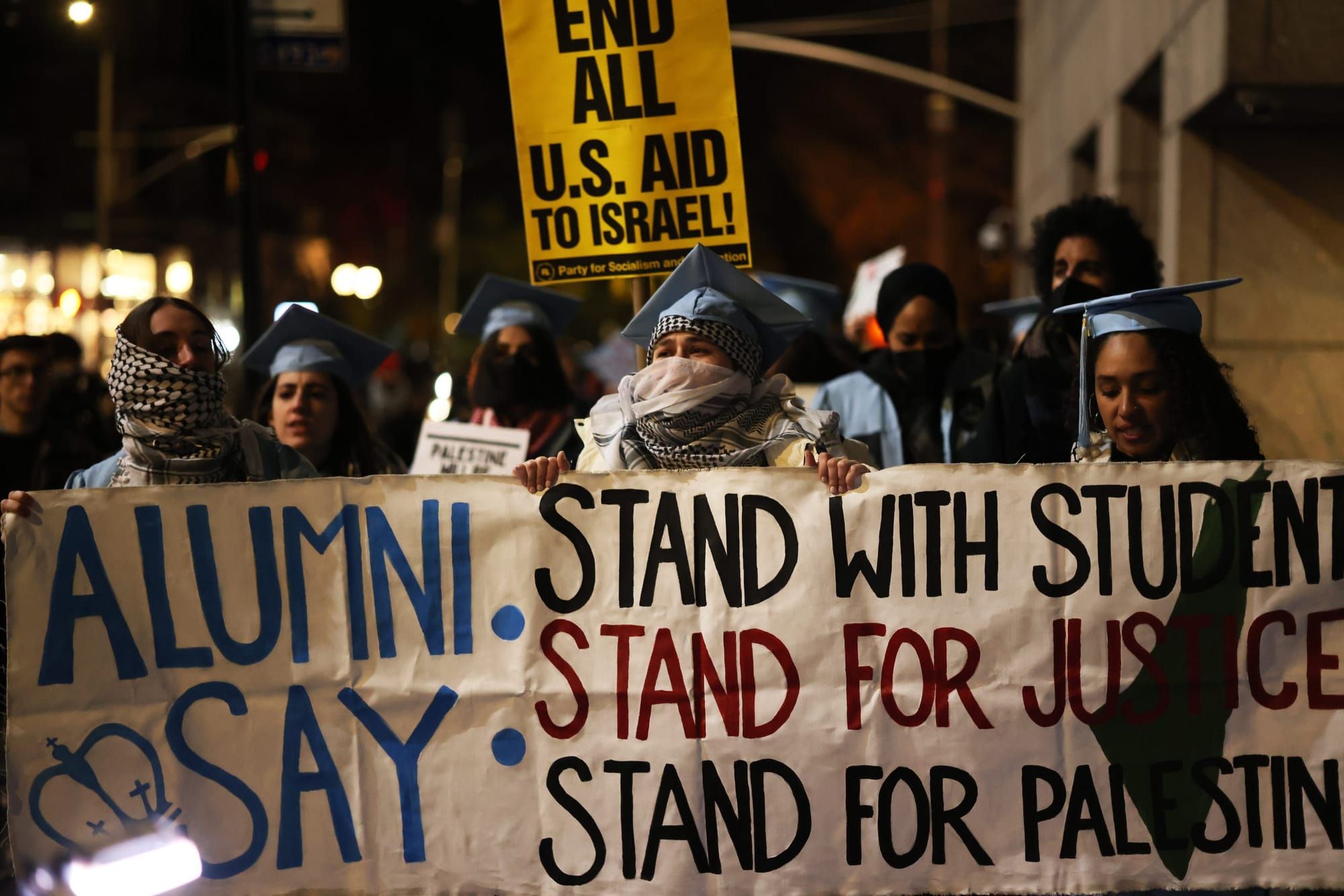
Weeks after causing an uproar by suspending two vocal student groups organizing to call for a ceasefire in Gaza, Columbia University has canceled another Palestine-related event. The event, initially organized by Columbia Global Centers in Amman, Jordan, eventually obtained a new sponsor and was moved to an online panel discussion. But student advocates say this is just the latest example of the university attempting to suppress pro-Palestine voices.
Columbia University released a statement on Nov. 10 suspending their chapters of Jewish Voice for Peace (JVP) and Students for Justice in Palestine (SJP). The statement noted that the suspension would be in effect till the end of the fall term and came after “the two groups repeatedly violated University policies related to holding campus events.”
Gerald Rosberg, the senior executive vice president of Columbia University and chair of the Special Committee on Campus Safety, wrote in the statement that an unauthorized event was what eventually resulted in the suspension. The event was a walkout for a “peaceful protest art installation,” organized by SJP and JVP as part of the nationwide call to shut it down for Palestine.
A public statement by SJP and JVP called the suspension an “attack on free speech to distract and enable Israel’s genocidal campaign against the Palestinian people,” adding that their “suspension is the latest instance of a pattern of censorship.”
Columbia University reportedly changed its Student Group Event Policy and Procedure and University Event Policy after SJP and JVP staged protests on Oct. 12 to include a requirement for a 10-day advance notice for any “special events,” which was defined as being held outside or having more than 25 attendees. It also now includes assertions that the university has the right to “regulate the time, place and manner of certain forms of public expression,” and that administrators have “sole discretion” over whether there has been a violation and what the appropriate sanctions shall be for student groups and their members.
SJP and JVP said in a Nov. 13 statement on Instagram that “the university has repeatedly changed event approval policies and been deliberately vague about these changes.”
Mohsen Mahdawi, a Palestinian student and the co-president of Dar, the Palestinian Students Union at Columbia University, says the university is systematically discriminating against pro-Palestine organizations.
“We saw that by the denial of giving us permits to conduct activities or to hold activities on campus, even very human activities such as holding a vigil, where we grieve and cry for the death of Palestinians, which now reached over 15,000 people,” Mahdawi said.
There’s been a trend of pro-Palestine university events being canceled in recent weeks. Barnard College shut down a Nov. 2 event titled “Let’s Talk Palestine” with the Palestinian writer and poet Mohammed el-Kurd, organized by SJP and co-sponsored by the Barnard Center for Research on Women. The university cited that their event approval process was not followed. Columbia University also canceled a Nov. 20 virtual talk by Omar Shakir, the Israel and Palestine director at Human Rights Watch, “claiming that security approvals not raised before were required,” Shakir stated on X, formerly known as Twitter.
“The university has created obstacles over and over and over for Palestinians and pro-Palestinian organizations,” Mahdawi said.
Despite the suspension of SJP and JVP, student activists at Columbia are intent on organizing for a free Palestine and, over the past few weeks, have seen both faculty and alumni stand with them.
A petition circulated with more than 3,000 alumni of the university as signatories called for the university to reverse the suspension of SJP and JVP, to divest from companies that profit from Israeli apartheid, to protect Palestinian students, and more. Members of Columbia University Alumni Action For Palestine, a coalition group of alumni and affiliates of the university, also hosted a protest in front of Columbia on Nov. 20, denouncing their alma mater.
About 100 faculty members and graduate workers took a similar stand and gathered on Low Steps to express their support for free speech and academic freedom at the university and overturn the suspension of SJP and JVP, along with other demands.
Pro-Palestine students say that they are far from done organizing at Columbia. Columbia University Apartheid Divest (CUAD), a coalition formed in 2016, has gained renewed support in the wake of Israel’s war on Palestine, with at least 80 student groups at Columbia joining the coalition.
“The goal is divestment, academic and economic, from Israeli apartheid across the board,” said Andrew Timberg, the spokesperson and member of strategy and direct action council at CUAD.
CUAD has outlined a few specific ways in which Columbia can do so. One way is the reformation of the endowment fund usage because endowment funds are being invested in companies that support and enable Israeli apartheid, such as Boeing, Lockheed Martin, Hyundai Heavy Industries, and others. In addition, Timberg said CUAD has also called for academic divestment, including the cancellation of the opening of the Global Center at Tel Aviv University and the cancellation of the dual degree partnership for the general studies program at Tel Aviv University.
Timberg says this is “because Palestinian affiliates of Columbia would not be able to participate in these programs due to Israel’s apartheid policies, and this actually violates Columbia’s own non-discrimination policy.” He adds, “Our job is not done till Palestine is free.”
Many of CUAD’s early efforts have been around creating a sustainable and powerful coalition of student groups that is able to maintain energy, passion, and focus on the issues that they care about, predominantly divestment from Israeli apartheid.
CUAD says it will continue to host rallies and actions on campus into the new year. On Dec. 4, the Barnard-Columbia Abolition Collective, Student-Worker Solidarity, and the Columbia Barnard Young Democratic Socialists of America announced a tuition strike on Instagram, saying they do not want to fund genocide. The student groups have presented a list of demands around campus policing and divestment, including calling on the university to release financial data related to Columbia’s investments and board of trustees and demanding that the university cease contact with NYPD when it comes to crowd control around protests. The student groups are expected to hold a town hall on Dec. 12 to provide more information about the tuition strike.
“We have groups that are going out to tour groups, encouraging them to reach out to the admissions officers and letting them know that they’re not comfortable with Columbia’s role in Israeli apartheid,” Timberg said.
CUAD has also started to increase outreach to SJP chapters at other Ivy League universities and universities in New York.
“The idea would hopefully be to coordinate our actions and our demands so that these university administrators see this is not a single instance, this is not an isolated incident, but a broad, powerful coalition of groups not only on Columbia’s campus,” Timberg said. “Students nationwide are tired of waking up every day and being compelled to participate in death and terror and apartheid.”
Echoing this sentiment, Mahdawi adds, “This is an action that would set up the stage for other universities to follow. Columbia now has made us spearhead the movement for justice and for humanity, and we realize that we have a big responsibility on our shoulders as student groups, as conscious humans, that if we rise, all universities will rise, and if we fall, all universities will fall. So what happens at Columbia is going to impact the rest of the country.”
Author
Nayanika Guha is a journalist who focuses on writing about social justice, health, and politics. She has a MFA in journalism from NYU and a background in psychology and social work, which informs her
Sign up for Prism newsletters.
Stay up to date with curated collection of our top stories.