Important climate stories you may have overlooked this year
Trump’s dismantling of bedrock environmental protections is just one facet of the administration’s wide-ranging attacks on the planet
Real journalists wrote and edited this (not AI)—independent, community-driven journalism survives because you back it. Donate to sustain Prism’s mission and the humans behind it.
If you’re only going to read one article on climate change this year, let it be this one.
One of Prism’s goals is to provide readers not just with accurate news about current events, but with the context needed to situate those events in the larger political landscape. Not just what is happening, but why and how. While Prism can’t cover every climate story, the reporting we do prioritize provides a way to read between the lines and connect the dots between seemingly disparate issues to paint a picture of how struggles for environmental justice are connected.
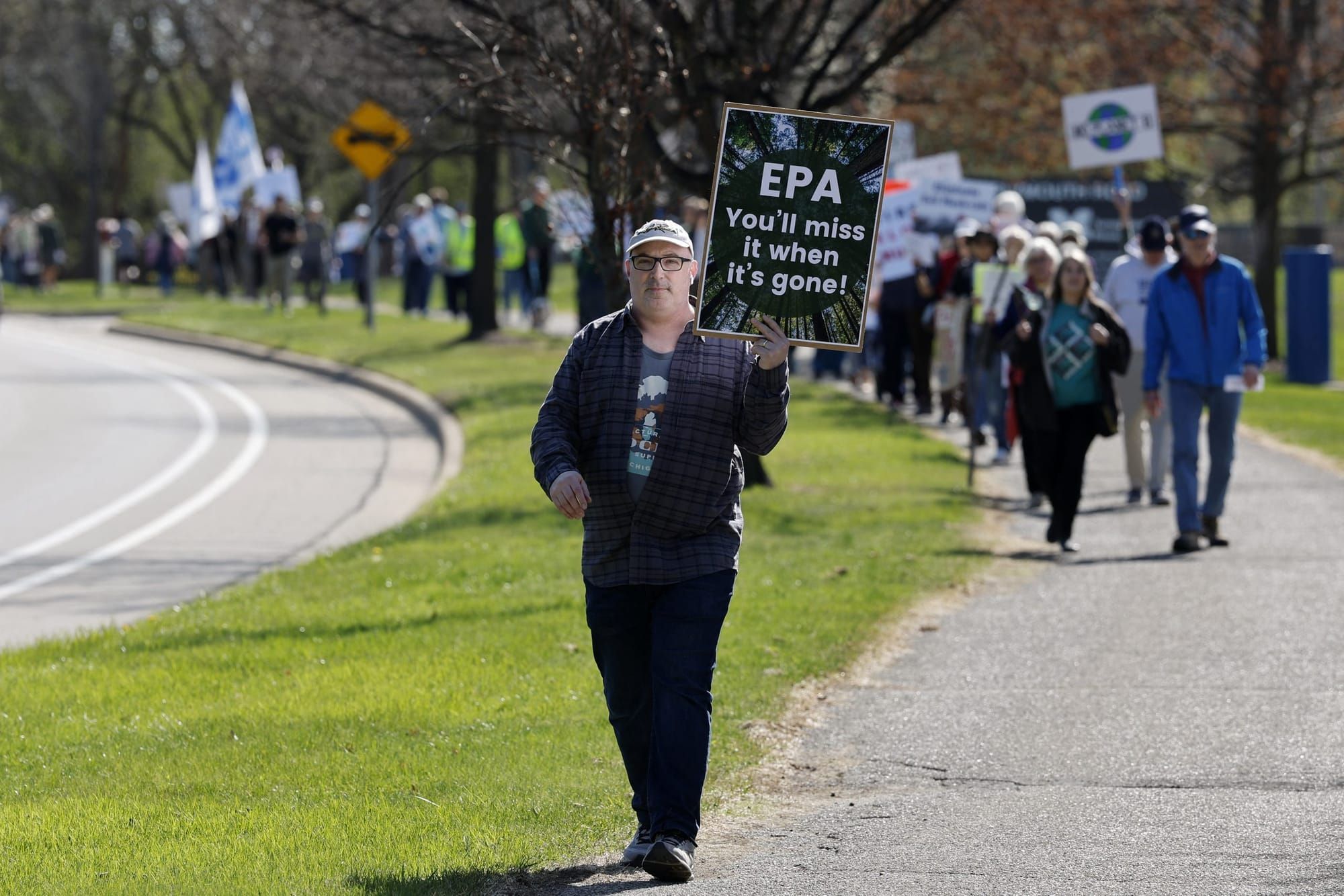
As promised by Project 2025, the Trump administration’s blueprint for dismantling the federal government, the authority of the Environmental Protection Agency (EPA) is disappearing. The U.S. is entering a period in which industry has near-total free rein to squeeze out profits in whatever ways it sees fit—including the weakening of regulations that govern chemical exposure and refusing to carry out programs for communities impacted by environmental justice.
As Prism has reported throughout the year, environmental injustice is not simply a category of harms levied onto vulnerable and disinvested communities of color, but the result of centuries of policy decisions. Legislative spending bills are statements of value and intentions for the future.
Legislative spending bills are statements of value and intentions for the future.
The last two decades in eastern Kentucky are prime examples. The community has spent years fending off attempts by Republican Rep. Hal Rogers to build a $500 million medium security prison. Appalachia has long been vulnerable to extractive industries, from coal mining to timber harvesting. In 2018, community groups succeeded in making sure that legacies of extraction would not continue into the modern era through the extraction of people’s bodies from their home communities. But the victory was short-lived, and the project was revived four years later. This year, however, an Indigenous women-led organization called the Appalachian Rekindling Project purchased some of the land slated for development, forcing the federal Bureau of Prisons to go back to the drawing board.
Prism has long drawn the manifold connections between incarceration and climate justice. This year, Prism Senior Reporter Alexandra Martinez doggedly covered the construction and legal evolution of the South Florida Detention Facility, also known as “Alligator Alcatraz,” because of its siting in the Everglades, a critical ecosystem that is home to hundreds of plant and animal species. The initial cost of Alligator Alcatraz was $608 million with a predicted annual cost of $450 million.
Built over eight days in late June, the immigrant detention center quickly drew ire from Indigenous tribes and local Floridians, who said that the development of the facility endangered those locked inside its walls as well as the ecosystems surrounding it.
Prism obtained records of a phone call made from a person detained inside the facility to his fiancée, in which he described how guards failed to provide emergency medical treatment to an immigrant who collapsed. He also described how guards subjected those detained at Alligator Alcatraz to chronic and arbitrary abuse, including beatings and humiliation, and how those inside did not have regular access to food and water. In December, the humanitarian group Amnesty International published its findings on the conditions inside the detention center, reporting that the treatment of immigrants detained at the facility operated by the Florida Department of Emergency Management constituted “torture.”
Most reporting portrays climate change as a series of discrete ecological events characterized by temperature variations: warmer oceans, colder winters, or more frequent storms. What these stories so often fail to acknowledge is that climate change isn’t just the weather. Rather, it’s the result of policy decisions that prioritize where to spend money and what—or who—to withhold public funding from.
In July, Prism reported on a surprise mid-May cancellation of environmental justice grants by the EPA. Grant recipients, such as Ira Vandever of the Navajo Nation, whose work includes the restoration of land polluted with heavy metals, were given notice via email with little information about how to appeal the arbitrary decision. Those with canceled grants were also left in the dark and on the hook for any funding gaps. Through public and political pressure, funding for some grantees, such as the Mi’kmaq Nation in Maine, was restored within a month of cancellation.
It wasn’t just grassroots pollution remediation efforts that suffered this year at the hands of a rogue EPA, but those relying on EPA grants to prepare regions against the impacts of mounting weather effects such as flooding.
Federal funding provides a critical bridge to emergency preparedness, but the Trump administration has placed its focus on the continued vilification of so-called DEI projects, a not-so-subtle dog whistle to the communities that benefit disproportionately from these programs. The cancellation of 105 grants selected by the Biden administration as part of the Community Change Grants program put a wrench in climate preparedness efforts led by communities in Appalachia, Mississippi, and Alaska. The program allocated funds through the Inflation Reduction Act to help address environmental justice issues, including supporting regions most vulnerable to the impacts of a rapidly changing climate and most unable to bear the financial fallout on their own.
These dire environmental challenges were made even worse when the Trump administration’s EPA announced its intention in August to scrap the 2009 Endangerment Finding, a rule that facilitated Clean Air Act regulation of greenhouse gases such as the air pollutant carbon dioxide. Carbon dioxide is in fact the most ubiquitous greenhouse gas and a major precipitator of global climate change. Already, the U.S. plays an outsized role in protracting climate change through its disproportionate per capita emissions and has demonstrated a continued ability to skirt international law, but the Trump administration’s dismantling of bedrock rules enshrines extractive supremacy and never-before-seen profits for polluters.
With no funding to mitigate environmental impacts brought by climate change and corporate injustices, it’s also important to note the slashing of the legal mechanisms available to environmental organizers fighting to protect ecosystem health. This summer, the Supreme Court gutted the National Environmental Policy Act (NEPA), which provided activists with the ability to sue to stop destructive development projects sure to impact sensitive ecosystems and species. Ultimately, the court ruled in favor of industry to restrict NEPA and the EPA’s ability to evaluate the downstream impacts of projects, which Harvard Law School professor Richard Lazarus referred to in the Texas Law Review as an “unraveling of the nation’s environmental protection laws.”
The second Trump administration’s dismantling of the EPA has also been a windfall for data centers across the country, especially in areas where state-level environmental agencies don’t have the funding or capacity to fill the federal gap in oversight. There are currently 4,296 data centers across the U.S., most clustered in Republican states where land is cheaper and that are more proximate to natural gas pipelines.
Data centers gobble up energy, resources, and water at alarming rates—actions made worse by the lack of federal guidelines regarding facilities’ usage. Communities targeted for data center development are also frustrated with the noise, water, and air pollution that results from their operation.
Data centers force communities to contend with increasing rates of pollution, but the facilities also drive up the costs of utilities. Ratepayers are tasked with footing the bill, mainly for upgrades to regional energy grid systems that are not accustomed to such large increases in power consumption. Data centers can consume as much energy as whole cities. In 2024, for example, data centers accounted for 4% of the country’s electricity consumption.
All of the movement around data centers puts a wrinkle in the country’s desire to decarbonize transportation, transition the energy grid to renewable sources, and see prices come down for critical services and goods such as heating and cooling. Renewable energy sources such as solar and wind are far cheaper than fossil fuels. For example, 91% of renewable energy projects commissioned in 2024 were more cost-effective than fossil fuel alternatives. In other words, renewable energy is good economics.
Perhaps one of the biggest—and most underreported—climate stories of the year is that the voting public isn’t aligned with current political leadership. According to the Yale Program on Climate Change Communication, 63% of adults are very worried about global climate change, 74% support regulating carbon dioxide as a pollutant, and 66% want a total transition to clean energy by 2050.
Americans’ stated desires are in direct opposition to the Trump administration’s actions. Voters want clear changes to the status quo, and sooner or later, elected officials will have to answer to climate change—either because voters take action or because the consequences of climate change become too loud to ignore.
Editorial Team:
Tina Vasquez, Lead Editor
Carolyn Copeland, Top Editor
Rashmee Kumar, Copy Editor
Author

ray levy uyeda is a staff reporter at Prism, focusing on environmental and climate justice.
Sign up for Prism newsletters.
Stay up to date with curated collection of our top stories.