Climate advocates reach their boiling point at Summer of Heat protests
Eleven weeks of continuous climate organizing on Wall Street wrapped up in late August, highlighting the complicity of financiers of fossil fuel projects
Climate advocates gathered on Wall Street all summer with one goal in mind: End the era of fossil fuels. With 640 arrests since June 10, the Summer of Heat wrapped up its 11 weeks of continuous climate organizing in late August.
The New York City protests are a collective effort. More than 100 organizations have endorsed the movement, but the main convening organizations are Climate Organizing Club, Stop the Money Pipeline, New York Communities for Change, and Planet Over Profit, according to Marlena Fontes, an organizing director with Climate Organizing Hub.
Summer 2023 was the hottest summer on record, with 2024 not far behind. Heat is the No. 1 weather-related killer, and research shows heat deaths are rising. New York was hit with another heat advisory on Aug. 28, days after New York Police Department officers cuffed the latest batch of Summer of Heat protesters.
“There have consistently been people who have been willing to take part in nonviolent civil disobedience, people who’ve been willing to risk arrest to make sure that the urgency of the crisis is understood,” Fontes said.
While Summer of Heat protests several financial institutions, its number one target is Citigroup. Citi did not respond to Prism’s request for comment.
“Citi is underwriting climate devastation through its continued funding of fossil fuels, including $396 billion since the Paris Agreement in 2016,” wrote research scientist Carly Phillips, who joined Summer of Heat’s Scientists Speak Out action, in a blog post for advocacy group Union of Concerned Scientists.
Demonstrations have spurred thousands of people newly committed to the movement.
“They might not have understood or fully grasped how much Wall Street is to blame for [extreme heat], and now they do,” Fontes said.
For Fontes, these connections began forming years ago, after the birth of her son in 2019. Her baby’s future in a warming world brought forward new anxieties.
“He was born before the hottest day of the summer,” she said. “I realized that I could just no longer compartmentalize the [climate] crisis and really had this strong urge to get involved in activism.”
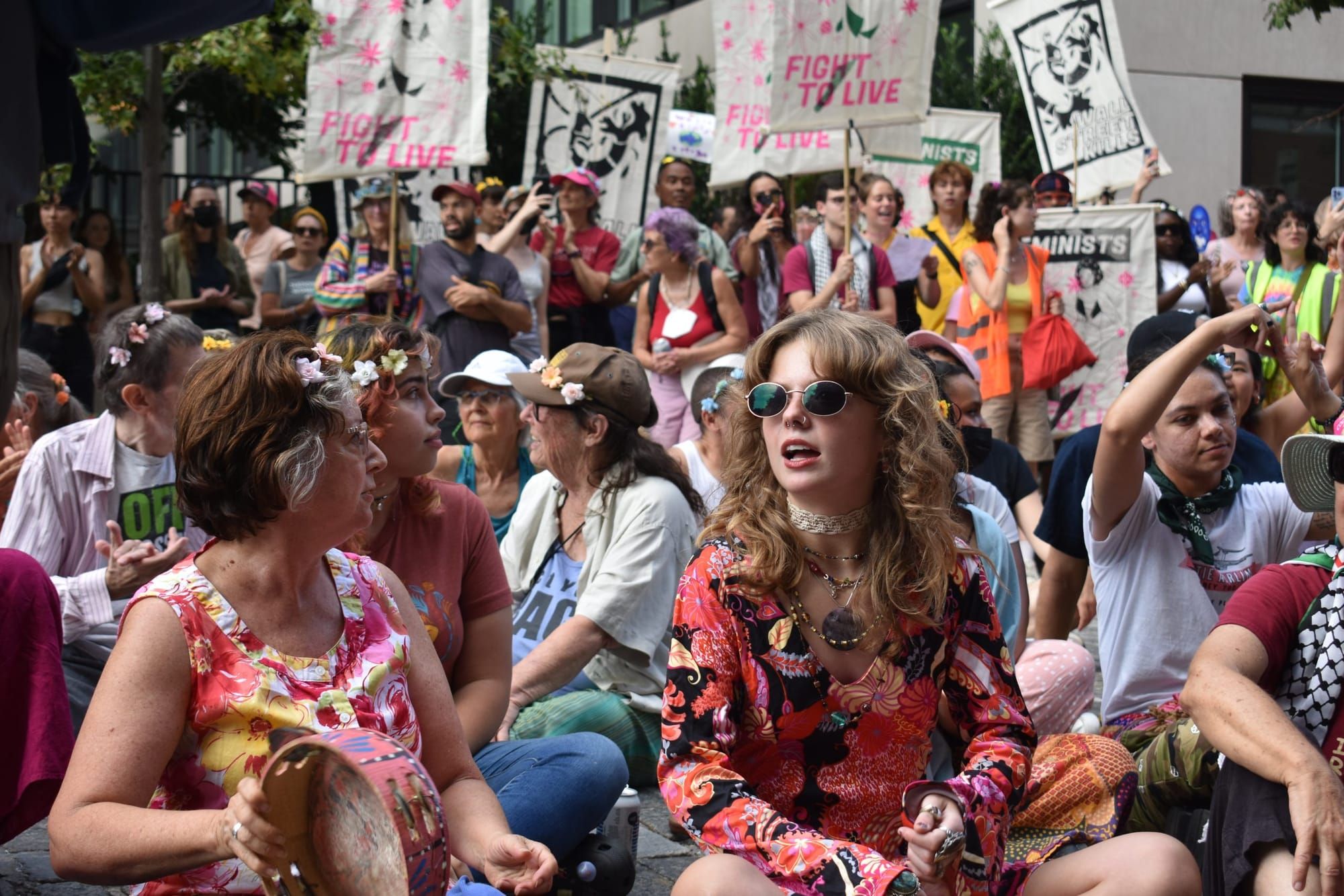
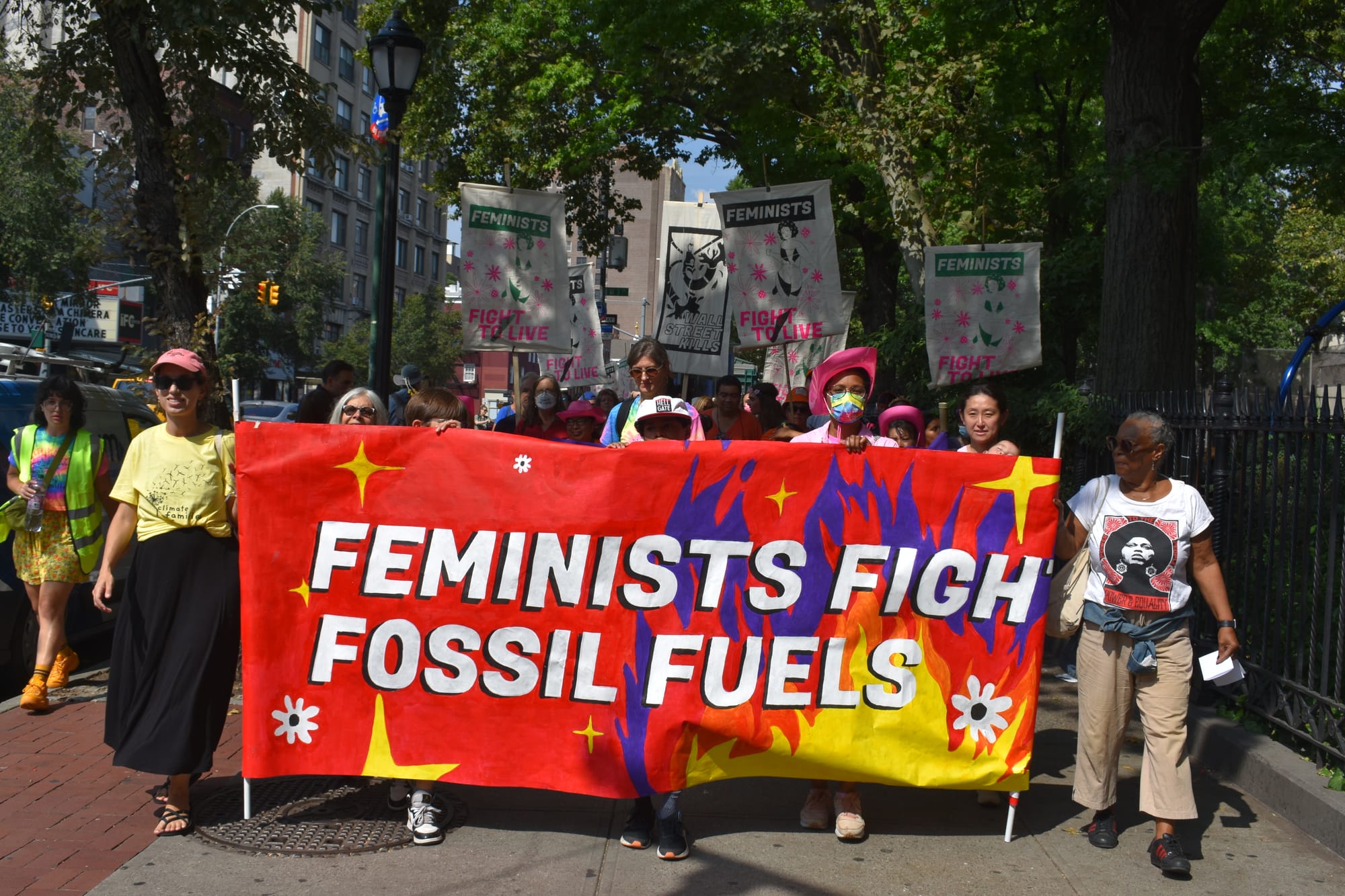
The last week of Summer of Heat was dedicated to feminists fighting against fossil fuels. Women are 14 times more likely to die from climate-related disasters than men.
The New York chapter of the Raging Grannies, a senior activist group, kicked off the march with their catalog of protest anthems. Nods to the flower power of the ’60s were present across demonstrators’ attire, floral crowns, and passive resistance strategies. Many donned pink cowboy hats. Fogo Azul NYC, a Brazilian drum line, supplied the beat.
The feminist march included many who identify as male. Baruch, an activist who has asked to withhold his last name, attended the protest with his brother. They said they’re concerned about the future for their nieces and nephews.
“I go to anything climate-related, I see that as an existential issue,” he said.
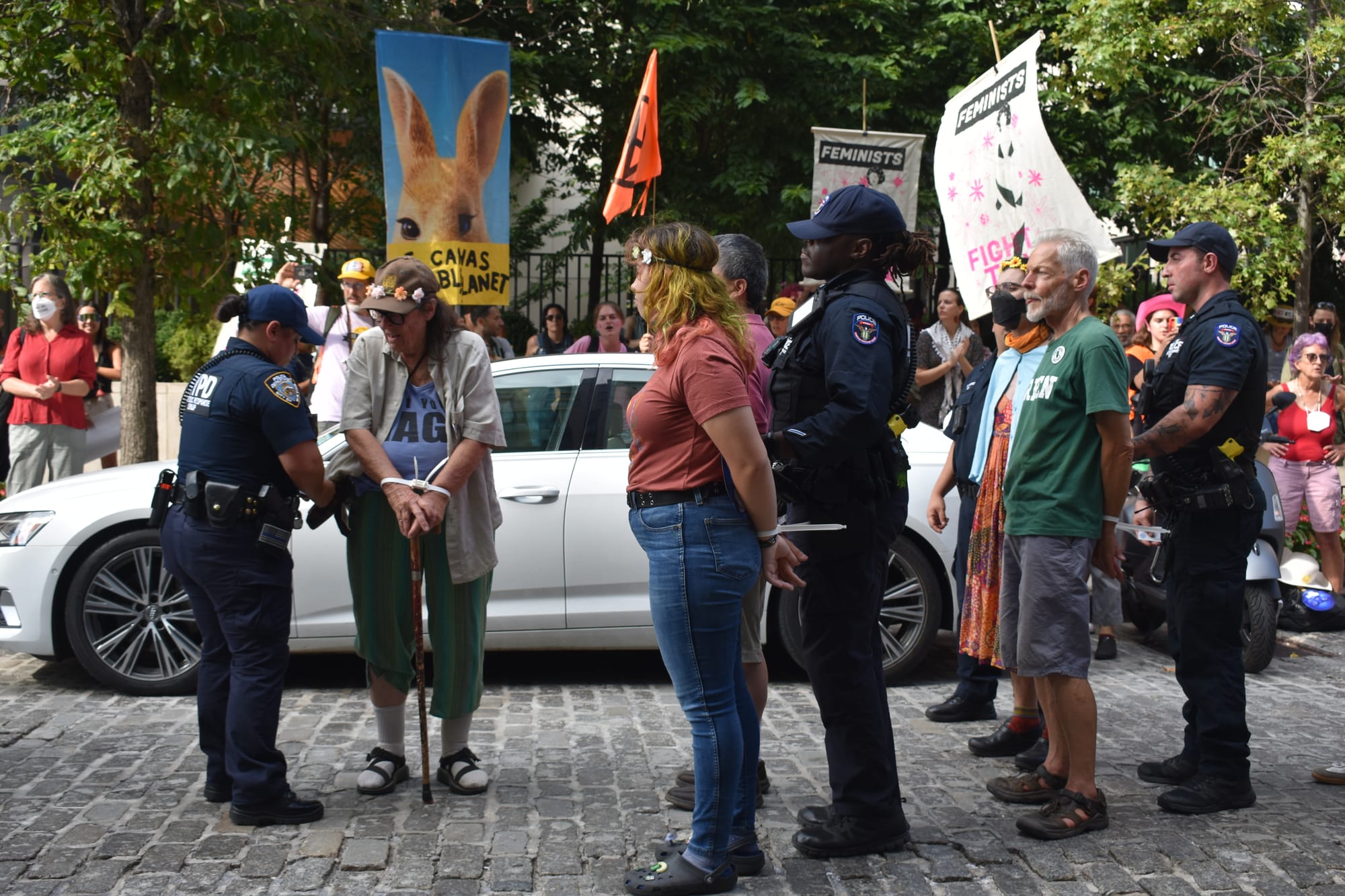
The march concluded at Citi CEO Jane Fraser’s apartment, where dozens of demonstrators broke off for a sit-in. Fraser, nicknamed “Methane Jane” by the protesters, receives an annual salary of $26 million. After arrest warnings, NYPD ziptied protesters, including an elderly woman relying on a cane, as witnessed by Prism.
The themes of previous weekly demonstrations included protests led by parents and grandparents seeking a better future for their children, leaders from the U.S. Gulf South who Fontes said suffered cancer and other conditions they blamed on harmful fossil fuel projects, and leaders expressing solidarity with Palestine.
Citi “boasts the largest presence of any foreign financial institution in Israel,” according to its website.
“[Palestine] is definitely a feminist issue and it’s definitely connected to climate change,” Gabby, a 26-year-old who works with the Youth Climate Finance Alliance, said at the August feminist march where keffiyehs and Palestine flags abounded.
Environmental advocates had never protested banks for this length of time before. Leaders realized that “doing an action every few months was not enough to really tell the story of the urgency of the crisis,” Fontes said.
Organizers were inspired to structure Summer of Heat as a weeks-long demonstration after many read Paul Kix’s book “You Have to Be Prepared to Die Before You Can Begin to Live.” It chronicles 10 weeks of organizing in Birmingham, Alabama, that led to desegregation.
Movement leaders have continuously asked to meet with Citi, offering the bank more than 180 different times and dates to connect, according to Fontes.
Organizers were granted one Zoom call with Citi, which Fontes called “disappointing.” She felt that employees they met with were “extremely disconnected” and unconcerned with their company’s climate impact.
“But we’re going to keep going back, and we’re going to keep pushing because we have to,” Fontes said. “People’s lives are at stake.”
Protesters want Citi to feel the heat. The financier wants otherwise.
“We have to keep our cool,” Ed Skyler, Citigroup’s head of enterprise services and public affairs, wrote in a company-wide memo after protesters blockaded the entrance to Citi headquarters.
Fontes has been “surprised” by the level of aggression from both law enforcement and Citi.
“A non-violent protester who was just filming was punched in the face” by security, according to Fontes and a video posted to X.
Summer of Heat arrestees include Bill McKibben, one of the first journalists to bring climate change awareness to the public, and John Mark Rozendaal, a professional cellist.
“He barely started playing cello before like 20 police officers in riot gear came after him,” Fontes said.
Images of the grandfather’s detainment caused some virality for the movement. Mercy Van Vlack, one of the Raging Grannies, thinks documentation of the mass arrests might stir people from their aloofness to climate devastation. She’s noticed how disconnected Americans have become from one another, an observation backed up by evidence of the U.S.’s growing crisis of loneliness and isolation.
“That’s so important to make people realize what’s going on because they’re sitting home watching their TVs and playing on their computers,” Van Vlack said. “They don’t talk to each other.”
Coming together to fight against banks gives demonstrators a chance to address personal trauma caused by climate change.
“I’m out here because I’ve been riddled with climate anxiety my entire life, and I think it just gives me a good outlet to express some of my rage,” said Betty, a 21-year-old who attended the feminist march.
As 2024’s edition of Summer of Heat came to a close, Fontes said organizers won’t quit until Citi stops funding fossil fuels.
“The shape of the campaign is going to change a little bit, but the momentum is going to continue.”
Author

Jill Webb is a Brooklyn-based award-winning journalist and audio producer. She mainly covers mental health, the environment, and labor issues. Her work can be found at www.jillmwebb.com.
Sign up for Prism newsletters.
Stay up to date with curated collection of our top stories.