Dear Reader,
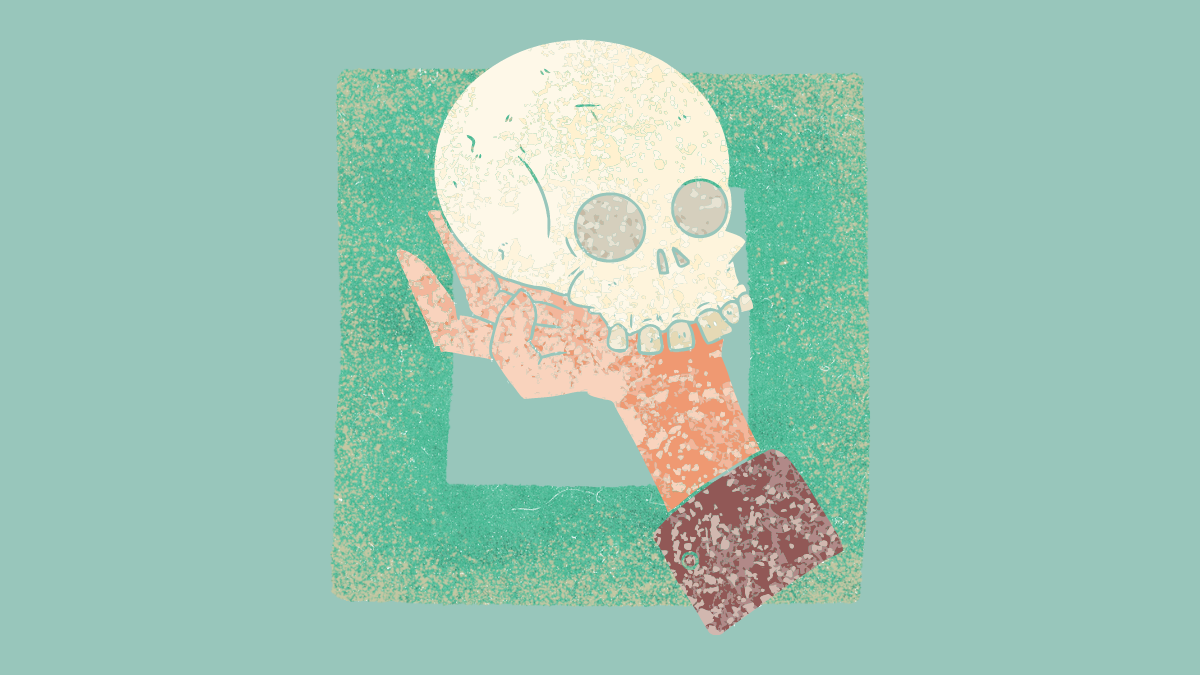
“To be or not to be?” Hamlet famously asked this question in the play by the same name written by William Shakespeare. I first encountered the life-changing power of Hamlet when I signed up for a prison playwright’s circle called Voices Inside, created by Curt Tofteland and Robby Henson. When I first heard Curt read Hamlet’s soliloquy, it opened a doorway in my mind. Hamlet’s question was like a life preserver. I was a drowning man, slowly contemplating my own surrender to the waves of despair and hopelessness. If prison is an ocean, the currents are treacherous and swift. It’s easy to lose all hope. But when Robby and Curt stood before us at the prison to discuss Hamlet, it was like a defibrillator creating an electric charge.
To be or not to be? This is the story of how this simple question shocked me to life.
Everyone has a story, explained our two instructors, Robby and Curt, on that first day of Voices Inside. Of course, everyone has a story, I thought. I raised my hand.
“What’s your point?” I asked. “Who’ll give a damn about my story?”
Curt and Robby shared a conspiratorial look. Robby spoke first.
“You will,” he said. “Won’t you? Your family might, too. You just have to write from the gut and tell everyone your truth.”
“Your story is life’s expectation from you,” Curt said.
“What?” I asked. I was confounded by the man’s zen-like explanation.
“Writing can right wrongs,” Robby said.
“And so much more,” Curt said. “To be or not to be? Is your story filled with pain, anger, and tragedy? Shakespeare’s stories were. He provided a vision of what life was like in his time, through his plays and the characters he created.”
Robby took a different approach, explaining that he was once a movie director.
“Like, for Hollywood?” someone asked. “You made movies for Hollywood?”
Robbie confirmed that he had.
“Dude, why the hell are you here?”
We didn’t immediately see how Robby was already giving us a writing lesson.
“This is why story is so important,” Robby laughed. “You start with the hook. Make the audience ask questions. That’s what we’re going to teach you. To be or not to be? Never allow anyone else to automatically assume they know your story. You are going to learn to share your truth and make sure your stories matter.”
This is how we learned that the prison’s playwright circle was a “circle of truth,” as Curt explained. It’s where we would express our inner wounds so that healing could begin.
When I wrote my first play, I had no idea what I was doing. Honestly, it was terrible. But I kept writing. I kept seeking ways to express myself. Why? Because Curt was absolutely correct. I was in pain. I was wounded. I was suffering. Just like everyone else around me. If hospitals are places of triage and healing, prisons are the exact opposite. Nothing gets fixed by incarceration; no one’s scars fade with time. Imprisoned people bleed on everyone they encounter.
Over time, I learned that writing plays was hard—not just because writing is hard, but because it required revisiting the past, confronting emotions, and learning to use words instead of violence and threats. If I knew anything at the time, it was trying to solve problems with anger and vitriol.
Conflict isn’t a fight scene, no matter how well it’s choreographed, Robby explained, nor was it page after page of raised voices. That’s just an argument. What you need is depth. Flawed characters in truly bad situations who somehow get themselves out.
Prison is the truest of bad situations, and I considered myself to be as flawed as everyone else behind the fence. I wrote plays because I felt broken. I felt irreparable. I put my pen to the page, and I bled. I cried. I stared at the blank space of my paper and looked through it like a lens into my past, all in the hope of determining my future.
Through my plays, I learned the truest definition of hindsight. Through my characters, I found focus by reenacting my past and all of the experiences that shaped me. Did I want to make the people who hurt me suffer? After all, revenge was just a few words on the page away. Or did I want to discover where their anger came from? Because I could. All I had to do was write the dialogue, and, like magic, I was in their minds, better understanding their motivations. All the apologies I ever wanted could flow like a river through my characters. The bully who abused me, the teacher who told me how stupid I was, the family that neglected me, all wrongs could be righted. The potential seemed limitless.
Why do you write? Why does your story matter? This is why.
As the plays in our circle evolved, so did their tone. It was clear we were ripping off scabs and digging into wounds that could only heal from the inside out. I began to realize: Just because I’m in prison, doesn’t mean that I’m dead. My dreams don’t have to die, despite my confinement, I shared with the circle. Doesn’t a caged dog still sleep and dream of running free? When does the punishment end and cruel torture begin?
“That’s a play,” Robby said. “Explore that. Dig deep. Discover the story within. How many of you have ever heard of a guy named Carl Jung? He was a psychiatrist.”
A few hands rose.
Robby explained that one of the many things Jung’s work explored was man’s outlook on life. Jung believed that a person’s ability (or inability) for self-acceptance was the essence of their moral problem. My take on it is that you must accept yourself—flaws and all—and also work to change what doesn’t serve you or the world around you. Robby said this is why he teaches prison writing classes; this was his reason for asking us to look within ourselves and explore the ways that we are in need of our own kindness. This is why we must share our stories with the world.
I will never forget Curt’s poem that he used to close our circle:
I may say that I am not responsible for my trauma. But I am responsible for my healing. It is not what I expect from life but rather what life expects from me. I must stop questioning what the meaning of life is and contemplate what life is offering and asking of me. I will look for my answer within these questions.
I have been in prison for 19 years, and I continue to look for answers. My story isn’t over. I still remember how to dream. How to be.
The Right to Write (R2W) project is an editorial initiative where Prism works with incarcerated writers to share their reporting and perspectives across our verticals and coverage areas. Learn more about R2W and how to pitch here.
Author
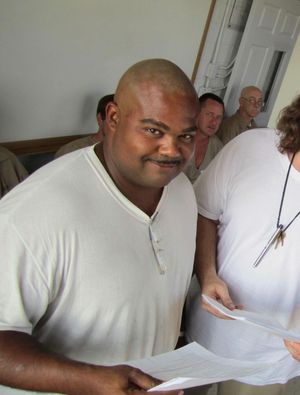
Derek R. Trumbo, Sr., a multiple-time PEN Prison Writing Award winner, is an essayist, playwright, and author whose writing has been featured in "The Sentences That Create Us: Crafting A Writer's Life
Sign up for Prism newsletters.
Stay up to date with curated collection of our top stories.