Harvard’s Chinese commencement speaker refuses to be used as a geopolitical pawn
The Trump administration has attempted to block Harvard University from accepting international students, claiming it’s coordinating with the Chinese Communist Party
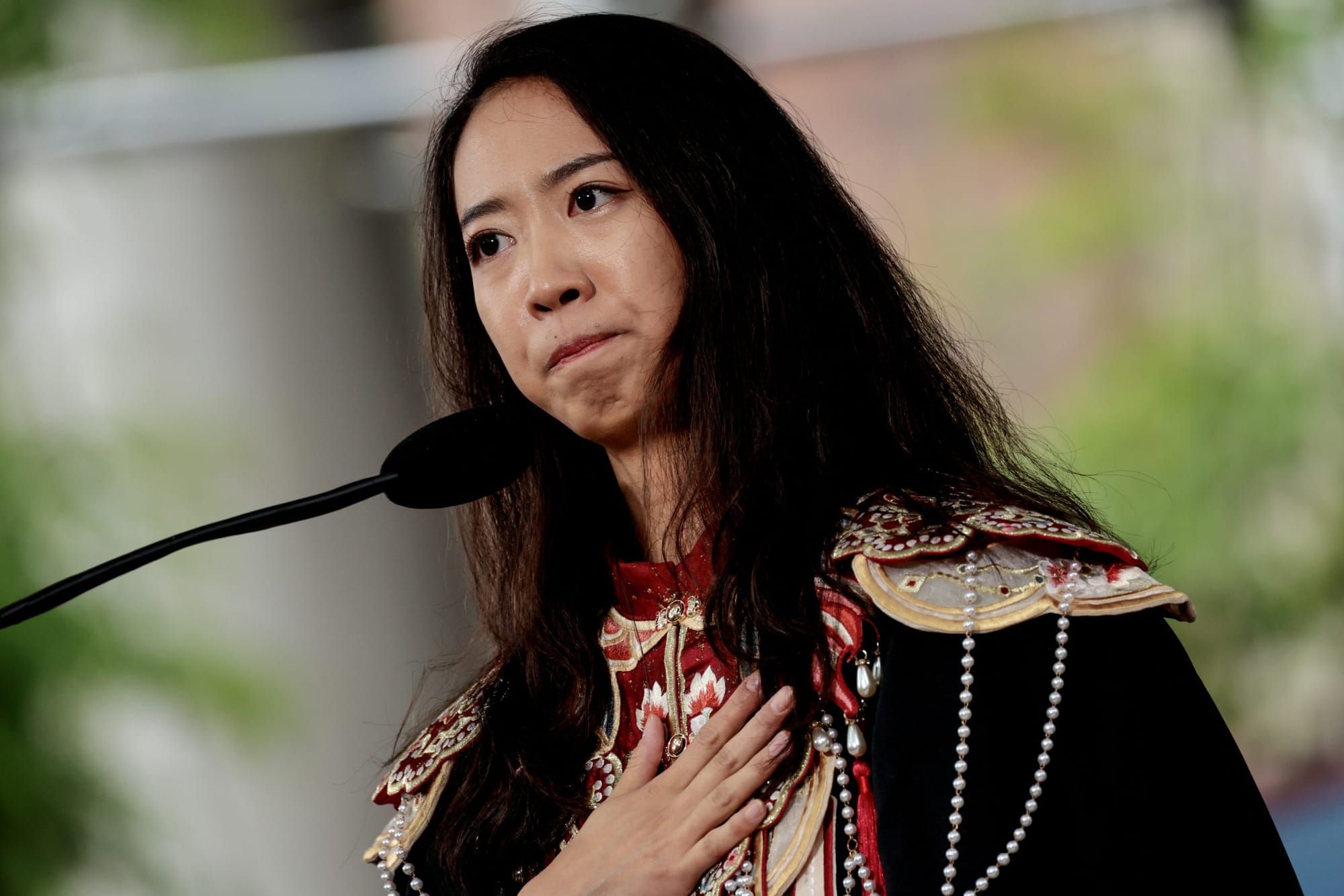
When she first arrived at Harvard as a Chinese international graduate student, Yurong “Luanna” Jiang was excited to expand her horizons at a world-class university. During her time at the Kennedy School, Jiang, a master’s student in public administration in international development, enthusiastically connected with classmates and academic experts from all over the world. In her studies, she learned skills she hoped would enable her to have a career in which she would work to build bridges and foster international cooperation.
It was in this spirit that, when Jiang graduated on May 26, she gave a commencement speech calling for unity in a divided world.
“If we still believe in a shared future, let us not forget: Those we label as enemies, they, too, are human. In seeing their humanity, we find our own. In the end, we don’t rise by proving each other wrong. We rise by refusing to let one another go,” she told her graduating class. The first Chinese woman to ever deliver a commencement speech at Harvard hoped that her message would resonate long after her graduation. Her address drew praise from her classmates and from many people all over the world who personally wrote to her to express their support.
The “eye of the storm”
Jiang’s message came as, four days prior, Department of Homeland Security (DHS) Secretary Kristi Noem ordered Harvard to terminate its Student and Exchange Visitor Program certification, thus blocking the institution from accepting international students. The DHS cited national security concerns for the move, alleging that the university’s leadership facilitated and engaged “in coordinated activity with the CCP [Communist Party of China], including hosting and training members of a CCP paramilitary group complicit in the Uyghur genocide.” It also alleged that Harvard “partnered with Chinese universities tied to military advancements” and “with individuals linked to China’s defense-industrial base.” The day after the announcement, a judge temporarily blocked the order.
Two days after Jiang’s speech, Secretary of State Marco Rubio announced that he would “aggressively revoke visas for Chinese students.” On June 11, President Donald Trump announced on Truth Social that Chinese students were welcome again in the U.S., pending a trade deal with China.
The series of actions was widely condemned by many Asian American advocacy groups.
“This policy threatens to dismantle the international talent pipeline that has long fueled American innovation and excellence,” Gisela Perez Kusakawa, executive director of the Asian American Scholar Forum, wrote in an email statement to Prism. “Chinese students contribute immensely to our campuses, communities, and economy. Treating them with blanket suspicion not only violates principles of fairness, due process, and our democratic values—it sends a chilling message to the world that America no longer welcomes global talent.”
The developments also led to Jiang receiving online pushback for her message, even though she never mentioned the current administration directly in her address.
“I was accused of being a spy for China. And, ironically, I was also accused of being a spy for the U.S.,” she wrote in an email to Prism. “The fact that a speech about human connection could generate such polarized responses says a lot about the world we’re living in. That’s exactly why I felt the need to speak about our shared humanity,” she said.
Jiang maintains that she never intended to stoke controversy or to criticize any particular entity. “I started writing the speech in March, before that particular controversy erupted to this extent. I wasn’t trying to address a particular political event,” she told Prism. “The message I hoped to share was about resisting the forces that pull us apart, the forces that encourage us to see others as enemies or as symbols. That it is still possible, and urgently necessary, to stay connected with each other—across identities, nations, and worldviews—not because we all agree, but because we all are human beings with fundamental dignity.”
Jiang believes that as a Chinese international student at Harvard, the current political context put her in the “eye of the storm” of the situation. She remembers how terrified many of her international student friends were when they heard the DHS announcement. She stated that some had to change their travel plans at the last minute to make it back to campus in time.
“I remember one Latin American girl who was on a flight back to the U.S. when the policy change was announced,” Jiang recalled. “Only when she landed, she saw the news and she was taken in for questioning for a long period of time at the airport. She was eventually allowed to enter, but I can only imagine how unsettling that experience must have been.”
Accusations of a double standard
The DHS announcement to ban international students from Harvard also cited national security concerns tied to the university’s alleged inaction during alleged incidents of antisemitism on campus. In January, Harvard expanded the definition of antisemitism to include most criticism of the state of Israel.
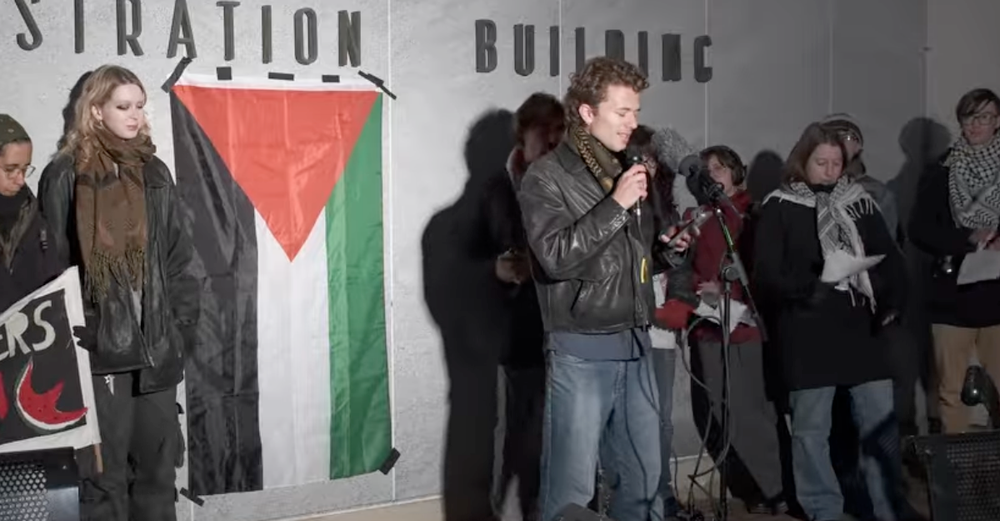
Kawsar Yasin, a Uyghur American Harvard student organizer for the undergraduate Palestine Solidarity Committee (PSC), was unsurprised and disappointed when she heard of the DHS ban. She believes that the DHS is “demonstrating hypocrisy” when it is condemning what it openly calls “the Uyghur genocide” while simultaneously refusing to recognize the Palestinian genocide.
“I am a Uyghur student who organizes with the PSC, which has been allegedly perpetuating antisemitism, or pro-Hamas rhetoric—all of these things that the United States government or a lot of far-right groups say—but then I’m also Uyghur, and I actively fight within that movement as well. And I actually co-founded a student coalition that resists the CCP,” Yasin said.
Yasin worries that Rubio’s ban on Chinese international students would affect Uyghur international students in the U.S. who carry Chinese citizenship—students the ban is purportedly trying to protect against a government that is perpetrating a genocide against their community. She said she believes the ban is “even worse” for Uyghur students with Chinese passports, as it prevents them from securing upward mobility and education.
“I try to be very consistent in my advocacy,” Yasin said about fighting for the liberation of all people within the PSC. “I make sure to mention that all of these struggles are kind of intertwined, that liberation is intertwined.”
Moving forward
Meanwhile, Jiang is grappling with the uncertainty of her future the best she can. She believes international students are uniquely equipped to cope with the current climate of instability due to their experiences of crossing borders and navigating different cultures during their education.
“Students adapt. They look for creative ways forward, they support each other, and they stay flexible,” she said. “The challenge is real, but so is the resilience.”
Jiang’s post-graduation plans are to join a startup to advance public good and to continue to build bridges between the U.S. and China. She wants her fellow Chinese international students to know that they are not alone.
“There’s a world of people—students, mentors, strangers—who believe in you even when the external environment feels hostile,” she said. “The journey is not easy and people will project a lot of things on you. But don’t let fear shrink your imagination of what’s possible.”
Editorial Team:
Sahar Fatima, Lead Editor
Carolyn Copeland, Top Editor
Stephanie Harris, Copy Editor
Author
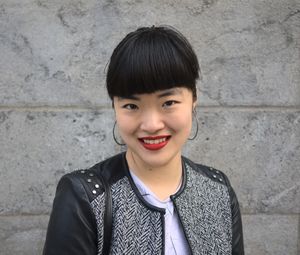
Diamond Yao is an independent writer/journalist who focuses on contemporary social and environmental issues. Her work has been featured in many outlets that include Toronto Star, Washington Post, CBC,
Sign up for Prism newsletters.
Stay up to date with curated collection of our top stories.