From genocide to activism: The Carrizo/Comecrudo Tribe’s battle for land and justice
The chairman of the Carrizo/Comecrudo Tribe of Texas discusses the similarities between the first colonizers and today’s oil and gas companies
Juan Mancias, who has been the chairman of the Carrizo/Comecrudo Tribe of Texas for decades, first joined with other families connected by a shared lineage in the early 1990s. The violence that severed families from each other and from their heritage was shared: a genocide of Indigenous peoples fueled by centuries of Spanish and American colonization. Generations were forced to flee their ancestral homelands, their cultural practices, and their identities altogether. Then, oil and gas corporations came in. “This is what genocide is,” Mancias said. Intentionally removing people to “abuse the land.”
Around the time of the Tribe’s founding, Mancias also helped launch the Texas branch of the American Indian Movement. Since the 1990s, Mancias has led efforts to oppose, halt, and stop oil pipelines, the Dos Republicas Coal Partnership, and the Trump administration’s border wall. Despite belonging to the land now known as Texas since time immemorial, the Carrizo/Comecrudo peoples do not belong to a federally recognized tribe. This means that when construction of projects like the Dos Republicas’ open-pit coal mine disturbed sacred sites and human remains, the Tribe didn’t enjoy federal protections. This has led the tribe to fight oil and gas projects in other creative ways, using direct action or lawsuits to challenge the permit-approvals process, as is the case in the tribe’s latest effort to stop NextDecade’s Rio Bravo LNG project, the largest and most expensive methane gas project in U.S. history. If completed, the project would refine 27 million metric tons of liquified methane gas per year. While methane is often referred to as a ‘natural’ gas or ‘renewable’ energy source, it’s 80 times more potent than carbon dioxide. Over the past two centuries, methane has contributed to as much as 30% of the planet’s warming. The project’s construction would destroy nearly 200 acres of wetlands and impact nearly 2,400 acres more of wildlife habitat.
In August, climate justice reporter Ray Levy Uyeda spoke with Chairman Mancias about the criminalization of land, identity, and protest.
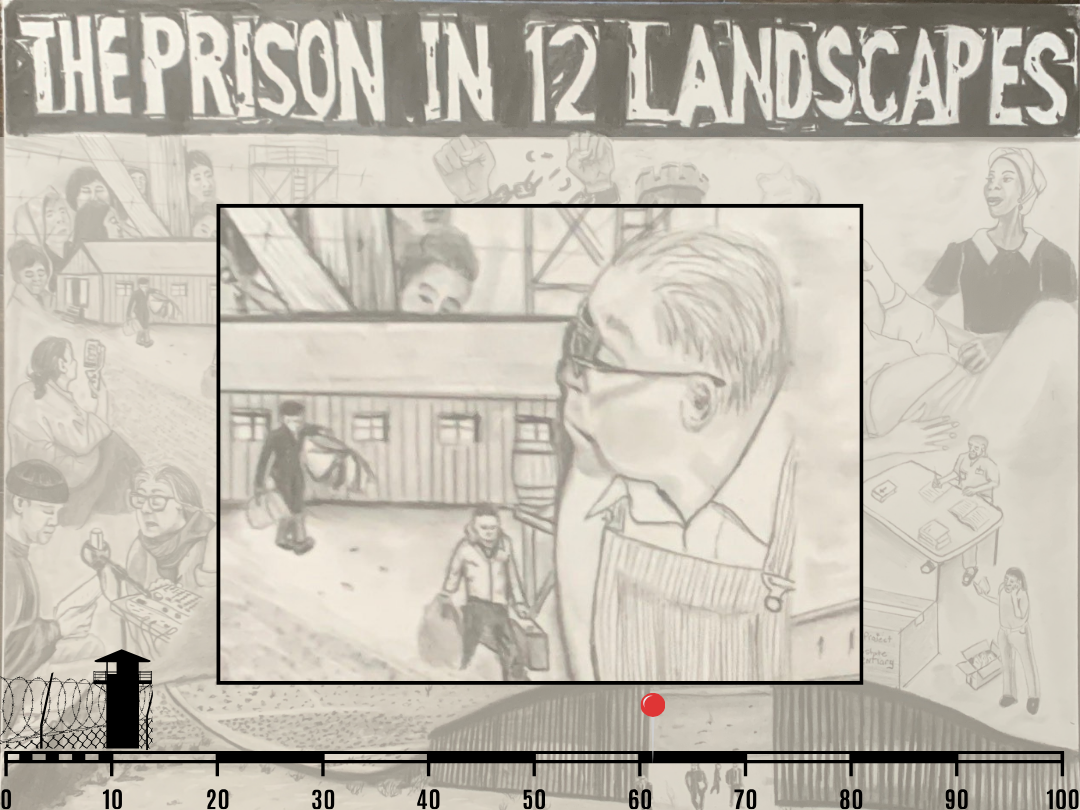
This Q&A is part of a series, Prison in 12 Landscapes, featuring companion pieces from Ray Levy Uyeda and Tamar Sarai. The series runs through September and is organized to introduce readers to subjects beginning with the most—and easing into the least—proximate to prisons’ material form. You can read through the full series here.
This interview has been edited for length and clarity.
Ray Levy Uyeda: On Aug. 6, the D.C. Court of Appeals vacated the Federal Energy Regulatory Commission’s approval for the construction of three components of NextDecade’s Rio Bravo LNG project in Texas. The court ruled that the agency didn’t correctly evaluate the environmental justice impacts of the El Paso facility and its planned carbon capture technologies. What role did the tribe play in halting the project’s approval?
Juan Mancias: With NextDecade’s Rio Bravo LNG project, we found a way to go after the Federal Energy Regulatory Commission’s (FERC) permitting process. Now, we’re finding out that NextDecade lied in their proposal regarding plans for carbon capture. It turns out they didn’t build the technology to do it. [In August], the Court of Appeals also told the FERC that it was wrong to approve the project and Enbridge’s [gas] pipeline that they’re building to hook up to the terminals. For the first time, these companies are not actually being slapped on the hand but slapped in the face with their own lies. This is also what happens when the Federal Energy Regulatory Commission doesn’t [perform] their due diligence. What we’re asking as a tribe is that they set up some kind of standard process and policy for environmental evaluation, including a baseline measurement of 1491, because then, there was nothing wrong here.
Levy Uyeda: Why 1491?
Mancias: We had clean water, we had clean air, we had clean land. The environment was fine. We knew how to live in harmony with it. Our science was working. We had a connection with the earth. We didn’t say, “We have dominion over the earth” because we are the earth. When we die, we go back to this earth. So we don’t have dominion over it. Actually, it has dominion over us.
Levy Uyeda: In some ways, it seems to me like these oil and gas corporations are extensions of the modern-day colonial governing structure–especially when you consider that we have an economic system predicated on the extraction and consumption of fossil fuels. As evidenced by the tribe’s continued defense of its ancestral land, these corporations—like the governments that greenlight them—have the ability to decide who or what is disposable.
Mancias: One of the things that I keep looking at is that there was a resistance 500 years ago when [colonizers] first came here. They came here for one thing: to take the resources from here and make the king rich in Europe. Five hundred years later, they’re still doing the same thing. They’re taking the resources from these lands, like methane, and it’s all going overseas. [Editor’s note: In 2023, the U.S. was the world’s largest exporter of methane gas, with Europe being the primary destination.] So you clear the people who have the resistance, who will fight for the land, and then you can abuse the land. But they couldn’t kill the spirit of the original people of Texas. Esto’k Gna is who we are—we’re human beings.
Levy Uyeda: The efforts to criminalize protest through so-called ‘critical infrastructure laws’ changes the ways that tribes, grassroots collectives, and activists can resist extraction. The oil and gas industry, which stands to benefit financially from silencing protest, is part of the effort to write and distribute model legislation to effectuate their needs. What is your experience with critical infrastructure laws?
Mancias: When Texas passed the no protest law in 2019—because of Standing Rock—they didn’t want us to do what we were doing down in West Texas, where we had two camps trying to stop the Trans-Pecos pipeline and the Comanche Trail pipeline. So the resistance continues, but [the oil and gas industry] just don’t want to accept it. That’s why they make the laws like the no protest law. They say that we cannot impede critical infrastructure, and that means we can’t block anything that they’re doing. So what we’ve done is we’ve taken the federal government to court, and now they’re blocked by rulings like those from the Court of Appeals.
But, the thing is, what is critical infrastructure to them is not the same as critical infrastructure to us. They use that phrase a lot—critical infrastructure—because that’s how they’re getting their money. How much money they’re getting is how they measure how important something is. I measure mine by how well our human beings are breathing if our human beings can drink clean water, and how well human beings can live on the land. So our critical infrastructure is the air, the water, and the land.
Author

ray levy uyeda is a staff reporter at Prism, focusing on environmental and climate justice.
Sign up for Prism newsletters.
Stay up to date with curated collection of our top stories.