For New York canners, a dime could make all the difference
While the cost of living in New York has soared, the deposit on a bottle remains just 5 cents. The “Bottle Bill” could change that—and reshape conditions for canners, many of whom are immigrants and people of color

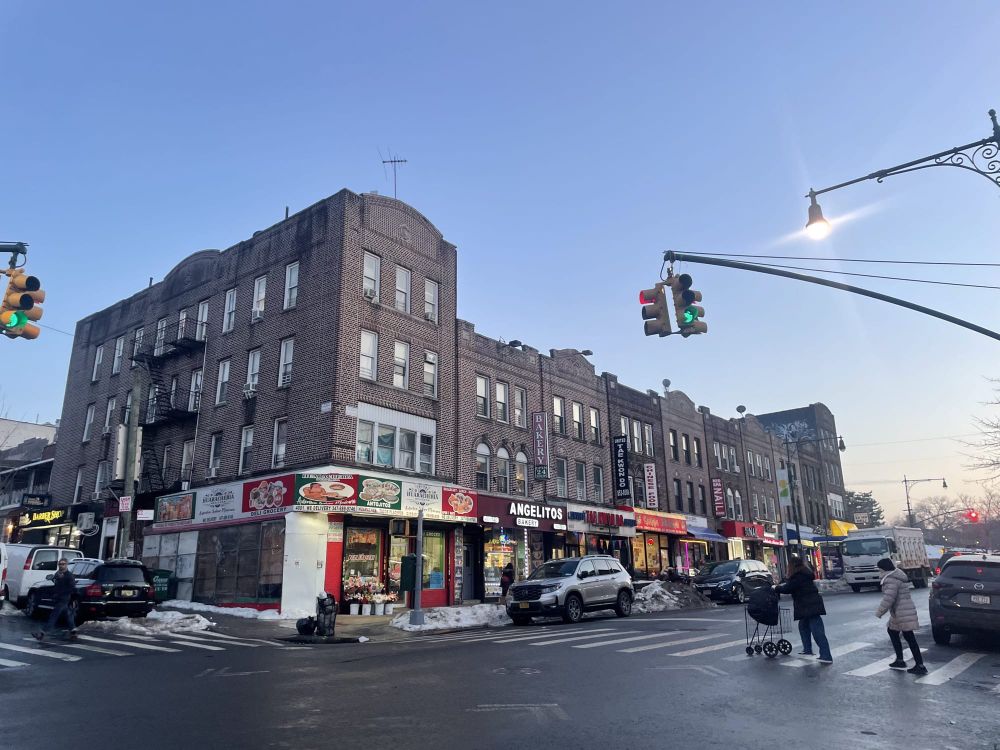
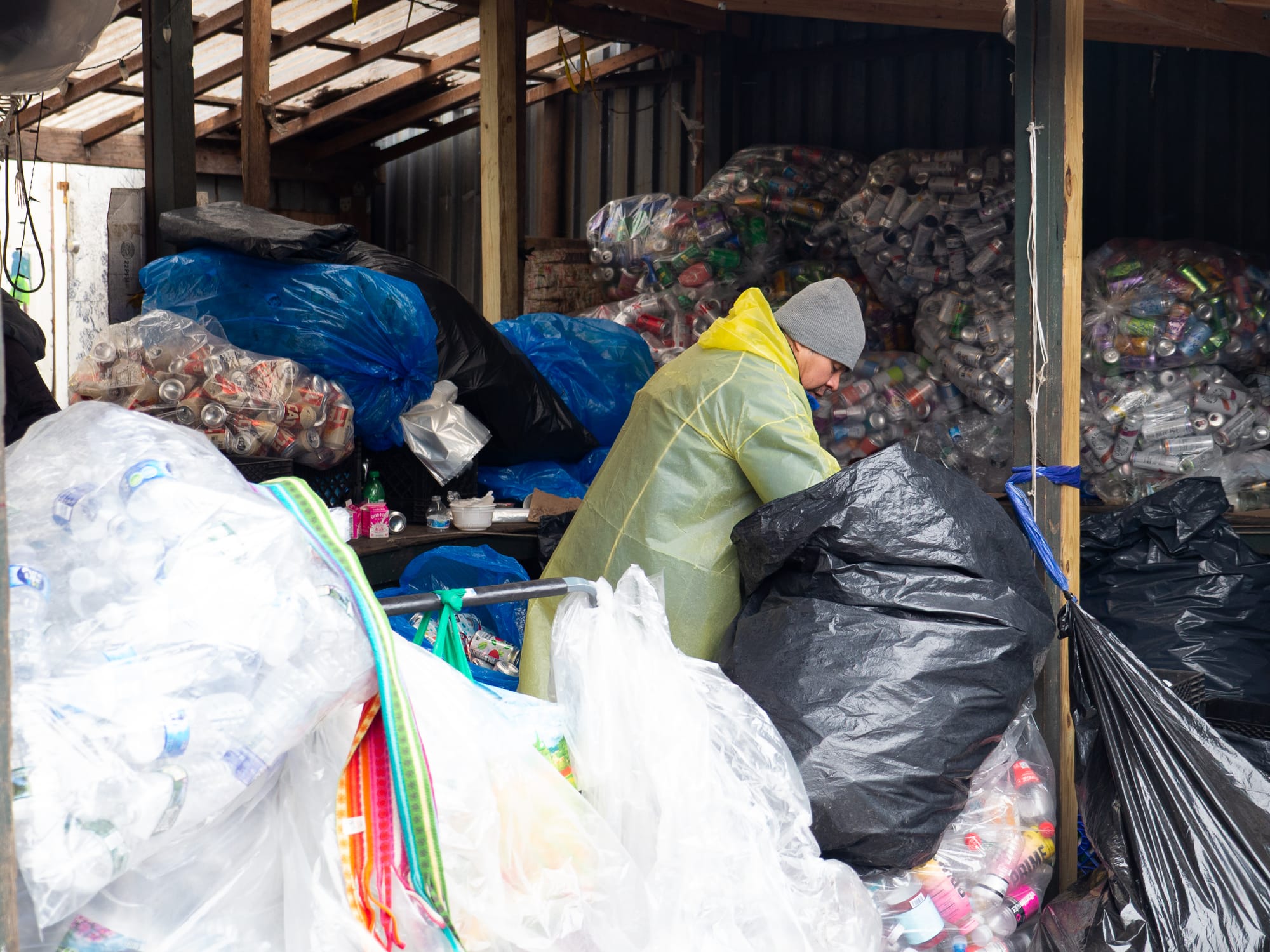
On a bitterly cold February afternoon, Josefa Marín, bundled in a puffer jacket, sorted bags full of cans and bottles at a redemption center in Brooklyn. For more than two decades, she has spent her days collecting recyclables on the streets of the Bushwick and Williamsburg neighborhoods.
“It’s like our second home,” Marín said in Spanish, reflecting on the hours she and other canners spend at Sure We Can, the recycling hub where they exchange their collected aluminum cans and plastic bottles for money—and connect with others doing the same work.
Originally from Puebla, Mexico, Marín, 53, is one of thousands of New York City canners—many of them immigrants and people of color—who help keep millions of containers out of landfills. Their work keeps the country’s largest city cleaner, yet their contributions remain largely unrecognized.
“We are the ones doing the work that the American citizens don’t do,” said Marín, who also leads the Alliance of Independent Recyclers of New York City.
While the cost of living in New York has soared, the deposit on a bottle remains just 5 cents—unchanged since the 1980s. Marín and her partner, Pedro Galicia, earn around $700 a week collecting and redeeming recyclables.
Like many canners, Marín has long pushed for the state government to modernize the Returnable Container Act—also known as the “Bottle Bill”—which dates back to 1982. Over the years, the measure has been amended to include items such as water bottles and wine coolers, but its core feature remains unchanged: Consumers pay a 5-cent deposit and can redeem that nickel when they return an eligible container.
Overall, Marín and environmental advocates argued that expanding the types of beverage containers and raising the deposit fee to a dime would not only boost canners’ earnings, but also improve recycling rates.
The program has proven effective. Approximately two-thirds of all bottles and cans with deposits are returned, and litter from these containers has dropped by 70% since the program began. According to the New York State Department of Environmental Conservation, the law helped recycle 5.5 billion beverage containers in 2020, the most recent year with available data. This diverted over 241,000 tons of waste from landfills at no cost to local governments.
Advocates of an expanded Bottle Bill emphasized that adding bottles that contained wine, spirits, hard cider, and most noncarbonated beverages—along with doubling the deposit—would significantly increase earnings for canners. The deposit money comes from consumers when they purchase beverages and is later refunded by distributors or retailers when containers are returned.
However, the updated Bottle Bill, introduced by New York state Sen. Rachel May and Assemblymember Deborah Glick, faced opposition in 2024 from businesses and labor unions concerned that it would drive up product prices. This year, the lawmakers are renewing their push. A recent Siena College poll found that 61% of New Yorkers support doubling the beverage container deposit.
Updates to the bill, advocates stress, are more necessary than ever at a time of skyrocketing living costs and insufficient social safety nets. A recent analysis by the New York Public Interest Research Group (NYPIRG) found that if the deposit were adjusted for inflation, it would be nearly 15 cents today.
When Marín started canning 15 years ago, her rent was just $350. Today, it has soared to around $3,000. She reminisced that years ago, she could buy food or a drink for 35 cents. Now, that buys nothing.
She believes that updating the Bottle Bill is necessary.
“It would help a lot—a whole lot, really—because what we earn today, we’d be earning double,” she said. “So then it would be enough for us.”
Compared with other states, New York’s bottle recycling policies fall short. Its redemption rate was 68% in 2023. Maine’s law covers bottles for nearly all beverages except dairy products and unprocessed cider. Michigan has a 10-cent deposit, with a redemption rate of 89% in 2019. Vermont charges a 15-cent deposit on liquor bottles, achieving an 83% redemption rate in 2020.
In California, the beverage recycling program—with a 70% recycling rate—was expanded to include wine, liquor, and large juice containers in 2024. Redemption fees vary by container size: Five cents for containers under 24 ounces, 10 cents for those 24 ounces or more, and 25 cents for wine and distilled spirits.
Meanwhile, some canners take bottles and cans collected in New York City to other states like Connecticut, where the deposit is 10 cents, to redeem them for a higher return, according to Sure We Can Executive Director Ryan Castalia. Sure We Can redeems returnable bottles and cans, paying canners the full 5-cent refund. It also provides canners with composting toilets, handwashing stations, and storage for their carts and bags.
“Because the system is neglected and is not updated, there’s all this gray area, informal stuff. People are finding ways to try to survive and make it work,” Castalia said. “But a lot of this is happening kind of under the radar, because not only is the system not updated, and it’s not getting the attention it deserves, but also the [Department of Environmental Conservation] … that is required to oversee this system is severely under-resourced to do so.”
Advocates are also pushing for an increase in handling fees—the amount that redemption centers like Sure We Can receive for processing returned containers—from 3.5 cents to 6.5 cents. After recyclables are collected and sorted at Sure We Can, the nonprofit sends the bottles and cans to recyclers who process them into new products.
The handling fee has remained the same for 15 years, even as operating costs have risen, forcing more than 100 redemption centers across the state to shut down.
“Redemption centers are the best place for canners to go. So it’s really important that they be able to continue operating,” Castalia said.
An update to the law would also boost the state’s environmental efforts by as much as $100 million, according to NYPIRG. New York State collects unredeemed bottle deposits from beverage distributors, saving them from ending up as litter. The state allocates 80% of the funds to the general and environmental protection budgets, while the remaining 20% goes back to the beverage distributors to cover their handling and administrative costs.
Using the state of Oregon as a model, NYPIRG estimated that the redemption rate could rise to 77% if the deposit increases to a dime. With an estimated 11.8 billion redeemable containers, around 2.7 billion bottles and cans would go unreturned for redemption. This would generate $271.7 million, with $217.4 million going to the state, nearly $100 million more than it currently receives.
In a 2023 report, Sure We Can emphasized that an updated Bottle Bill would not only keep millions of tons of waste out of landfills, but also reduce the strain on municipal recycling systems. Additionally, the revised law could encourage the use of refillable containers.
Data from the Environmental Protection Agency showed that 292.4 million tons of trash were generated in the U.S. in 2018—about 4.9 pounds per person per day. Of that, only about 24%, or around 69 million tons, of trash was recycled. Paper and paperboard accounted for around 67% of the recycled materials, while metals made up about 13%, and plastics just around 4%.
New York City generates around 44 million pounds of waste each day. According to a 2023 study by the city’s sanitation department, the recycling rate was just below 50% for paper and around 41% for metal, glass, and plastic.
When Marín came to New York City in 1987, she initially worked at a garment factory. After her shifts, she would collect cans and bottles to sell, just to make ends meet. It wasn’t until the 2000s that she began canning full-time.
“My work is now 100% recycling, and I am self-employed,” said Marín, a mother of two. She spends three to four days a week scouring the streets of Brooklyn, starting her day at 4 a.m. After a quick bath, “I rest and go back to bed,” she said, laughing. By 6 a.m., she and her partner head to Sure We Can to wait for the redemption center to open.
Canning is slow in the winter, but summer is a different story. “In the summer, when there are sales and events, people reach out to me and invite me to recycle,” she said.
Canners, Marín said, are overlooked by both the government and the public. “They don’t count us. To them, we don’t exist,” said Marín.
“Our main objective is to be heard … to say that we’re here, that we exist,” Marín said. “We want to be seen and recognized because we’re important too.”
This waste ends up in rivers and seas. Thanks to us, not as much gets there.
Josefa Marín, leader of the Alliance of Independent Recyclers of New York City
Robin Nagle, a professor of anthropology and environmental studies at New York University, attributed this sense of invisibility to the nature of their work: handling materials others prefer to ignore.
“There’s a whole category of labor that we are culturally comfortable ignoring even as we need that work done, and we’re not going to do it,” she said.
Waste pickers like canners are economically and socially vulnerable due to low pay, social stigma, and poor working conditions, according to research network Women in Informal Employment: Globalizing and Organizing. These workers also receive little support from governments or industries.
There is no official data on the number of canners in the state, but a 2019 report by environmental research and consulting firm Eunomia estimated that around 4,000 to 8,000 people are part of New York City’s canning community.
According to a census conducted by Sure We Can in 2023, 46% of New York City canners identified as Hispanic, Latino, or of Spanish origin, and 42% as Black or African American. Sixty-four percent were born outside the United States. Most canners are older adults, with nearly half being between 50 and 65 years old.
President Donald Trump’s return to the White House has heightened risks for canners, especially the undocumented ones who are already struggling to make a living on the fringes of the economy. While there is no data on the number of undocumented canners in New York City, statewide there are an estimated 470,100 undocumented workers, more than half of whom are from Latin American countries and China.
“There are many people who are no longer going out,” Marín said. “Before the new administration came in, there were a lot of people recycling.”
Despite the challenges, Marín wouldn’t trade her life of canning for anything else. “I love going out to recycle because I meet people,” she said. Marín hopes to continue for another 10 years—maybe more.
As the world celebrated International Waste Pickers Day on March 1, Sure We Can opened its second location in Brooklyn’s Broadway Junction, on a lot that had been empty for years, filled only with weeds and scrap metal. Now, the space is transformed, with Marín at the helm of operations. She’s eager not only to teach others about recycling, but also to provide a haven for canners in need of cold water in the summer and hot coffee and food in the winter.
Marín often thinks about the satisfaction of seeing a pile of trash outdoors and imagining what it would be like if it hadn’t been recycled.
“This waste ends up in rivers and seas. Thanks to us, not as much gets there,” she said.
Editorial Team:
Tina Vasquez, Lead Editor
Carolyn Copeland, Top Editor
Stephanie Harris, Copy Editor
Author

Gaea Cabico is an award-winning journalist from the Philippines who reports on climate change, environmental issues, and energy through a social justice lens. She is currently based in New York City.
Sign up for Prism newsletters.
Stay up to date with curated collection of our top stories.