Countering the Zionist disinformation campaign
Canary Mission went from a blacklist that harmed professional prospects to a dossier of people for the U.S. government to target and detain
One of the first videos listed on the Canary Mission website is titled “Bringing the War Home: The Palestinian War on America.” “We are here to bring the end of empire,” a keffiyeh-wrapped activist shouts to a room of rapt attendees. This line is repeated and spliced together with clips of dozens of other activists condemning Israel and condemning empire, each one more impassioned than the next.
At first glance, the video’s framing is meant to induce fear in its target audience of American Zionists who believe that Israel’s existence—and ongoing occupation of Palestine—is central to U.S. foreign policy interests. Canary Mission, an anonymously run doxxing website and blacklist, identifies and lists pro-Palestinian activists, students, scholars to harm and limit their professional opportunities. But anyone who has ever edited a TikTok video knows how easy it is to select the right clips—and leave out others—to convey a message. Canary Mission’s videos are no different: Throughout a video that was filmed almost exclusively at Palestine solidarity events, details of Israel’s occupation of Palestine—and the ongoing genocide in Gaza—were not included once.
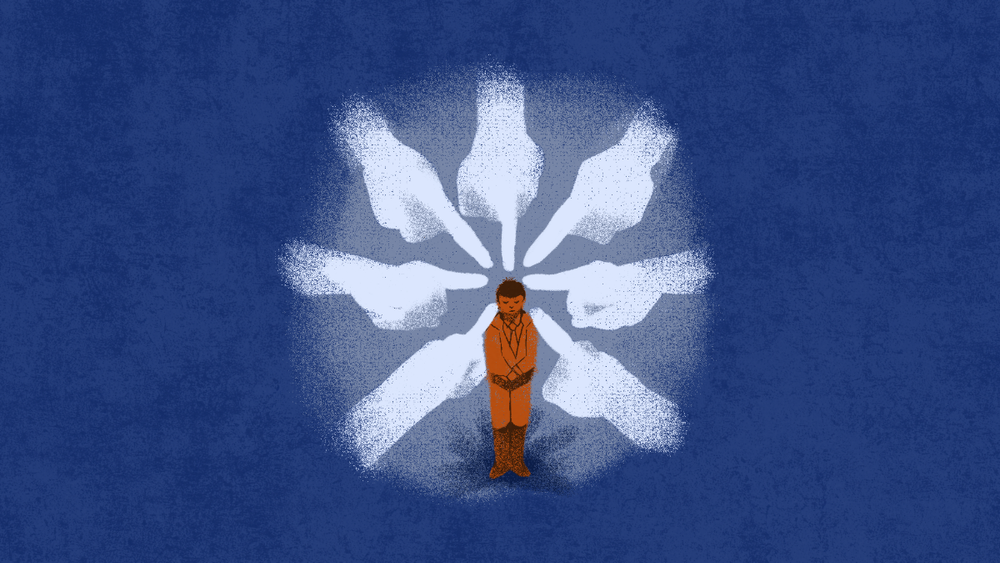
Nevertheless, these kinds of videos, along with the extensive dossiers that organizations like Canary Mission compile on Palestine solidarity activists, are being used to target and arrest activists on suspicion of supporting the political group Hamas and the Palestinian right to self-determination, and therefore, posing a threat to U.S. foreign policy interests. Before the genocide began in October 2023, Canary Mission’s smear campaigns targeted activists’ employment or professional opportunities. However, since the Trump administration targeted Mahmoud Khalil, it has become clear that these dossiers are more than just smear campaigns: They’re an instruction manual on who to detain next.
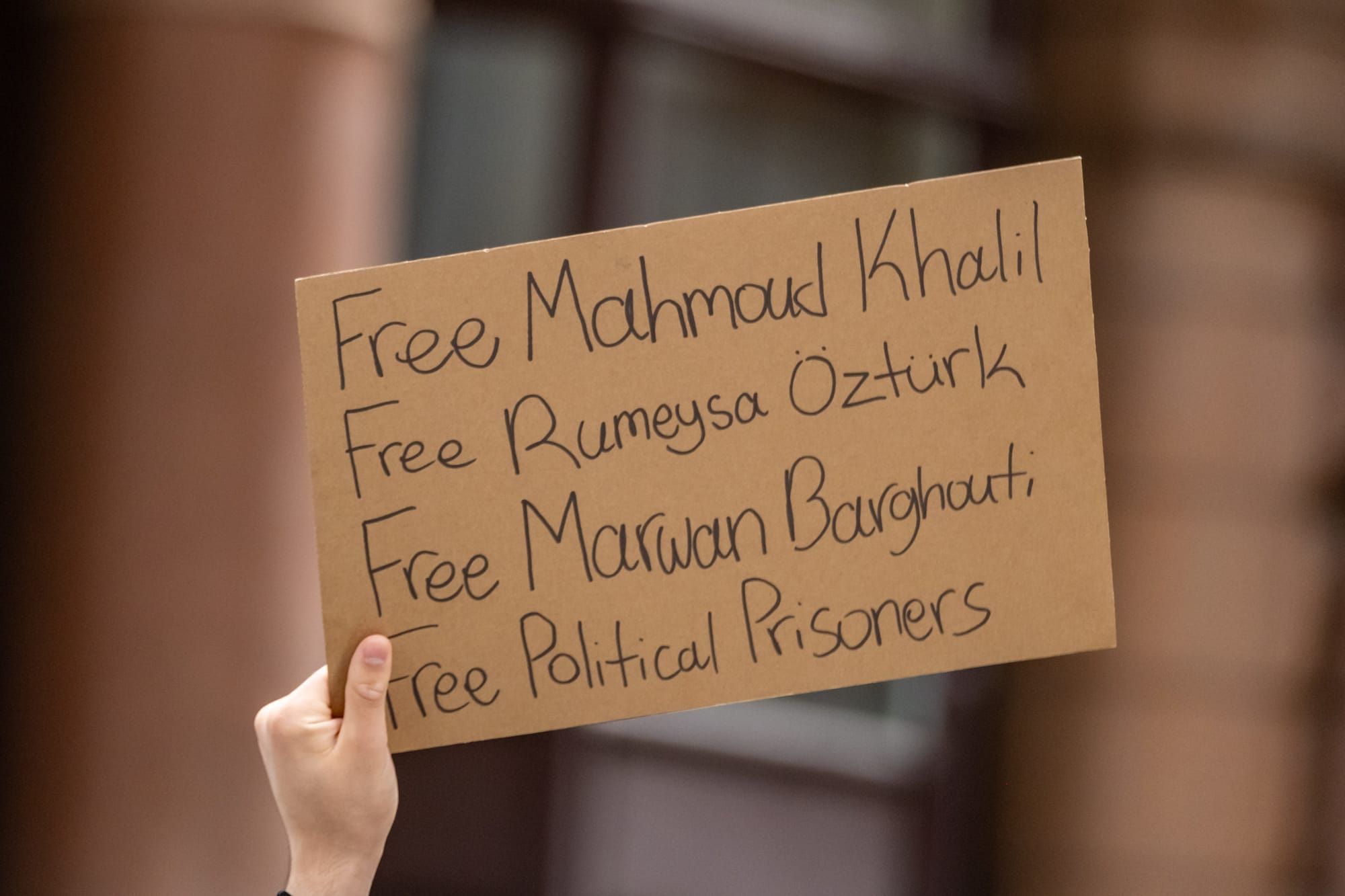
“We are moving from the realm of cultural cancellation and financial consequences to outright criminalization and attacks on Palestinians in this country,” said Eman Abdelhadi, a Palestinian American professor and sociologist at the University of Chicago, pointing out that pages like Canary Mission—along with similar lists published by organizations like Betar and even the Anti-Defamation League —now provide all of the “evidence” necessary for Immigration and Customs Enforcement (ICE) to target and detain activists. Khalil, Rümeysa Öztürk, Yunseo Chung, Badar Khan Suri, and Mohsen Madawi had all been identified by Canary Mission.
They no longer feel that it’s enough to smear us or call our employers. They effectively can no longer win on ideological grounds.
Eman Abdelhadi, University of Chicago professor
“I think it is important to see this as the markings of Zionism’s weakness,” Abdelhadi said, adding that unleashing the power of the state shows that Zionism is losing public support. “They no longer feel that it’s enough to smear us or call our employers,” she continued. “They effectively can no longer win on ideological grounds.”
Unsurprisingly, a review of court documents found that the U.S. government cited inaccurate tabloid coverage in its case against Khalil. Meanwhile, Secretary of State Marco Rubio has suggested using artificial intelligence tools to scrape social media accounts and compile more lists of “Hamas sympathizers” eligible for deportation. Given that Canary Mission and affiliated doxxing initiatives liberally scatter the words “Hamas” and “pro-Hamas encampment” throughout each profile, it is easy to imagine how an AI tool, programmed to find these words, would pick up on their embellished context and create blacklists of people who have done nothing wrong.
Nevertheless, Canary Mission has been able to operate largely unchallenged. While the website invites anyone who believes that they do not deserve to be identified by Canary Mission to make their case—and features “ex-Canary” testimonies—it is difficult to have a profile removed otherwise, even when it’s posted without the subject’s consent. While the Chicago chapter of the Council on American-Islamic Relations has attempted to use Illinois anti-doxxing legislation to sue Canary Mission on behalf of a client who experienced distress after appearing on the website, Canary Mission argues that it uses open-source information to compile its testimonies and that all of it is verified facts.
However, this “open-source” information is taken out of context, edited, and clipped to fit the Zionist narrative that anyone condemning Israel’s occupation of Palestine and the ongoing genocide in Gaza is an antisemitic terrorism sympathizer. Activists who speak openly about Palestine run the risk of having their words misconstrued and taken out of context, being forced to live with the consequences.
“If you think you might be at risk, set up alerts for your name,” advised Dia Kayyali, a Syrian American technology and human rights consultant, adding that if it takes too much of a toll on your mental health, someone else can monitor the alert.
“It’s definitely a good time to lock down your social media,” they continued. They recommended data removal services, like DeleteMe, for anyone trying to scrub their personal information off the internet. A low-cost alternative is Kanary, which offers some data removal services for free. “One thing a lot of guides don’t mention is talk to your friends and family, let them know you’re concerned,” Kayyali said. “Ask for them not to reveal your address, your location, or any other sensitive information.”
Even though the U.S. recently reversed a decision to cancel more than 1,200 student visas, students who have been identified by Canary Mission and similar websites are still living in fear of what comes next. Egyptian writer and former political prisoner Abdelrahman Elgendy eloquently describes his decision to leave the U.S. in an essay for The Nation, stating that he didn’t go into exile in the U.S. only to become a political prisoner all over again. While Elgendy is one of a handful of people who have publicly shared their experience, hundreds—perhaps thousands—of others are in hiding, unable to speak openly about their experiences out of the same fears.
All of this is happening during a looming recession, when even U.S. citizens worry about their job prospects. “Jobs are harder to find. Wages are falling and our social safety net is being cut,” Abdelhadi said, adding that President Donald Trump’s timing actively discourages citizens who would want to express their solidarity for Palestine from speaking out. “Increasingly, people are worried about how they’re going to survive in this society.”
Meanwhile, Israel has escalated its genocide in Gaza while its politicians loudly express genocidal intent in occupying the entire besieged territory. Israel is starving Gaza and committing the war crimes of withholding aid, food, fuel, and other essential supplies, and drone-bombing civilians. The documented death toll has reached over 52,000, including 15,000 children, with estimates from The Lancet estimating the true toll to be 40% higher. While activists in the U.S. are targeted for arrest, journalists and humanitarians in Gaza are systematically killed, making Gaza the most dangerous place on earth to be a journalist. As Trump employs his “shock and awe” tactics in the U.S., these war crimes continue, largely unchecked.
Nevertheless, Abdelhadi said that it is precisely Trump’s full-pronged attacks that make this such a potentially powerful moment for the movement for justice in Palestine.
“We need to figure out who our potential allies are and what we need to do to move them into action,” she said, adding that freedom of speech, the right to assemble, and the right to academic freedom are all under threat right now. “We’re extremely well-positioned to do this. It is more obvious than ever before that Zionists are willing to literally sacrifice every liberal promise of this society at the altar of Zionism.”
Editorial Team:
Lara Witt, Lead Editor
Carolyn Copeland, Top Editor
Rashmee Kumar, Copy Editor
Author
Anna Lekas Miller is a writer and journalist who covers stories of the ways that conflict and migration shape the lives of people around the world. She is the author of the book Love Across Borders, a
Sign up for Prism newsletters.
Stay up to date with curated collection of our top stories.