California’s plan to rebrand prisons doesn’t consider climate change
At a time when the window to mitigate the worst effects of climate change is closing, Gov. Gavin Newsom is placing political goals ahead of data-based policy proposals
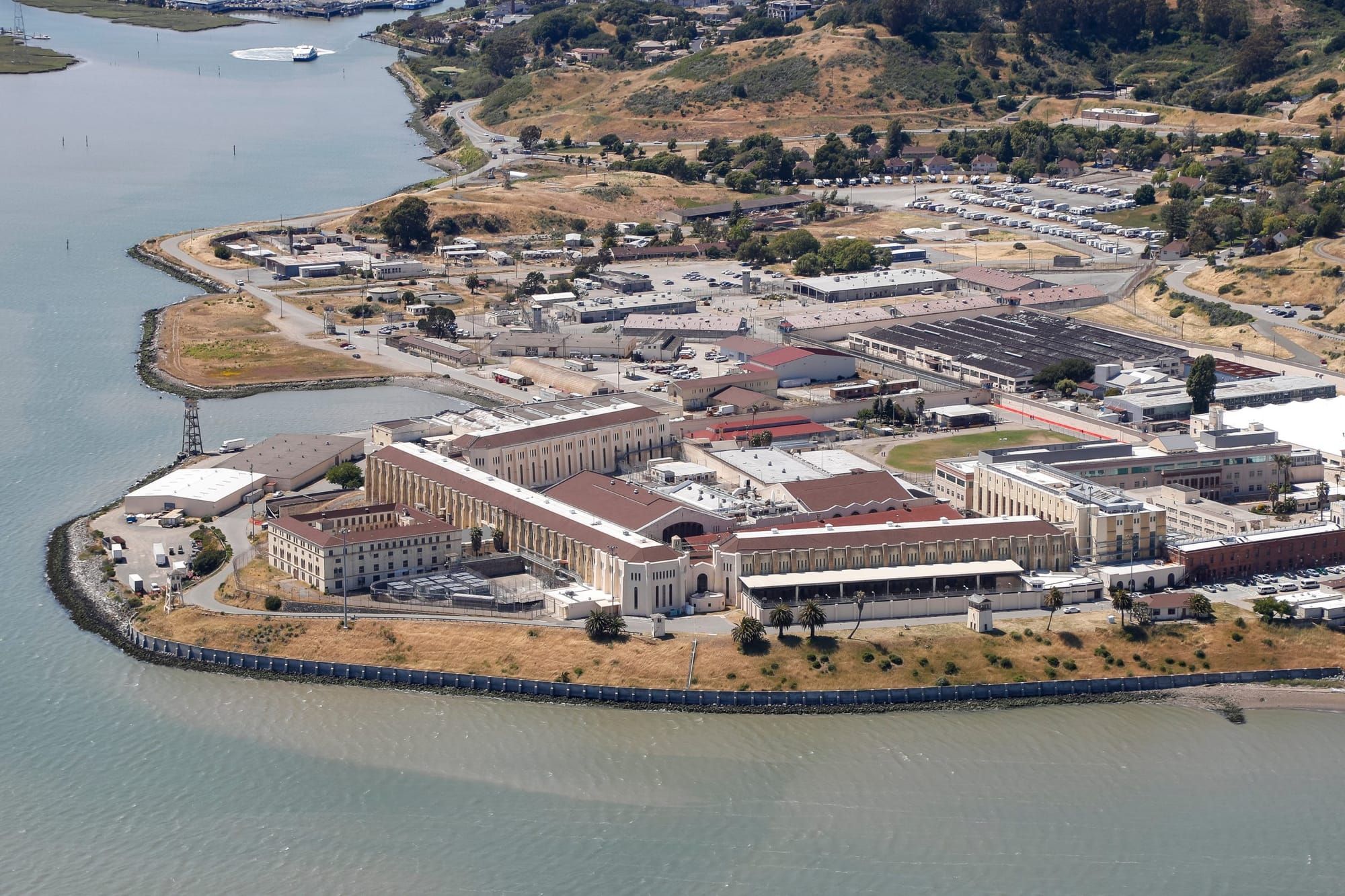
The state of California is attempting to rebrand incarceration with a new building and a promise for “normalcy,” a public relations move that could cost taxpayers billions of dollars.
On the heels of a nationwide mass movement for decarceration and police reform in 2020 and 2021, the statewide umbrella organization known as CURB, or Californians United for a Responsible Budget, released a plan that would catalyze the call for justice into substantive change to California prisons. “The People’s Plan for Prison Closure” calls for the California Gov. Gavin Newsom to close 10 prisons by 2025. Research and testimony detailed in the report outline the manifold reasons for closure: the state’s responsibility for the poor health outcomes of incarcerated people, the need for increased investment in communities recovering from the shock of COVID-19, and mounting evidence that locking people up is a misguided means of addressing social ills. The state has committed to closing four prisons, though it has the ability to close at least five more by 2027 due to the decreasing incarcerated population.
Rather than heed the call, this year, Newsom responded with a proposal of his own to reform San Quentin, the oldest men’s prison in the state. The pivot is both confusing and precedent-setting, illustrating the state’s history of transferring harm under the guise of “reform.” There is also a tandem proposal by the California Department of Corrections and Rehabilitation (CDCR) to enact related reforms to create a “California model” for incarceration—an homage to Nordic models of imprisonment.
But California’s quest to rebrand prisons raises many larger and far more pressing issues, including the significant overlap among the ways that policing, incarceration, and environmental and climate injustices stymie democratic participation, the accumulation of intergenerational wealth, and individual and familial health outcomes. At a time when the window to mitigate the worst effects of climate change is closing, advocates are worried that Newsom is placing political goals ahead of data-based policy proposals.
According to advocates, the real problem is that the Democratic governor wants to have it both ways. Newsom wants to establish a legacy of environmental activism against Big Oil and other major polluters while also championing changes to the state’s prison system. Advocates say the governor’s plan is nothing more than a high-cost vanity project intended to mollify voters invested in maintaining the status quo.
A blank check for prison construction
Steven Brooks was at San Quentin on March 17 when Newsom announced his plan. The governor explained that he wanted to build a new “education and vocational center” on the grounds of the San Quentin prison to create “the preeminent restorative justice facility in the world.” Despite the purported goals of programming, advocates say the project’s $360 million price tag is allocated only for construction costs. Another $20 million comes from the state’s general fund for demolition and site preparation. Newsom wants to accomplish the project by the end of 2025. If this “California model” of incarceration is replicated across the state, it will cost taxpayers $20 billion over the next 25 years when factoring in calculations for debt servicing.
Brooks is the editor-in-chief of the award-winning newspaper, the San Quentin News, run by journalists incarcerated at the prison. He’s also one of the leaders of People in Blue, an organizing hub at San Quentin. According to People in Blue, the “restorative justice” facility’s construction “will eliminate existing rehabilitative programs serving hundreds of incarcerated people, create hazardous conditions from the spread of asbestos, toxic mold, and lead particles, and lead to constant delays and shutdowns of prison programming due to the need to move heavy equipment.” It should also be noted that the governor waived the California Environmental Quality Act as part of his proposal, meaning there won’t be an environmental impact review or an opportunity for advocacy groups to file objections based on report findings.
“You can’t use a building to change anything for people living and working in the prison system,” Brooks said. “That change has to be cultural.” And as for the $360 million price tag? “We don’t believe that is a smart way to spend money,” he said.
As one incarcerated writer, Christopher Blackwell, said on X (formerly known as Twitter), “Us prisoners have noticed an inverse correlation between Norway model rhetoric and our actual experiences. The more politicians travel to Norway and brag about ‘humane’ prisons, the harsher conditions are for us inside. Been down 20 years and in some ways it’s worse than ever.”
The move is reminiscent of when the corrections department added the word “rehabilitation” to its title in 2004 in an attempt to rebrand what was then known as the California Department of Corrections (CDCR). “I think in some quarters, there was a belief that the insertion of ‘rehabilitation’ into the formal presentation and writing of the California state prison system was actually going to accomplish something decent,” said Dylan Rodríguez, an abolitionist, writer, and professor at University of California, Riverside.
Newsom and CDCR are “engaging in a form of public fraud because the term rehabilitation has essentially become meaningless,” Rodríguez said. “It’s another example of how the concept of ‘rehabilitation’ is actually the problem … They want people to believe that reforming the prison will somehow ameliorate [an] institution that is fundamentally premised on terror.”
Other officials balked at the price tag while emphasizing that San Quentin’s media, education, and trade programs already far outpace those of other state prisons. “Almost all of the other prisons need it more than San Quentin,” Don Specter, the executive director of the legal advocacy group Prison Law Office, told The Sacramento Bee.
“Under the guise of rehabilitation, [it’s] an ill-defined model that could mean anything,” said Brian Kaneda, the executive director of CURB. “They’ve said publicly that [San Quentin is] an experiment, and right now they’re sending the California model—which has virtually no parameters—to eight other prisons.”
Even the state’s own independent, nonpartisan Legislative Analyst’s Office (LAO) that evaluates bills and budget items urged legislators to reject the governor’s request for funding due to lack of transparency around what exactly the funding would be used for. The agency also noted the legislature’s goals of closing prisons to save money, alluding to budgetary concerns the San Quentin project would only exacerbate.
Caitlin O’Neil, author of the report on the San Quentin project, said both the project’s request for open-ended funding and the rushed timeline was “highly irregular” and “extremely problematic.”
“The legislature has really no sense … of what these buildings are going to be used for, how many rooms [they] are going to have, what the ongoing costs are to actually hire the teachers to work in the classroom—if that’s what is even going to be in there,” O’Neil said.
The report also highlights that success measures for the San Quentin project haven’t been outlined. Is the goal to reduce recidivism, address rates of illness or suicide within prisons, or address concerns of those who work in them? It’s unclear, and success measures haven’t been defined for CDCR’s operations as a whole.
Despite questions of the hurried design and construction process, the exorbitant price, and the legislature’s stated desire to lower the cost of state prisons rather than raise it, Assemblymember Mia Bonta, the Democrat from Alameda and Chair of the Assembly Budget Subcommittee, added the item to the budget this past spring. But it was for a trade: Newsom could have his San Quentin rehabilitation project if CDCR was required to produce a report on which prisons the state could close, mostly based on capacity.
According to earlier reports from the LAO, state prisons currently have 15,000 unused beds, a number that’s expected to increase by 5,000 in the next four years. Changes to sentencing laws, shifting judicial attitudes around sentencing, and early pandemic releases contributed to these numbers.
Advocates say they’ve heard from legislators who feel as if there’s no one running point on how San Quentin’s new programs will function, or how the so-called California model will expand to other prisons. The public details of the governor’s plan are indeed confounding. Why would a prison investment project follow prison closures? Law enforcement and prison guards have opposed reform for decades, so why is it now met with excitement? In 2011, the last time California enacted reforms that lowered the number of those incarcerated in prison, CDCR pushed the responsibility onto local jails that were ill-equipped for the job. The only category of crime that increased was auto theft, by about 17%—far lower and far fewer kinds of crime charges than critics had been fearmongering about. The most noticeable rise came in the number of those who died while under the care and custody of jail officials, with the state having effectively solved “one problem and created another,” according to reporting from ProPublica.
At other points in history, California attempted to revamp the way it incarcerated people, though it has never lowered its corrections budget even as the number of those it incarcerates decreased. The boom of prison construction started in 1970s, after the country began its so-called “war on crime.” During this period, the judicial system indiscriminately criminalized Black people, expanded prison construction, and punished crimes related to drugs in harsh and unprecedented ways. The three-strikes law, first piloted in California, forced judges to order the maximum sentence for people who had been convicted of a third crime if their first two convictions were considered violent or serious. Since its implementation in 1994, the three-strikes law has cost taxpayers half a billion dollars every year.
From 1984 to 2013, the state built 22 of its 34 prisons, incarcerating 165,000 people at its peak in 2006—double what the system was designed for. At the time, the prison industry was riding a wave of successful lobbying and election influence by outspending other unions five or 10 times the size, influencing local district attorney races to favor “tough on crime” candidates, and working to pass local measures to protect police officers from accountability.
As one Stanford researcher put it in 2006 in his analysis of the corrections officer union’s political influence, “The formula is simple: more prisoners leads to more prisons; more prisons require more guards; more guards equal more fundraising capability; fundraising, of course, translates into political influence.”
In 2011, the Supreme Court ordered that the state take steps to reduce the number of people incarcerated to 137.5% of its design capacity to alleviate conditions that led to 64 preventable deaths per year—a violation of the Constitution’s Eighth Amendment prohibiting cruel and unusual punishment. As of May, the state incarcerates 96,000 people, operating at 112.9% of its design capacity. Across California, as of 2021, there are still five prisons near or above 150% capacity. In November, the state’s incarceration arm reported to the legislature that the issue of capacity was “complex” and that more physical space was needed to adhere to the new goals of “rehabilitation.” But the report doesn’t outline clear steps toward simplifying what it claims is a complex issue: letting people go home.
Even with reforms, the political influence of the incarceration industry remains.
Legislators’ efforts to rethink California’s penal code, address the state’s violation of incarcerated people’s constitutional rights, or implement changes long demanded by advocates occur only after conditions in prisons reach a crisis point. California courts have found CDCR guilty of violating due process by falsifying testimony, and its guards have been convicted of rape. In May 2020, San Quentin officials also allowed for the transfer of 122 men into the prison, which introduced COVID-19 and killed 26 people. Recently, a judge ruled that family members of the deceased may sue the guards responsible for the willful exposure of vulnerable people to a deadly disease.
What advocates are trying to make sense of is the sheer contradiction between the ways that CDCR operates and what it now lauds as a new and healthful method of incarceration. And while Newsom champions the biggest prison reform project in a decade, he has spent the entirety of his governorship opposing voter- and legislature-approved prison reform measures.
In 2020, Newsom approved a bill that terminated contracts with corporations operating private prisons in the state because they “contribute to over-incarceration” and “do not reflect our values.” But as Capitol Weekly reported, then-Assemblymember Rob Bonta’s proposal allowed private contractors to maintain $200 million in annual profits by operating “community corrections” programs—incarceration by another name.
Then, in 2022, Newsom vetoed legislation that would have mandated CDCR implement rehabilitation programming to provide job training for incarcerated people. Funding for the program would have come out of CDCR’s budget rather than the state’s general budget. Earlier that year, he also vetoed a bill that would have reformed some conditions for solitary confinement and banned it for specific populations that included pregnant people. The state’s current solitary confinement practice is defined as torture, per the U.N. And in 2020, after voters in Los Angeles County approved a measure that allocated funds directly to services within the community, the sheriff’s deputies’ union spent three years fighting to get the measure overturned. The sheriff’s deputies’ effort failed.
Why is the governor attempting a prison reform program when efforts to curb staff and institutional violations of constitutional rights haven’t worked? And why would the governor propose his own reform just six months after vetoing legislation that would have enacted similar changes?
That’s what advocates with CURB want to know. One theory rests on the power of the incarceration industry. With the San Quentin model, where incarcerated people may have larger cells and prisons might have more programmatic space, prisons can remain open even while decreasing the number of people incarcerated. One CURB advocate told Prism it’s important to consider the state’s economy. During the most recent budget process, California prisons received more money than ever before: $18 billion, plus an additional $1 billion in personnel raises, allowing the state of California to continue profiting from restricting the free movement of what is now a decreasing number of people.
Incarcerated people live on the front lines of climate change
Advocates say Newsom is pushing efforts in a dangerous direction. While the governor focuses on executing a project that offers the public few details about why it exists and what it will accomplish, there are real climate concerns CDCR has yet to account for. Even more concerning, there’s no oversight of the corrections department’s lack of preparation, as the state’s own guiding emergency preparedness document doesn’t include climate emergencies faced by CDCR or its facilities.
Already, California’s prisons face a host of environmental and climate injustices. Of the state’s 34 prisons, at least 21 have contaminated water sources that are toxic for human consumption. As a result, one prison spends $46,000 per month on bottled water. Nearly half of state prisons are located in parts of the state with some of the worst air quality, and nine prisons are built in a region of California where incarcerated people are more susceptible to a fungal infection called Valley Fever caused by a fungus in soil and dirt. According to the Prison Law Office, most people are not infected with Valley Fever, and of those who are infected, death is rare. But that’s not the case inside at least two CDCR prisons, Pleasant Valley and Avenal, where incarcerated people are 20 times more likely to become infected.
The people incarcerated inside CDCR facilities have no choice but to stand on the front lines of climate change. As outlined in a 2023 report by the Ella Baker Center for Human Rights, increases in extreme heat, flooding, and wildfire put incarcerated people at risk. When the 2021 Dixie Fire traveled devastatingly close to the California Correctional Center in Susanville, California, incarcerated people spent days and sometimes weeks without power, functional plumbing, or clean air. Incarcerated people at the Susanville prison reported having never experienced an evacuation drill, which was echoed in findings from the Ella Baker Center’s report. According to the organization, 80% of incarcerated people across state prisons did not feel prepared evacuating in the case of fire, and 84% didn’t feel prepared for a flood. Almost two-thirds of incarcerated people say that they didn’t have access to air conditioning during extremely hot days or that they experienced prolonged numbness in their hands and feet due to extreme cold.
Every potential emergency that CDCR has no plan for—including for the San Quentin Prison—only has the potential to worsen in frequency and severity under the current climate reality. As the Ella Baker Center report noted, due to climate change, the past decade has brought eight of the 10 hottest years on record—and the past five years have included the most destructive wildfires in state history. Increased rainfall and hotter conditions due to climate change have also increased the risk of Valley Fever. If climate scenarios carry out as predicted, sea-level rise will render many parts of the San Quentin grounds inoperable by 2100.
“It’s not a safe place for people to be, and to model a whole rehabilitation program [in an] already vulnerable area does seem to me to be a poor decision,” said Maura O’Neill, one of the authors of the Ella Baker Center report.
For a population that’s entirely dependent on the preparation of others, the lack of climate consideration is a grave concern, O’Neill added. But even if the corrections department was directed by state leaders to evaluate climate concerns, previous legislation and current tools used by the state to evaluate climate issues seemingly pretend that incarcerated people don’t exist.
“In my opinion, no one’s really paying attention to what’s going on inside and around prisons as far as climate is concerned,” O’Neill said.
CalEnviroScreen, a state tool that maps environmental hazards by census tract, with specific consideration for disadvantaged communities and environmental injustice, doesn’t include measurements of environmental conditions surrounding prisons. A 2020 Legislative Affairs Office report on the impact of sea-level rise on California doesn’t include any mention of state prisons in either its evaluation of preparedness or cost estimation. The paucity of data makes it difficult for legislators to direct funds or build legislation to address the needs of incarcerated people.
What O’Neill wants to know is who’s accountable for the lack of preparedness—and how can a “California model” for a prison not include considerations for the unique climate emergencies California will experience? “Trying to move forward with some greater model when this institution just isn’t even functional to keep people safe feels like a huge oversight,” she said.
To address the consequences of climate change, authors of the Ella Baker Center report urge CDCR and Newsom to reduce the size of the incarcerated population by 50,000 and close prisons most vulnerable to climate hazards. They also advocate for the reallocation of corrections’ vast budget to address incarcerated people’s immediate concerns: access to shade, air conditioning, heating, N95 masks, and back-up generators and an adequate plan for inevitable climate disasters.
For advocates, the lack of accountability for existing climate change challenges—and the lack of preparedness for those in the future—illustrate how climate justice and justice for those in the criminal legal system go hand in hand.
“The toxicity that permeates people’s mental health, their spiritual health, and ultimately their physiological health—they demonstrate the interconnectedness between the toxicity of the physical world and the toxicity of violent power relationships,” Rodríguez said.
Still, prisons aren’t even where environmental injustices begin. Research shows that people living in census tracts with higher instances of lead exposure and in neighborhoods suffering from high rates of asthma are more likely to be incarcerated as adults. In the past three years, the state has spent $10 billion on housing programs, just over half of what a single year of the corrections’ budget is. Disproportionate rates of incarceration are also linked with other consequences of underfunding, including poor health outcomes.
People in prison tend to be recipients of underinvestment and over-policing, disproportionately affecting California Indians and Black Californians, racial groups that bear the least responsibility for a rapidly changing climate system yet live on its front lines no matter where they reside. As a recent article published by High Country News and Type Investigations underscored, the planet is “locked in” to 1.5 degrees of warming, bringing about ecological changes that require large-scale efforts rather than incremental ones. But Washington, like California, doesn’t have a climate adaptation plan for its prisons, meaning that those locked inside are forced to wait while those in charge decide their fate. As the magazine asks: Why not let people out?
The price tag of the San Quentin reform project looms large in the minds of advocates, given the needs that continue to go unaddressed. For every dollar that’s spent on this project, that’s one not spent in communities that need it, Kaneda said. “If people had access to those, they probably wouldn’t become incarcerated in the first place,” he said.
According to Kaneda, the governor’s effort to model Norway’s prisons is ironic. The country in question maintains a low incarcerated population largely because of the programs it funds, including universal health care, free education, and affordable housing.
Of all the ideas to export from Norway, why prisons?
Author

ray levy uyeda is a staff reporter at Prism, focusing on environmental and climate justice.
Sign up for Prism newsletters.
Stay up to date with curated collection of our top stories.