Redlining links Black women and higher rates of breast cancer
Recent research shows that living in redlined neighborhoods not only increases the risk of breast cancer for Black women, but also shapes their survival rates and broader health outcomes
Real journalists wrote and edited this (not AI)—independent, community-driven journalism survives because you back it. Donate to sustain Prism’s mission and the humans behind it.
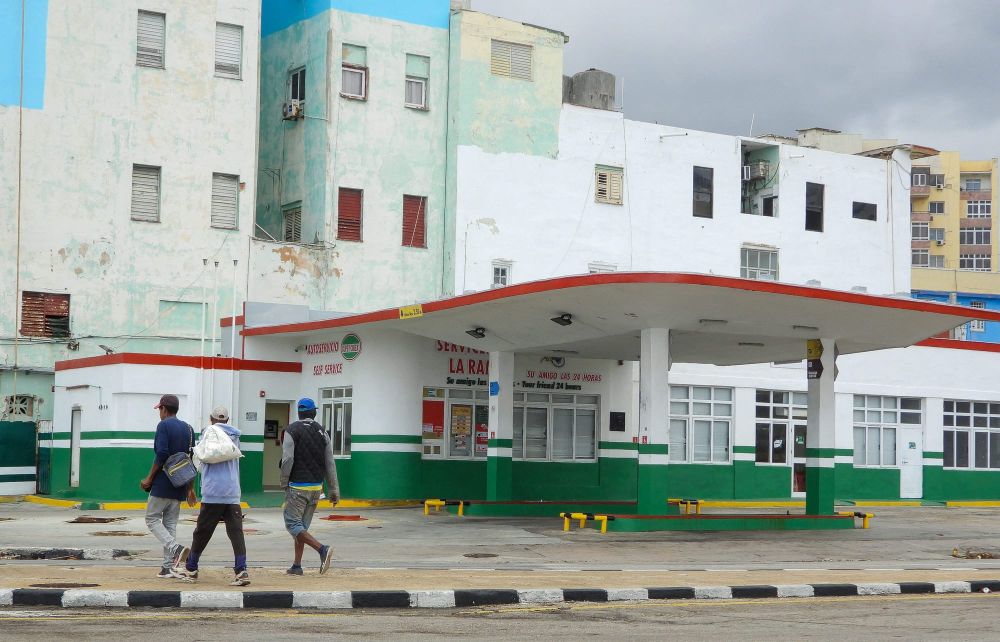
During the Great Migration, a young Delores Martin and her family moved in 1945 from Pine Bluff, Arkansas, to Sioux City, Iowa. Like many of Sioux City’s Black residents, they landed in a redlined neighborhood, home to meatpacking plants and acres of stockyards, where hogs and cattle were corralled, sold, and slaughtered. The stench of blood and manure hung in the air, clung to their nostrils, and filled their lungs, along with coal ash from the railroads that spliced the neighborhood.
Early on, Martin knew “she didn’t want to live in that type of environment,” said her granddaughter, Jasmine Miller-Kleinhenz. And from her 20s on, Martin successfully avoided these kinds of neighborhoods.
“Even if she had to live in a very small apartment, she always lived in one of the better areas to make sure her kids had access to good education,” Miller-Kleinhenz told Prism. Along the way, Martin became a lawyer and worked for the Illinois attorney general. But despite Martin’s storybook success, her girlhood environment later proved to be inescapable.
In middle age, Martin was diagnosed with triple-negative breast cancer, a pernicious kind of cancer immune to the therapies that have saved women’s lives for decades. The perversely resilient disease plagues Black women at higher rates than women of other races, and can be attributed to why Black women die from breast cancer 40% more often than white women. Martin miraculously survived. Some 30 years later, she is still a part of Miller-Kleinhenz’s life, and her battle with breast cancer inspired the work her granddaughter does today.
Miller-Kleinhenz is a cancer researcher at the University of Mississippi Medical Center in Jackson. Over the course of her career, she’s authored studies that show how living in redlined neighborhoods leads to worse breast cancer outcomes.
It’s rare for a researcher’s work to run the gamut from population health to molecular biology. Most prefer to dive deep into a narrow niche. But for Miller-Kleinhenz, playing the polymath is critical to helping realize better breast cancer outcomes for Black women. “The problems are quite complex,” she said, “so to actually have true, lasting change requires someone who’s able to span from the cell to society.”
Even decades after redlining was outlawed, the practice continues to influence who gets sick and who dies. Finding and enacting meaningful solutions is necessary, but by no means simple. According to experts who spoke to Prism, the process must start with mapping the true extent of the problem nationwide, and then getting that information into the hands of lawmakers and other officials who can enact the impactful changes required to make a long-term difference in Black women’s health outcomes.
In the meantime, however, Black women who live in redlined communities remain at risk.
Data tells the story
Miller-Kleinhenz is far from the only researcher illustrating the connection between redlining and breast cancer.
Georgetown University epidemiologist Sarah Lima co-authored two studies last year that underscore how women living in redlined communities are not only overexposed to risk factors for breast cancer, but they also face higher risk of death due to the disease.
In one of the most comprehensive assessments of its kind to date, Lima and her collaborators used two national datasets that include environmental data and health data at the census tract level, which are the small boundaries about the size of a neighborhood that the government uses to track populations and their demographics. This information was combined with data regarding the average grade each tract was assigned by the Home Owners’ Loan Corporation (HOLC) when it created its infamous redlined maps in the second half of the 1930s that guided and homogenized national lending practices that discriminated against Black Americans.
On its maps, HOLC assigned sections of towns a grade based on the neighborhood’s race and class makeup and its physical characteristics, which they then used to assess how “safe” of an investment a loan was for a neighborhood. The grades ranged from A (the best possible place to provide a loan) to D (the most hazardous). Once HOLC determined the contours of the zones and assigned each a letter, the assessors shaded the A-grade neighborhoods in green, the B-grades in blue, the C-grades in yellow, and the D-grades in red. This discriminatory adult coloring book not only influenced who could buy a home, but also where they could buy a home.
Ultimately, the Blacker the neighborhood, the lower the grade HOLC assigned it.
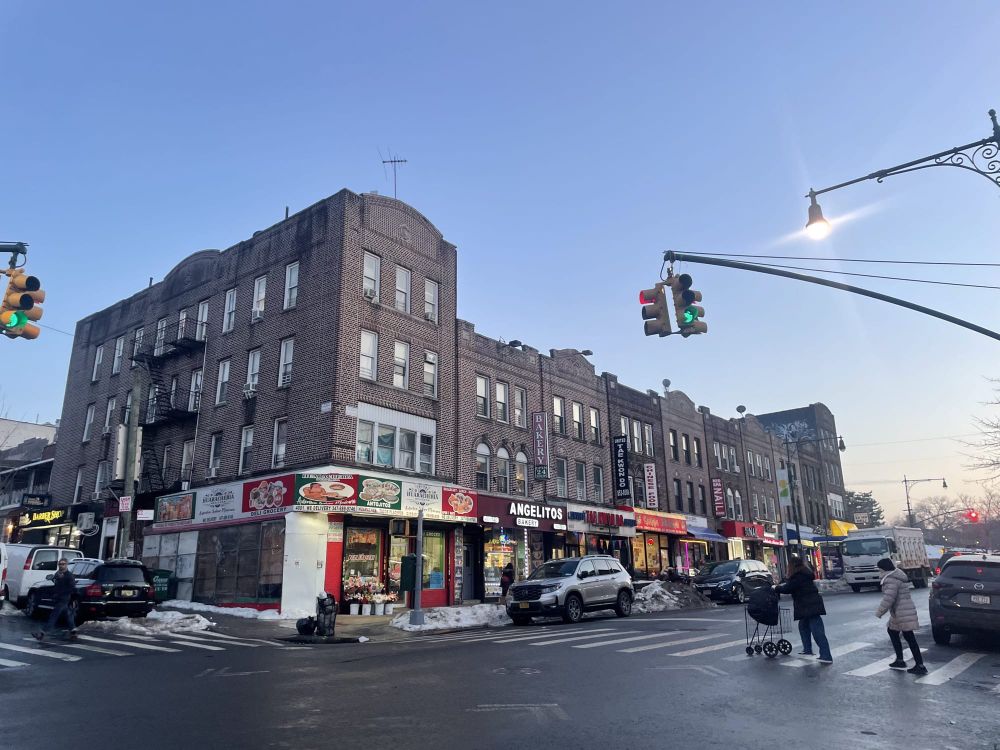
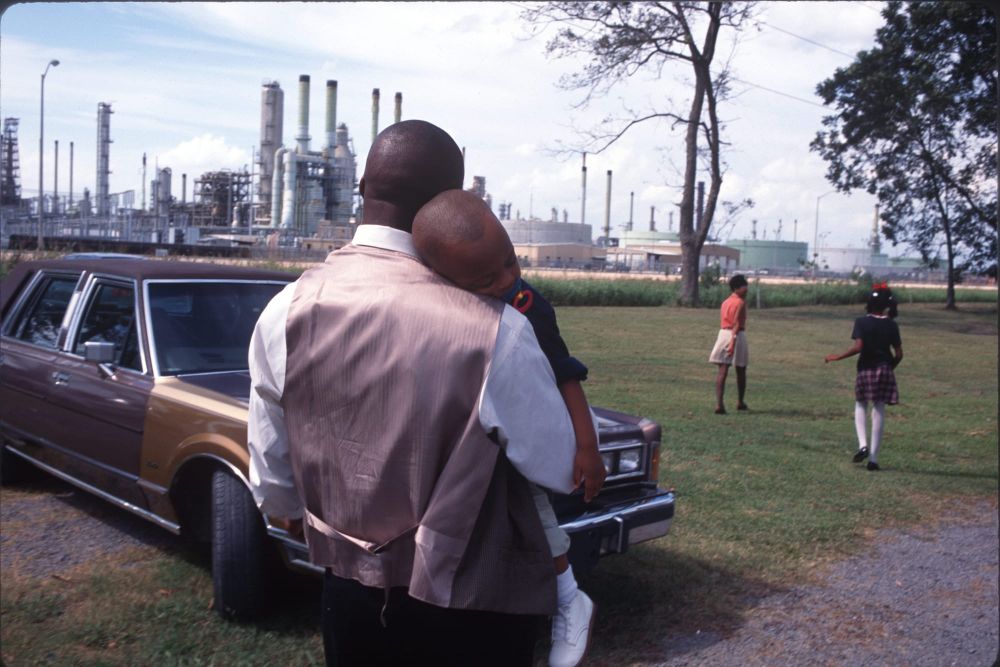
Thanks to the tireless efforts of Black civil rights activists, the Fair Housing Act of 1968 outlawed the practice of redlining—at least on paper. However, the specter of these maps linger today, dictating which neighborhoods have green spaces, hospitals, and well-funded schools, and which have hog waste operations, highways, power plants, and landfills. Residents living in neighborhoods that have effectively become dumping grounds for industry experience serious physical, psychological, and financial consequences.
“They’re just unhealthier environments,” Lima told Prism.
And all of this can be traced back to redlining. Lima’s January 2025 study showed that risk factors for breast cancer tend to cluster in and around historically redlined communities, far more than in the neighborhoods HOLC green-lit for loans. Across the nation, she also found that on average, redlined neighborhoods experience a range of risk factors, such as air pollution, aging infrastructure, segregation, mammography access, lack of health insurance, lower incomes, education level, obesity, smoking, binge drinking, and limited exercise. A-grade neighborhoods saw just a fraction of these risks. In fact, the only cancer hazard affluent areas are more likely to experience is a predilection for binge drinking.
While this national study provides key data that policymakers and urban planners can use to reduce risks for once-redlined communities, the data still has limitations. For example, they can’t use it to assess the risks that any individual woman is exposed to or how these risks may affect her if she develops breast cancer, Lima said.
Still, Lima said she hopes to make her maps publicly available, allowing people to search their city and view their overlapping risks for breast cancer. Each community, city, and region faces their own unique cluster of risk factors, which also means there is no one-size-fits-all solution.
According to Hanxue Wei, a social scientist at New York University with expertise in urban planning, no matter the shape a solution takes, it will require deep collaboration between communities, academics, and policymakers.
“We want to promote place-based policy that could take into account the history of the neighborhood,” Wei said.
And no one knows a neighborhood better than the people who live in it. In part, this is why Miller-Kleinhenz moved to Jackson. Mississippi has some of the worst outcomes for breast cancer in the nation. Making a home in Jackson means that the researcher is constantly confronted with the conditions that cause worse outcomes for Black women.
“How are you going to make an impact if you don’t know the reality of the place?” said Miller-Kleinhenz.
In the end, it’s the way American cities and systems are structured—and the way Black people are treated within them—that prove to be key determinants of health.
“I see how much work it’s going to take to make change. But it doesn’t mean that change can’t happen,” Miller-Kleinhenz said.
There was little research that illustrated quite how much work needs to be done—that is, until last year when Lima and her team published another groundbreaking work.
Lima’s second paper goes further than her previous work by comparing the treatments and outcomes of 61,000 breast cancer patients across New York, leveraging the state’s comprehensive cancer registry over a 10-year period based on the HOLC grade of their neighborhood. New York provided a wealth of data, and no such centralized database exists at the national level. Still, Lima and her co-authors wrote that this work may be “the largest study of its kind to date.”
The results of the study hold little surprise, given Lima’s previous findings: The lower the HOLC grade of an area, the higher the mortality. Between A and D grades, there’s “a 64% higher mortality risk,” Lima said. And, because of systemic racism and the way redlining robs communities of economic opportunities, those who live in these areas are also less likely to carry insurance and receive treatment in the first place.
“When we adjust for health insurance types as well as what treatments the women received, then it goes to a 32% difference” in mortality, Lima explained.
While Lima is hopeful that the two studies can help inform interventions—especially the maps they created that show “risk clusters”—better urban planning won’t solve these systemic problems overnight.
Still, there are women nationwide facing breast cancer in redlined communities, and they can’t wait for multi-year infrastructure projects before they get the support they need.
Community-based interventions
“[The media] still talks about dying,” said Karen Eubanks Jackson. “I’m talking about living.”
Jackson is a breast cancer survivor and the founder of Sisters Network, one of just a few national organizations focused on reducing the disparate outcomes for Black women diagnosed with breast cancer. Through her work, Jackson has seen the way that neighborhood segregation, information gaps about breast cancer, and racism intersect to influence the treatment Black women receive after they’re diagnosed, and even how long it takes for them to get diagnosed in the first place.
“It’s not an even playing field because you are Black, no other reason” Jackson told Prism.
Jackson’s breast cancer diagnosis led her to move to Houston, where Sisters Network is headquartered and the location of some of the best cancer treatment centers in the nation. But access to care is not evenly distributed across Houston, and neighborhoods issued low HOLC grades decades ago still have far fewer physicians. “They’re not building [cancer treatment centers] in our areas,” Jackson said of the city’s Black neighborhoods, “but if they exist, you need to take advantage of it.”
Knowing what care is available and which doctors to go to are just some of the critical information the Sisters Network highlights as key to improving outcomes for Black women. Jackson ultimately believes that a woman’s knowledge is more important than her income level and that there are low-income women receiving high-quality care because “they know how to work the system.”
In general, Black women living in higher income neighborhoods often face even greater disparities in their breast cancer outcomes compared to white women from the same communities, said Miller-Kleinhenz. And some research shows that when a Black woman is diagnosed with cancer, living in a whiter, more affluent neighborhood is no guarantee of a better outcome. In fact, she benefits more from being in a predominantly Black neighborhood, even if it is redlined, because of the social supports provided. This reality reflects what public health researchers call the “ethnic enclave effect.” These are benefits provided to minorities who live in neighborhoods dominated by people from the same background, which aids in insulating them against the corroding influences of racism and often leads to more robust support systems.
“There is a very important psychosocial effect of being with people and feeling connected to your neighborhood,” Lima said.
The Sisters Network and similar organizations help foster that sense of connectedness and support. Jackson’s organizations and its over two dozen local chapters provide support groups for women, and they also match women with companions and patient navigators who will attend medical appointments with them to help ask questions, advocate for them, and ensure that women understand everything their doctor says.
This patient navigation service is central to the work of Chicago’s Equal Hope, which focuses on reducing women’s unequal health outcomes. It was founded in light of research that showed Black women in Chicago were 62% more likely to die from breast cancer than white women, said Equal Hope’s CEO Paris Thomas. The primary reasons for this alarming statistic are access to mammograms, the quality of those mammograms, and access to quality treatments.
To address these issues, Equal Hope employs 11 patient navigators, nine community health workers, and three nurses to serve as many women as possible. The organization also sometimes provides free mammograms to local communities and uses grassroots advocacy to push for policy change. According to Paris, the organization’s local efforts significantly helped reduce the mortality disparity between Black women and white women in Chicago. However, conditions are slowly worsening again, due to the number of women who postponed mammograms during the pandemic and the Trump administration’s slashing of benefits.
Since he took office, President Donald Trump has proved hostile to many of the policies and programs that could have helped address the environmental causes of breast cancer disparities while ensuring access to care for low-income women. Upon his inauguration, Trump rescinded an executive order issued by former President Joe Biden that established federal initiatives aimed at addressing the very kinds of environmental injustices that Lima’s and Miller-Kleinhenz’s research identifies. And with major cutbacks and changes to Medicaid impending, the people who rely on the benefit for health care will be left without access to the services that could otherwise save their lives.
Ultimately, these growing obstacles further highlight the necessity of addressing the systemic issues at the heart of breast cancer disparities, which require aggressive action at a national level if they are to make a difference in Black women’s lives—efforts that appear extremely unlikely under the Trump administration.
“If the policy doesn’t change,” said Jackson, “nothing else is going to change.”
Editorial Team:
Tina Vasquez, Lead Editor
Lara Witt, Top Editor
Rashmee Kumar, Copy Editor
Author
Syris Valentine is a writer and journalist focused on climate change, social justice, and the just transition. Their work has appeared in The Atlantic, Grist, High Country News, Scientific American, a
Sign up for Prism newsletters.
Stay up to date with curated collection of our top stories.