Breaking In: The challenges of making it in the publishing industry from prison
The communication challenges prisons impose on incarcerated writers are now well understood, but what about the hurdles erected by the publishing industry?

In the early fall of 2020, my phone meeting with the op-ed and politics editors of the New York Times went great.
After presenting pitches for several articles, the editors settled on one about the Antiterrorism and Effective Death Penalty Act (AEDPA) of 1996 as it relates to populist politics and the spate of federal executions in 2020. As an incarcerated journalist, publishing an article in a legacy newspaper would be a huge break.
The opportunity came about when a friend reached out to a journalist I’ll call “Dee,” who previously worked at the New York Times and wrote about the death penalty. My friend also sent Dee some of my previously published work about the politics and policies of mass incarceration written for the publication Scalawag. Dee liked my work and helped coordinate a meeting with two editors from the newspaper.
Two weeks later, we sent the op-ed over to the politics editor, who acknowledged receiving the piece.
Then we waited.
A week went by and my friend followed up. The editor assured her they’d get back to us in time. Another week went by, and subsequent emails were ignored. It became clear to us that the editors for some reason changed their minds about publishing the piece. Dee was likewise unresponsive to emails.
About a month later, another friend alerted me to an article Dee published with the New York Times. The piece was similar to my AEDPA pitch, except Dee’s version skewed death penalty statistics and misinformed readers likely unfamiliar with the nuances of capital punishment. I tried to excuse it as a coincidence. However, several months later, Dee published another article with a prestigious magazine that also mimicked one of the pitches she heard me present to editors at her newspaper. Ostensibly the article was about innocent people on death row, but it was offensive to anyone trying to prove a wrongful conviction. Like the AEDPA article, Dee’s conservative slant parroted tough-on-crime talking points.
What frustrated me more than having an opportunistic parachute journalist “borrow” my ideas to create misinformation—and what discouraged me more than my inability to do anything about it—was how I thought I’d finally made it in the publishing industry, only to discover that success was still out of my reach.
“Making it” as a writer in today’s industry is arguably harder than it’s ever been, and making a living from the craft is often out of the realm of possibility for many marginalized people. For incarcerated writers like myself, the chances are even slimmer. To get our writing out into the world, we must overcome significant communication challenges and other barriers imposed on us by the prison system—a reality that has been the subject of a great deal of reporting. Less understood are the challenges and barriers imposed on incarcerated writers by the actual publishing industry, where editors, publishers, and agents rarely judge the merit of our work and instead fixate on false ideas about what our confinement may mean for the work we’re capable of producing.
For us, success is much harder to come by than it should be.
Communication and proxies
My foray into the publishing industry began when a fellow prisoner gave me a copy of J Journal, a justice-themed literary magazine housed at City University of New York’s John Jay College of Criminal Justice. With the help of my friend Tara, who communicated revisions to the publication’s editor on my behalf, the journal accepted my handwritten essay “Domesticated,” a description of life on North Carolina’s death row and our interactions with a family of stray cats. The piece appeared in the fall 2015 issue of J Journal.
Without access to a phone, typewriter, or any technology at the time, submitting writing to a publisher was a particularly daunting task and required investing a lot of time, energy, effort, and resources with no guarantee of a return. It also meant relying on the U.S Postal Service, which can take weeks and can prove costly for larger manuscripts and unanswered queries. Also, most agents and publishers aren’t likely to accept handwritten submissions or query letters. For these basic reasons, incarcerated writers often need friends on the outside who can type up a handwritten manuscript or query letter, email them to a publisher or agent, and facilitate communication. These friends become our literary proxies, acting as the go-between with editors and other members of the media interested in publishing our work or otherwise uplifting our stories.
When I first submitted my writing for publication, I only knew of a few places other than the J Journal: The Marshall Project, PEN America’s Prison Writing Contest, and PrisonWriters.com. I understood these organizations were seen as benevolent toward incarcerated writers, though I also knew they provided minimal feedback, little or no honorarium, and were generally on the fringe of the publishing industry. But these publications also accepted writing from people in prison because they are genuinely interested in the incarcerated perspective of the criminal legal system.
In 2016, North Carolina’s death row gained regular access to phones, making communication with editors and a proxy much easier. Post pandemic, many prison systems took an additional step in aiding communication by providing incarcerated people digital tablets and access to helpful, albeit expensive, instant messaging platforms like GettingOut, Securus, JPay, and Corrlinks. When North Carolina implemented its prison tablet program, what previously took me two weeks to write, type up, and mail to an editor could now be done in one day. While it did not completely remove the need for proxies on the outside to help communicate with publishers and agents, it did minimize their burden.
It’s supremely helpful when editors and others in the publishing industry familiarize themselves with the instant messaging platforms accessible to writers in prison, though many don’t—placing more of a burden on incarcerated writers and their proxies.
Sanya Huber, the editor-in-chief of the literary magazine Dogwood: A Journal of Poetry and Prose, wrote about the limitations of prison messaging services shortly after working with an incarcerated writer for the first time.
After Huber published the short fiction piece “The Pinch-Hitter” by incarcerated writer Sam Jenkins, Dogwood received more submissions from people in prison. Many of these writers provided insights into how challenging it can be to get published in prison, detailing lack of access to word-processing programs and file storage and how limited internet access makes it hard to read publications’ submission guidelines. Some writers had access to email but correspondents had to be approved by prison administrators. Others had to use a costly special system monitored and censored by prison administrators.
“I realized that I’d actually been receiving e-mail requests to communicate for years through such systems,” Huber wrote. “One of them, called Corrlinks, which is owned by the for-profit company Advanced Technologies Group, arrives with the vague anonymous message, ‘An inmate would like to connect with you.’ I didn’t know any of these names and, because the system does not include subject lines with emails, I had not known these requests were from incarcerated writers looking to communicate about Dogwood. So I ignored them, assuming they were spam.”
If an editor is so incurious about what comes through a designated submissions portal that they ignore an email that looks a little different, what chance does an incarcerated writer have of ever getting past this initial barrier? Signing up for a prison messaging app might not occur to an editor, but receiving and responding to queries—wherever they come from—should be part of the process, which also means being open to the possibility of submissions from people in prison.
Research and development
Knowing where to submit writing for publication is as important as having a proxy on the outside. Simply put: Editors, publishers, and literary agents do not make themselves accessible to incarcerated writers. Website submission guidelines and portals are only useful to people who have full access to the internet and can see them. Many publishers—including those focused on “justice” and claiming a desire to fight mass incarceration—require writers to have an agent. This requirement imposes an obstacle on all writers, but especially those in prison. Obtaining an agent is basically the equivalent of going through a submission process twice, with no guarantee you will get accepted either time and if you do, you’ll owe a percentage of your compensation to someone effectively acting as another industry gatekeeper. An agent can mean the difference between publication with a low-level independent press and a top-five publishing house, obscurity or the best sellers list, but most agents won’t represent incarcerated writers. They assume the logistics are too challenging, or they lack any frame of reference for the potential relationship.
Many of us found other routes to gain the information and access we needed. Since 1921, The Writer’s Market, which lists hundreds of literary agents, book publishers, consumer magazines, trade journals, contests, and awards, proved to be an important resource for anyone interested in breaking into the publishing industry.
Marketed as “the most trusted guides to publishing,” each edition included contact information, submission information, and tips for writers, demystifying the process for querying and submitting work to agents and publishers.
The publication no longer exists after filing for bankruptcy in 2019. While it was broadly helpful, it had no special advice for incarcerated writers and gave little insight into how much more difficult it would be for incarcerated writers to be accepted or rejected. For example, the many contests the publication suggested for writers to break into the industry had application fees. Contest organizers are also unlikely to be sympathetic toward incarcerated writers who are unable to pay the costs associated with the query and submission processes. Filing fees of $25, $50, or $75 might seem insignificant, but incarcerated people are generally indigent and paid pennies a day for labor—if they’re paid at all. Many rely on friends and family for necessities. Writing from prison in the mere hope of getting published is a heavy investment that quickly adds up.
Rarely do publishers commission articles from incarcerated writers unless they have an established relationship. Almost all of my publishing opportunities have come through word-of-mouth referrals from other incarcerated writers and friends on the outside. This is how I discovered the J Journal, PEN America, PrisonWriters.com, InsideHigherEd.com, The Marshall Project, and Scalawag. Only later in my writing career would editors open the door for pitches or commission a piece based on a proposal. Even then—as I learned with the New York Times—nothing is guaranteed.
A southern social justice publication, beginning in 2016 Scalawag became my writing incubator, a place my ability as a journalist transformed. This happened because the two editors who worked with me at the time—Danielle Purifoy and Lovey Cooper—allowed me to pitch articles over the phone, accepted handwritten drafts through the mail that they typed and sent back with revisions, and developed a collaborative relationship with me rather than a patronage. Their willingness to foster my growth through effective communication gave me the confidence to tackle bigger projects and to be unafraid of venturing out into the publishing industry. Because these editors at Scalawag invested in me as a writer and published nearly a dozen of my articles, I was able to become a journalist while incarcerated.
Publishers in need of examples of how best to work with incarcerated writers should talk to Purifoy and Cooper, who provided ideal circumstances that could be replicated by other digital publications, as well as newspapers, magazines, and book publishers. Those interested in learning more should read Scalawag’s guidebook, The Press in Prison.
Opportunity v. stigma
In 1976, while serving a life sentence at Louisiana State Penitentiary, a former plantation more commonly known as Angola, Wilbert Rideau became the first-ever Black editor of the prison newspaper The Angolite.
With the support of warden C. Paul Phelps, Rideau turned the prison newspaper into a respected, award-winning publication that cut through the stigma of incarceration by humanizing the people confined there. In a New Yorker interview published in April by fellow incarcerated journalist John J. Lennon, Rideau, who has been out of prison for nearly two decades and was recently named a career laureate by the prestigious George Polk Awards,’ discussed why the newspaper was able to do such groundbreaking coverage:
“A lot of people talked to us because they felt we understood,” Rideau explained. “Part of my whole objective was to humanize everybody in prison, whether it’s ourselves or the guards. Because that is part of the bigger problem: people in the streets did not see us as normal, breathing human beings, like themselves.”
The Angolite was also able to become an institution because it had institutional support unlike most incarcerated writers ever experienced. The only comparative modern examples are Minnesota’s The Prison Mirror, the oldest prison newspaper in the country, and California’s San Quentin News. San Quentin is also home to Ear Hustle, an award-winning podcast (and the first-ever created and produced in prison) that has taken groundbreaking strides to humanize the incarcerated. These examples are exceptions and certainly not the rule for anyone hoping to build a writing career from prison.
Though Rideau spoke of sometimes receiving “blowback” from other prisoners because of his stories, he and the other Angolite writers were largely allowed to report what they wanted. The same is true of Ear Hustle, which enjoys widespread support from prison administrators and the public. It cannot be overstated how central this acceptance is to their success. Overwhelmingly, independent journalists who pursue external publication do not enjoy the benefit of institutional support. This distinction is important to understand because when an incarcerated journalist pursues a story about prison misconduct, for example, they simply have to hope the publication will support them. If an incarcerated writer experiences retaliation from the prison for their work—and many do—they should be able to trust that their editor will stand up for them and publicly champion their First Amendment rights.
Retaliation can come in the form of targeted censorship by mailroom staff, who confiscate manuscripts or obstruct communications between incarcerated writers and editors. Retaliation can manifest in counter statements by prison officials who attempt to undermine the credibility of incarcerated reporting with misinformation. In some instances, retaliation can be physical and involve cell searches designed to trash personal property and antagonize the incarcerated writer, or even place them in solitary confinement for nonexistent rules violations.
When incarcerated journalists report on the conditions of their prisons, misconduct by staff and administrators, or critique the wrong-headed decision made by out-of-touch officials, the risk of retaliation is high. America’s prisons are black holes of information—largely because of the Supreme Court’s 1987 decision in Turner v. Safely, which gave prison officials broad discretion to decide what information enters or leaves a facility.
Editors and publishers rarely know how to support an incarcerated writer when retaliation happens; some editors and publishers simply prefer to avoid dealing with it altogether. The unique ways in which our First Amendment rights are trampled or diminished is not something the publishing industry has much experience handling or understanding.
Most agents and editors understand incarcerated writers through pop culture portrayals, which are a refraction of the State’s narrative repeated through the media. Through that lens, which is a product of the media’s failure to incorporate incarcerated journalists into their newsrooms, prisoners become a target upon which many project moral outrage, fear, hatred, ignorance, and prejudice. There will always be elements of the publishing industry incapable of interacting with incarcerated writers outside of this lens—and they reject incarcerated writers for the very same reasons employers reject candidates who have a felony record. Simply because they are confined, incarcerated writers are not viewed as equals to writers on the outside. Unless a publisher or agent has a specific need for material from systems-impacted people, being a prisoner is reason enough to reject a query letter.
This is likely why the list of former prisoners who published iconic works is much longer than those who published while confined. George Jackson and Jack Henry Abbott were both deceased by the time their works—“Soledad Brother” and “In the Belly of the Beast”—were published. Angela Davis and Assata Shakur were published after their confinement. In these examples and many more, society generally relates to the authors through their carceral experiences—even though their voices were suppressed in prison. Revolutionary figures such as Mumia Abu Jamal and Albert Woodfoxm (who recently passed) face intense political pressure and the many challenges imposed by the publishing industry, but have still managed to publish from confinement. This is a very narrow path that few others can achieve.
When breaking into the publishing industry isn’t enough
In July 2023, my second law review article, co-authored by Dr. Robert Johnson and Dr. Brittany Ripper, was accepted by New York University’s publication the Review of Law and Social Change. Though the article is not slated for publication until 2025, I wanted to summarize and simplify its arguments in an op-ed for World Death Penalty Abolition Day in October. A friend suggested I pitch the piece to the nonprofit news organization, Carolina Public Press (CPP). Since the outlet was already interested in reviewing my new book “Witness: An Insider’s Narrative of the Carceral State”, writing for CPP made sense.
The friend who suggested I pitch the op-ed helped me send it to CPP. After a couple of weeks, the friend gave me a copy of the 800-word op-ed with CPP’s questions and suggested revisions. Because it covered the constitutionality of the death penalty and drew from a much longer law review article, I included a dozen citations to back up my arguments. The questions and suggested revisions from three different editors were nearly as long as the article. It was clear they were arguing against my op-ed. They even provided their own outdated citations, almost as if to counter those approved by the law review, which has a 4% acceptance rate. One line in particular seemed to incense the editor-in-chief: “The death penalty is the State’s expressed intent to kill the capital defendant.”
The irony that any editor would argue against this well-understood fact of the criminal legal system—claiming it to be my “opinion” and asking me to remove it from my op-ed—was not lost on me. It was a deeply frustrating moment, and the kind of problem I hoped to be done with now that I was an established incarcerated journalist with many bylines under my belt and two books in the works Haymarket Books and Routledge Academic Press. At this point, I know enough about the law and publications’ editing process to understand that CPP’s dissection and critique of my op-ed was unnecessary and a product of misguided politics at an allegedly objective media outlet.
I had a decision to make: compromise the integrity of my writing to publish the op-ed, maintain the opportunity to promote my work, and potentially publish longer pieces with CPP, or kill the article. I accept legitimate criticism from an editor when it makes the writing stronger, cleaner, and sharper. But these edits were opinions about the death penalty, and moving forward with them would require that I trade my integrity as a journalist and abolitionist for the sake of publication.
I declined to publish the op-ed with Carolina Public Press.
I simply had to hope there would be other, better opportunities to publish my work. This is where networking really pays off. When I told another friend about the fiasco with CPP, she reminded me of the editor I met through the Interrupting Criminalization cohort that paired inside writers with outside writers. The editor just so happened to work here at Prism, which published the op-ed in December of last year.
[Editor’s note: Prism reached out to CPP for comment. Current editor in chief Frank Taylor, who was not at CPP when May worked with the publication, said the newsroom no longer publishes op-ed pieces and that the staff who interacted with May no longer work for the publication.]
Rejection from a publication is discouraging, but part of the process. Discrimination by a publication against incarcerated writers is also an unfortunate and unnecessary part of the process. CPP reminded me that however far I might have come in building a career as an incarcerated journalist, the emphasis of some in the publishing industry would continue to be on my confinement—not on the facts of a given article, clarity of my prose, importance of an argument, or my ability as a writer.
Opportunities for incarcerated writers in the publishing industry are more limited than they should be. So few avenues exist for us that we often feel forced to accept whatever gets thrown our way—even if it comes with a heavy price in the form of misguided revisions, discrimination, and, in some cases, the theft of our ideas.
All of this could change if more media outlets worked with incarcerated journalists; if literary agents looked for talent inside of existing programs for incarcerated writers like Empowerment Avenue and the Prison Journalism Project; and if publishers created fellowships expressly for incarcerated writers. Breaking into the publishing industry is challenging, obstacle-laden, and a lot of work, but with the right kind of dedication and support, incarcerated writers could also achieve success in the field.
My second book, “The Transformative Journey of Higher Education in Prison: A Class of One,” was published by Routledge Academic Press in August. Publishing two books in one year is good by any standard. It’s a testament to how far I’ve come as a writer and journalist who happens to be in prison. Despite my experiences with the New York Times and CPP—and despite publishing industry hurdles and myriad obstacles of incarceration—you could say I’ve “made it” as a writer. However, I’m a persistent person who has worked hard for many years, harder in some circumstances than should be necessary. The reality is few incarcerated writers make it past one or two publications before the process discourages and overwhelms them. I think of all the opportunities I have missed just because of the additional hurdles and stigma of incarceration, then I imagine a publishing industry more welcoming to talented writers in confinement. I envision greater accessibility and industry support for my peers so that we can finally have a seat at the table.
The Right to Write (R2W) project is an editorial initiative where Prism works with incarcerated writers to share their reporting and perspectives across our verticals and coverage areas. Learn more about R2W and how to pitch here.
Author
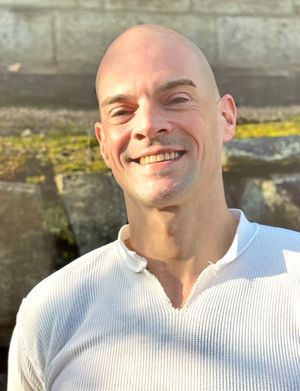
Lyle C. May is an Ohio University alum, member of the Alpha Sigma Lambda Honor Society, an incarcerated journalist, and author of the books Witness: An Insider's Narrative of the Carceral State (Hayma
Sign up for Prism newsletters.
Stay up to date with curated collection of our top stories.