Another way out: What Black America’s migrant history tells us now
The complete erasure of Black immigrants, migrants, and refugees is being aided by ICE incursions against disproportionately targeted communities

“One ceases to speak of ‘a’ migration, or of ‘the’ migration, for Negro migration ceases to be a new development. It becomes an old movement, begun a century ago, but now heightened and intensified.” –Charles H. Wesley on Carter G. Woodson’s 1918 work “A Century of Negro Migration”
“let’s say it, fascism,
how else to say, border,
and the militant consumption of everything”
–Dionne Brand
Black history in the U.S. is something to be proud of. Yet, how we relate to this history is an integral part of what pride can lead to. Where one places emphasis and what one celebrates about a history matters. For instance, there’s a big difference between glorifying Black inclusion in white supremacist institutions and celebrating the most dissenting elements of the Black radical tradition. The space between two very different approaches may be filled with those who strike a balance of universal appreciation. However, at a time when commonplace reinforcement of reactionary politics is resulting in regular dissemination of anti-immigrant and nativist sentiments, a stunning historical omission is revealed. The prevalence of divisive xenophobic rhetoric emerging in some segments of the Black community shows that many people don’t recognize our Black migrant ancestors’ past. Neglecting, and even suppressing, these facts gives us a deeper perspective about how contemporary politics, state co-option of Black history, and fascism have led to mass confusion.
The popular myth that the U.S. is a “nation of immigrants” erases Native genocide in favor of oversimplification. In addition to the conquest of Native lands, there were enslaved Africans who were forced to come to the so-called New World. Upon arrival, it’s important to remember that these Black people did not stay in one place for generations. Oftentimes, they didn’t even have the choice. Despite growing Black nativist miseducation that over-represents U.S. Blackness, this country represents a tiny minority (less than 10%) of where most enslaved Africans were transported to. The vast majority were shipped as human cargo to the Caribbean and Latin America. Labeled “Negroes” and “Blacks” throughout the Americas, our respective slave-descended populations have had varying and changing relationships with these labels, nationality, and placement over time. Also, no one has the exclusive right to them because the terms moved just like Black people had to, by force or by choice.
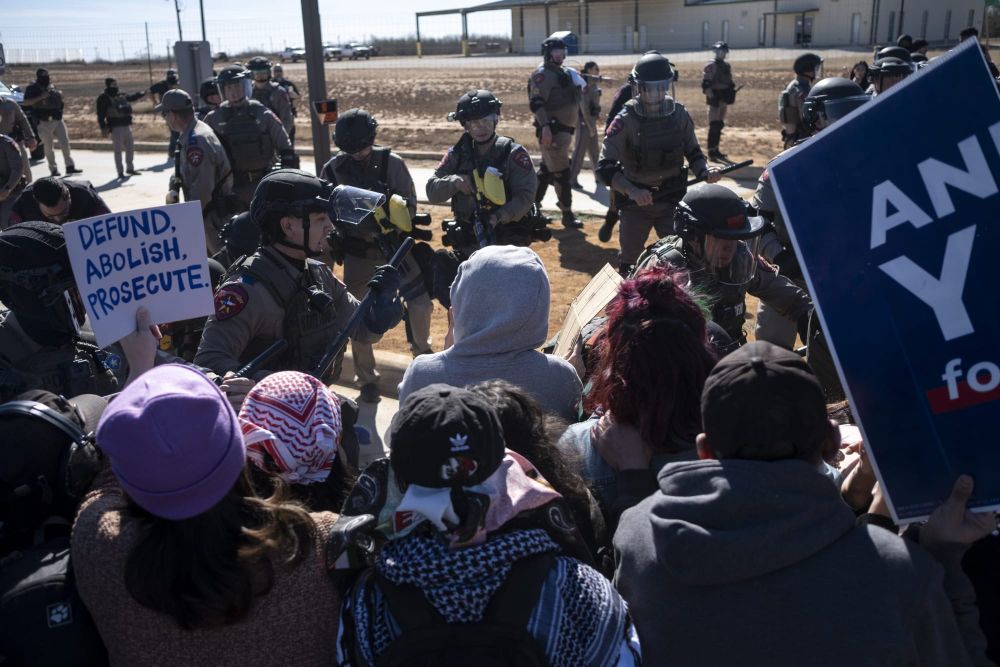
It’s distressing that a deeply misinformed public fails to grasp the difference between race, nationality, and ethnicity. People think that nationalities are races and therefore, Mexicans “aren’t” Black or Dominicans are “all” Black and in denial. They see these countries as one race, unlike the U.S., which many view, exceptionally, as the only multiracial society that exists. This becomes frustratingly apparent in the misreading of exit polls after elections, when people cast blame onto ethnic groups they can’t separate from antiquated ideas of who others around them are. So, blaming immigrants means blaming an “other” that supposedly does not include or mix with members of one’s own group. Borders, race science, and myth-making celebrations of certain aspects of history, at the expense of supplemental parts, reinforce this misunderstanding of society. Now, as Immigration and Customs Enforcement unleashes attacks on immigrant communities around the country, the benefits of these racist norms show the depth and most damaging aspects of their purpose.
U.S. borders have misled Black people into thinking that because our history of the Great Migration happened domestically, we’re not descended from migrants.
U.S. borders have misled Black people into thinking that because our history of the Great Migration happened domestically, we’re not descended from migrants. Furthermore, many of us are still migrating with the same motivations as those who come from outside the country. Our past movements shouldn’t be ignored. Enslaved Black people were once forced to migrate from the “Old South” to the “New South” to meet the demands of changing industry. They were also deported in many cases, like that of the slave rebellion led by Denmark Vesey, as well as the conspiracy of 1741. President Abraham Lincoln, seen as the “great emancipator,” toyed with the idea of deporting Black people somewhere else as a “peaceable solution to America’s race problem.” As historian Nell Irvin Painter wrote in “Exodusters,” “In 1865, most Southern Blacks faced their freedom with nothing but their labor as capital.” She documented the economic conditions and hopes for better lives, driving the first migration north to Kansas for formerly enslaved people. Questions about how to best exploit Black labor post-chattel slavery highlight the development of new modes of subjugation and trace the migration routes of Black people on the move. This raises the question of citizenship and what it truly entails.
Resting what U.S. Blackness means on citizenship is a seriously shaky foundation. Even though the formerly enslaved were centered in the initial and ongoing debate over birthright citizenship, we have never been secure in the citizen category. Though reactionaries use the 14th Amendment to tokenize Black history and reject “foreigners,” congressional record shows it was understood that it would apply more broadly to Chinese immigrants and others. As for Black people, despite the iconic amendment, we’re seen more like unwanted residents who are haunted by the evergreen dismissal to “go back to Africa.” The reason we can always be told to leave is that for many, citizenship, birthrights, and the U.S. are fundamentally white promises. Blackness has been rendered an anti-state threat despite endless efforts to assimilate, integrate, and be included. Even in the highest of positions, the country’s first Black president had to respond to the “birther” movement by making his birth certificate public because his citizenship was seen as an impossibility. Now, Black nativist and xenophobic forces are doubling down by trying to wave flags harder and attack other marginalized populations in an attempt to gain acceptance that they never can.
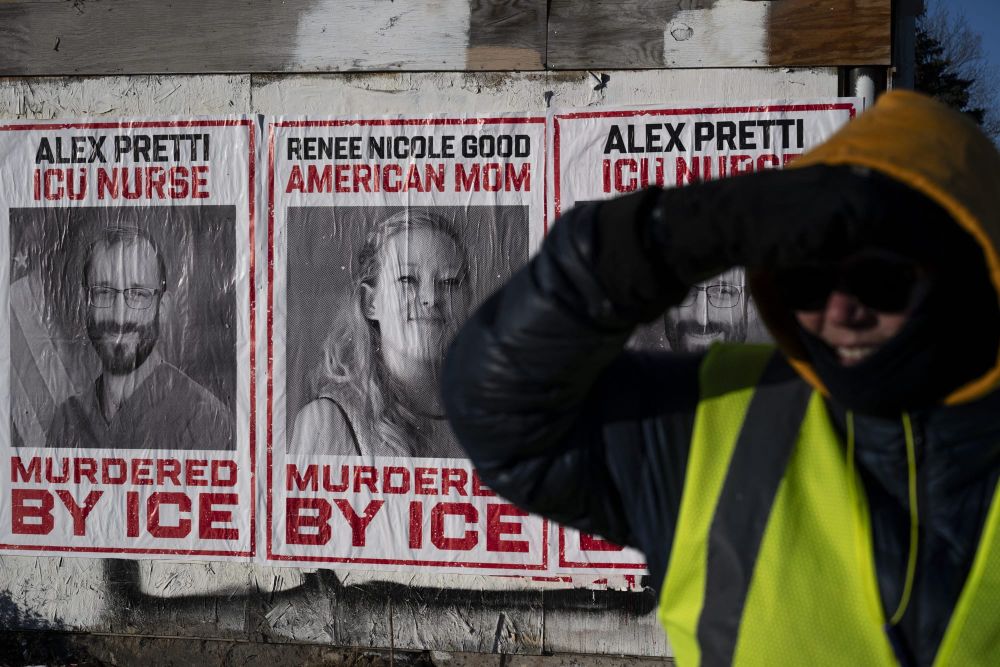
When you consider the anti-Blackness of the mainstream immigrant rights movement, it’s hard to be optimistic. The complete erasure of Black immigrants, migrants, and refugees is being aided by ICE incursions against disproportionately targeted communities. Much of this movement has failed to acknowledge Black domestic and international migration, in addition to feeding into the criminalization of Black communities with “we are not criminals” rhetoric. It doesn’t take much to understand that the Black population has long been labeled as criminal and isn’t considered “hard working” in this society. So, we’re challenged to tell a different story, one that can serve as a basis for autonomy and self-determination, balancing separate and collective interests. We do not all have to get along. We do not all have to like one another. Still, we have to understand that we have a common enemy much stronger than petty divisions engineered by white supremacists, colonizers, and enslavers.
In my book “The Nation on No Map,” I hoped to explain, among other things, that Black people have fled in every direction for generations seeking better lives. As a slave-descended, U.S.-born Black person from the South, I carry my family’s proud migrant history with me without shame. Our travels have even extended outside of U.S. borders and established or contributed to oppressive regimes in places like Liberia. To pretend we have been stagnant within the U.S. to distance our population from others is patently false and atrociously goofy; at best, it’s just ignorant. Malcolm X was always wrestling with the tensions of Black belonging and placement, which is why he said, “I’m from America, but I’m not an American.” In his speech “The Ballot or the Bullet,” he made it plain: “We were brought here against our will; we were not brought here to be made citizens. We were not brought here to enjoy the constitutional gifts that they speak so beautifully about today.” Contending with this means building the world we want that counters the borders, statism, and capitalism that define the colonial mentalities we’re engulfed by.
Now is the time to start highlighting the bigger picture so we can think beyond the small-mindedness of the self-destructive options before us. Our history is not about entitlements and national exceptionalism; rather, it is about freedom-seeking people. There’s nothing wrong with centering that in a way that has the potential to create a better world, even beyond one’s own community. Fighting for a Black version or any alternative version of what European conquest has arranged the world through is a futile venture that’s carried on long enough. An actual liberatory project will have to think collectively and understand that what’s only designed to oppress us won’t ever truly abandon its core function.
Editorial Team:
Lara Witt, Lead Editor
Carolyn Copeland, Top Editor
Rashmee Kumar, Copy Editor
Author
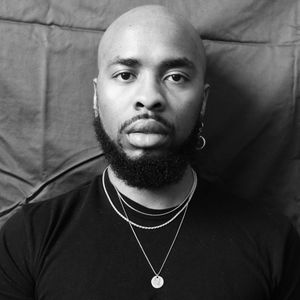
William C. Anderson is a writer and activist from Birmingham, Alabama. His work has appeared in The Guardian, MTV, Truthout, British Journal of Photography, and Pitchfork, among others. He is the auth
Sign up for Prism newsletters.
Stay up to date with curated collection of our top stories.