Filed Under:
Indigenous groups escalate fight to block drilling near sacred Lakota site Pe’ Sla
Community members held a ceremony at drill pads as a lawsuit by NDN Collective and other groups aimed to halt exploratory drilling in the Black Hills of South Dakota

Alexandra Martinez
Real journalists wrote and edited this (not AI). Independent, community-driven journalism survives because you back it. Donate to sustain Prism’s mission and the humans behind it.
Real journalists wrote and edited this (not AI)—independent, community-driven journalism survives because you back it. Donate to sustain Prism’s mission and the humans behind it.
Update, May 11: Pete Lien & Son is withdrawing its plan for exploratory drilling near Pe’ Sla, according to a letter the mining company sent the U.S. Forest Service on May 7.
Update, May 5: A federal court on May 4 granted a temporary restraining order, pausing drilling near Pe’ Sla for two weeks as the wider lawsuit proceeds.
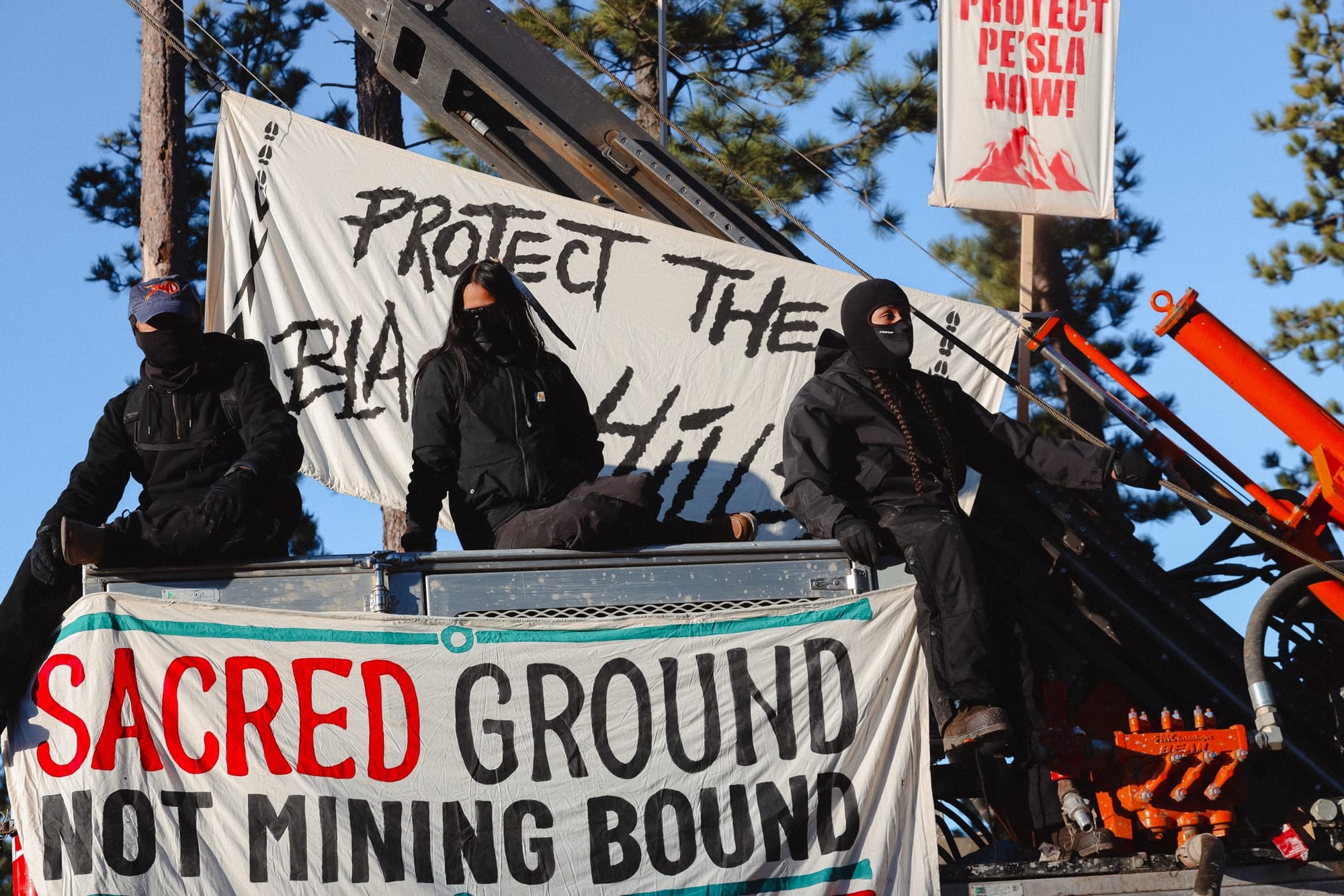
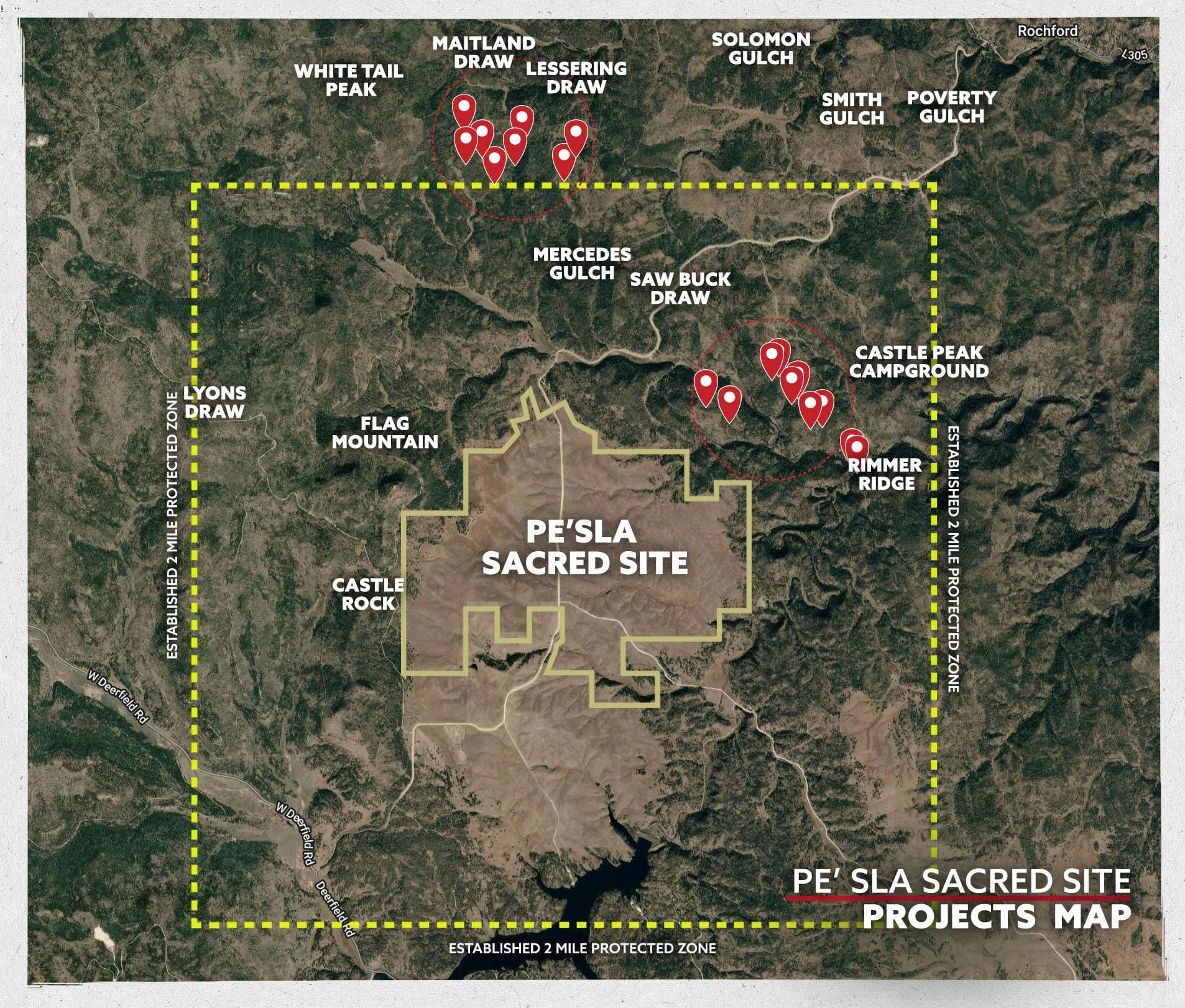
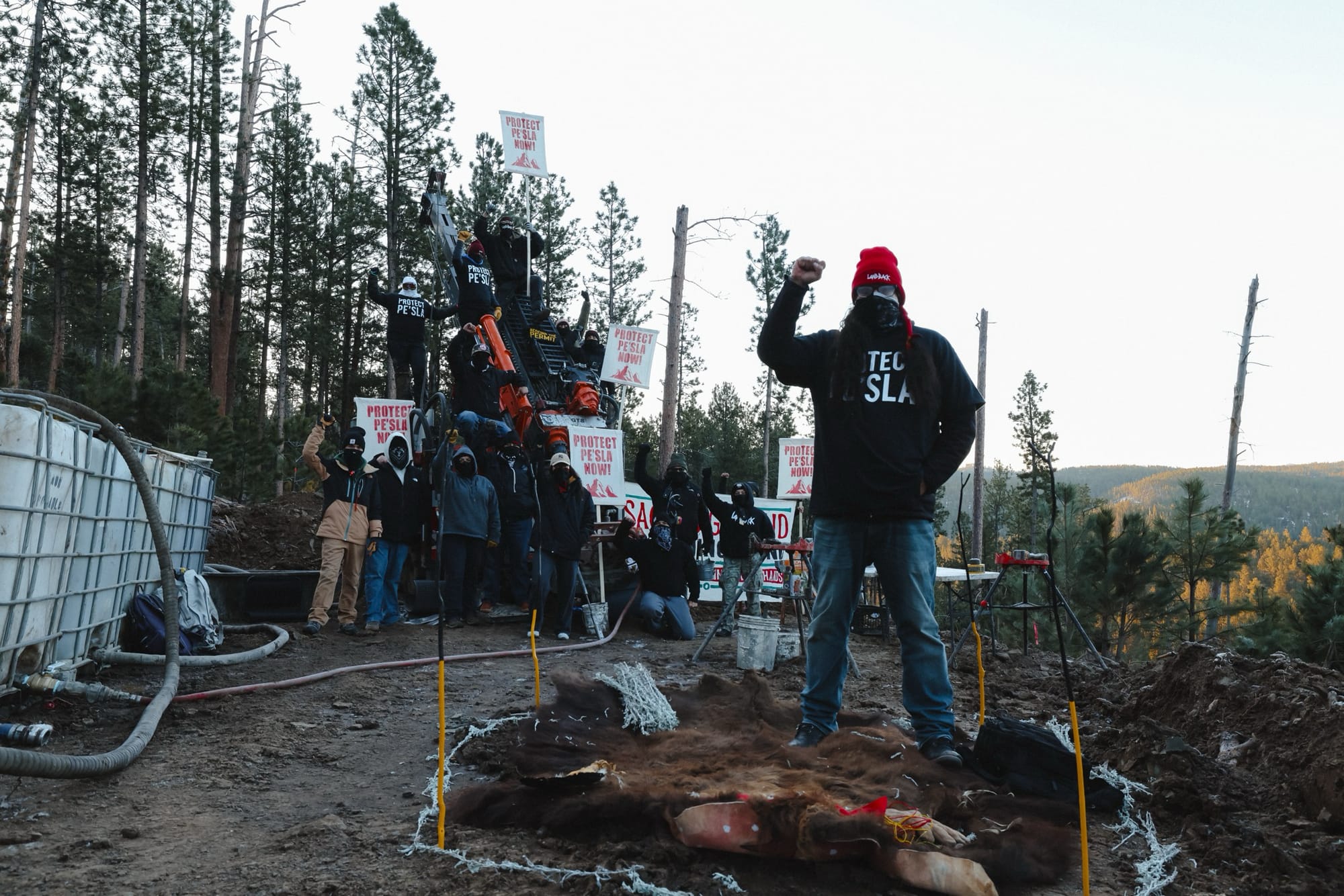
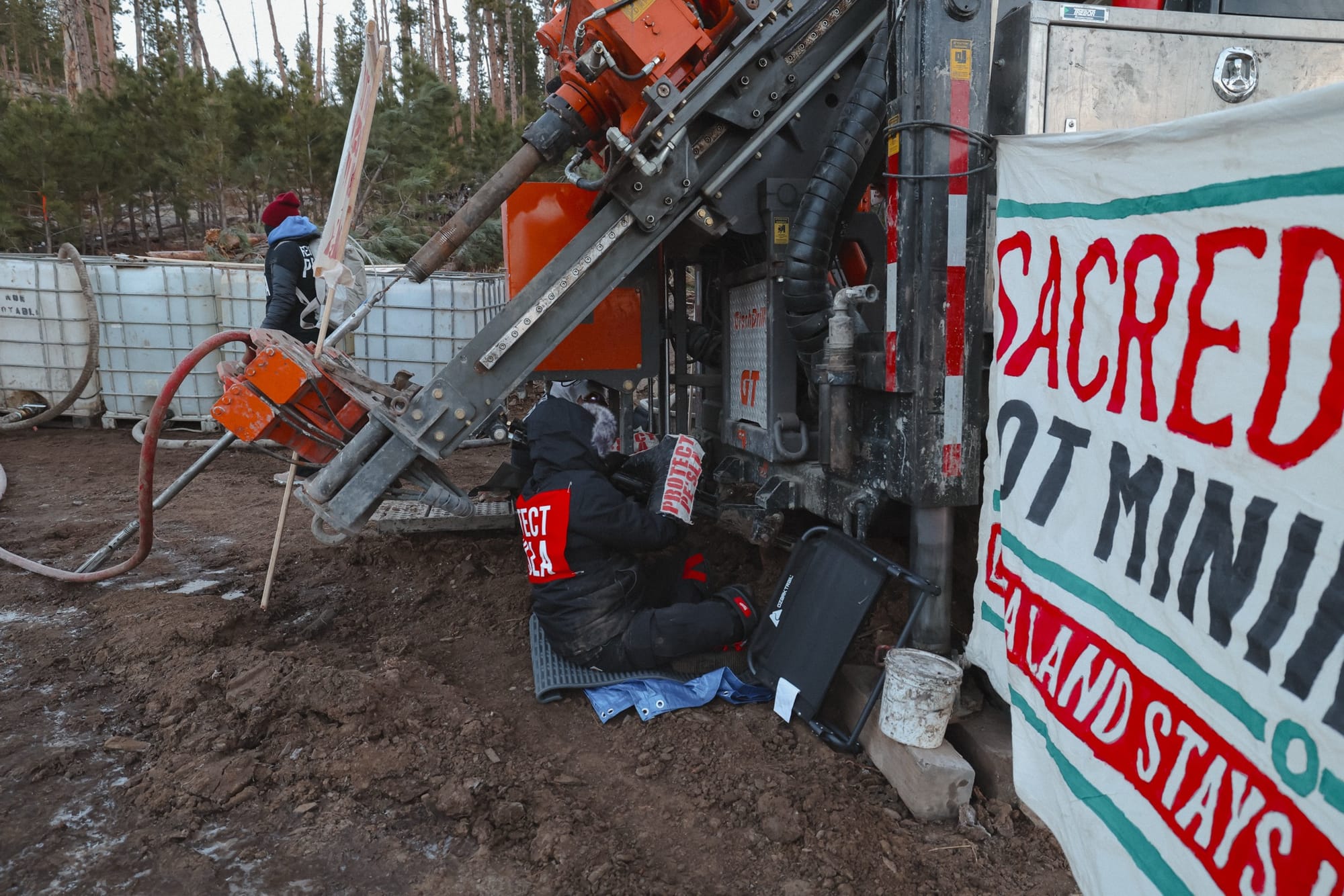
Community members held a ceremony at two drill pads near Pe’ Sla on April 30 in direct action against exploratory drilling that has started close to the sacred Lakota site in the Black Hills around South Dakota. Multiple drill pads are now actively operating, including some within a 2-mile buffer zone that tribes and the U.S. Forest Service had previously agreed to protect through a memorandum of understanding, according to a press release from Indigenous-led advocacy group NDN Collective.
The group’s action to defend the land escalated a legal and grassroots fight over the Forest Service’s approval of exploratory graphite drilling near Pe’ Sla, a sacred Indigenous site used for prayer and cultural practices for years by the Lakota people and other Indigenous nations of the Oceti Sakowin. According to NDN Collective, at least 10 drill pads are within the protective buffer zone around Pe’ Sla, and some proposed drilling sites are less than half a mile from Pe’ Sla’s legal boundary.
“Pe’ Sla is our sacred land, and we are doing everything we can to protect it,” said Valeriah Big Eagle, director of He Sapa Initiatives at NDN Collective, in the press release. “We will not cease our ceremony in the face of destruction, disrespect, and illegal drilling.”
NDN Collective, South Dakota-based Black Hills Clean Water Alliance, and national nonprofit Earthworks filed a lawsuit against the Forest Service on April 1, challenging the agency’s February approval of exploratory drilling near Pe’ Sla. The plaintiffs argue that the Forest Service violated federal environmental law when it allowed mining company Pete Lien & Sons to move forward with exploratory graphite drilling through a categorical exclusion, bypassing a deeper environmental review.
The U.S. Forest Service and Pete Lien & Sons did not respond to Prism’s request for comment.
On April 27, the plaintiffs also filed motions for a temporary restraining order and preliminary injunction to stop the drilling before more damage is done to the land.
“The damage done at Pe’ Sla is irreparable,” said Wizipan Garriott, president of NDN Collective, in the press release. “The U.S. Forest Service’s decision to move forward so audaciously breaks their own commitments, protocols, and laws—which should ring alarm bells across the country. We’re not going anywhere.”
In 2016, parts of Pe’ Sla purchased by tribes were placed in federal trust for protection and cultural use. The site spans several thousands of acres, with some land owned by sovereign tribal nations and adjacent areas managed by the Forest Service.
“The laws of the United States are often rigged against us, but we are confident this categorical exclusion was unlawful,” Garriott said in a statement. “We will defend this land in the courts, but as the original people of this land, sovereignty in this matter is inherent.”
In an interview with Prism, Garriott said the lawsuit centers on the Forest Service’s use of a categorical exclusion under the National Environmental Policy Act (NEPA). Such exclusions are intended for projects with limited environmental or cultural impacts and, according to Garriott, must involve work that can be completed in under one year. He said the mining company’s own drilling plan will take one year, which should have disqualified it from the streamlined approval process.
Garriott added that drilling, truck traffic, cement pads, runoff, and tailings would desecrate the sacred land of Pe’ Sla and threaten local wildlife.
“For thousands of years, it’s been a place where Lakota people have gone and prayed, made offerings, and it holds a special significance in our thought and philosophy and our religious beliefs and practices,” Garriott said.
The lawsuit asks a federal court to vacate the Forest Service’s approval and stop further proceedings related to the permit.
The Forest Service has claimed that there are no known Indigenous cultural or religious sites within the project area. Garriott said that reflects a narrow and flawed understanding of how Indigenous sacred places exist.
“It’s not like, ‘Oh, this little 10-by-10 square foot area is sacred,’” Garriott said. “There are many significant places all across the world, in many different cultural and religious traditions, where a mountain is sacred, or an entire area is sacred. [Pe’ Sla], that entire area, is a sacred place.”
For thousands of years, [Pe’ Sla] been a place where Lakota people have gone and prayed, made offerings, and it holds a special significance in our thought and philosophy and our religious beliefs and practices.
Wizipan Garriott, president of NDN Collective
Garriott said the agency’s claim also ignores the lack of a meaningful cultural inventory of the federal lands involved. He said trained Tribal Historic Preservation Officers and Native cultural experts must be part of any legitimate assessment of potential impacts.
The legal challenge follows more than a year of organizing by NDN Collective, Black Hills Clean Water Alliance, and community members. Opponents of the drilling project submitted thousands of public comments, testified at hearings and public meetings, gathered more than 6,000 petition signatures, and used podcasts, social media, and interviews to educate the public about Pe’ Sla’s significance.
“Legal action was necessary when the U.S. Forest Service illegally granted the categorical exclusion,” Garriott said. “When the U.S. Forest Service violated their own laws, then it became very clear that we needed, along with our partners Earthworks and Black Hills Clean Water Alliance, to take action to ensure the basic laws were followed.”
Garriott said the Forest Service failed to conduct formal, meaningful consultation with tribal governments and treaty rights holders. As someone who has worked in Congress, served in two presidential administrations, and helped draft federal consultation policy, Garriott said consultation cannot be reduced to informal meetings or after-the-fact outreach.
Although the lawsuit focuses on NEPA, Garriott said the project includes potential violations of the National Historic Preservation Act, the 1868 Treaty with the Great Sioux Nation, and Article VI of the U.S. Constitution, which establishes treaties as the supreme law of the land. The Black Hills fall within the territorial boundaries of the 1868 treaty, Garriott said, meaning that activity on those lands without the consent of the Great Sioux Nation violates treaty obligations.
Lilias Jarding, executive director of the Black Hills Clean Water Alliance, warned in a press release that the proposed project sits in a fragile biological and geological area within the Rapid Creek watershed. She said it threatens water for Rapid City, Ellsworth Air Force Base, tribal communities, ranching operations, and downstream communities along the Cheyenne River.
Garriott said a favorable court ruling would first mean preventing immediate desecration of Pe’ Sla. But longer term, he said, the fight points to the need for broader changes to mining law and a mineral withdrawal in the Black Hills.
“Those federal lands that are within treaty territories need to be returned to those Native nations that have signed treaties,” Garriott said. “The United States has a constitutional obligation to return those lands.”
He also connected the Pe’ Sla fight to other Indigenous-led struggles against extractive projects, including Oak Flat in Arizona and Line 5 in the Great Lakes region. These are not isolated conflicts, Garriott said, but part of a broader pattern of attacks on tribal sovereignty, sacred sites, and cultural resources.
“Do we want to be a country that places profit and short-term gain over protecting resources for our grandchildren?” he said. “Are we a country that wants to follow the Constitution or violate the Constitution?”
Editorial Team:
Sahar Fatima, Lead Editor
Lara Witt, Top Editor
Stephanie Harris, Copy Editor