Black and Palestinian solidarity isn’t new
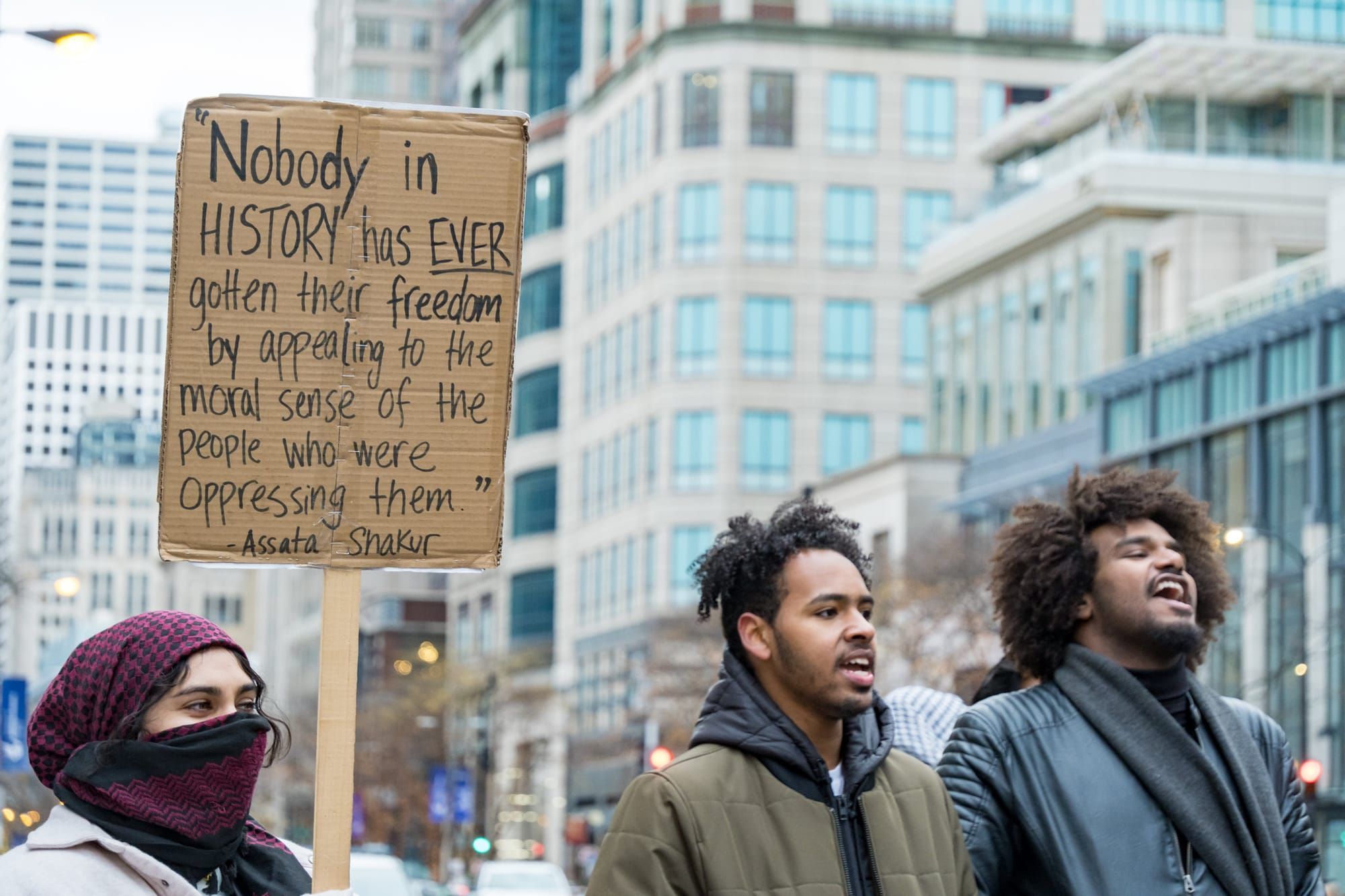
Fights against police and military oppression, racial discrimination, mass incarceration, segregation, and displacement link Black and Palestinian liberation movements
I was nine years old when I saw my first example of Black and Palestinian solidarity.
It was 1987, and my family had just moved to a diverse and eclectic neighborhood in Raleigh, North Carolina. The neighbors who lived in the house behind us were Palestinian, and they had three kids named Basam, Zuhar, and Inshirah, who quickly became my close friends.
Three years later, the first Gulf War began. President George H.W. Bush engaged in an aggressive lobbying campaign that would ultimately culminate in Operation Desert Storm. Tensions and hostility toward Muslims, Arabs, and Arab Americans increased throughout the nation, and my neighborhood was no different. White families told their children to avoid Arabs, creating a culture of bullying and hostility among the children in the neighborhood.
I’ll never forget the day Inshirah and I stood at the bus stop. Ramadan was ending, and her family bought a goat to slaughter and eat, a typical Islamic custom for Eid. A group of white boys arrived at the bus stop and began mocking Inshirah about the goat’s smell and the noise it made. My dad, a Black Panther who converted to Islam while in jail, intervened immediately, confronting the boys and their families about respecting Muslim traditions.
For my dad, solidarity with Palestinians was nothing new. In the 1960s and 1970s, the struggle for Black power in the U.S. inspired him to connect with movements outside the U.S.—including the movement against apartheid in South Africa and the movement for liberation in Palestine.
Malcolm X met with leaders of the Palestinian Liberation Organisation and the Student Nonviolent Coordinating Committee (SNCC), and the Black Panthers created reports and newsletters supporting the Palestinian movements. Muhammed Ali even visited refugee camps for Palestinians in southern Lebanon.
Those in the Black Power movement saw a connection between Black and Palestinian struggles. Police and military oppression, racial discrimination, mass incarceration, segregation, and displacement affected both communities. Those connections built an intimate sense of solidarity that was reflected in my dad’s support for the Palestinians around him.
That lesson of solidarity at the bus stop stuck with me—and it became incredibly prevalent in 2003 when the Iraq War began.
At the time, warmongerers, white supremacists, and politicians were busy spreading dangerous, Islamophobic narratives throughout the nation that painted all Arab people as a threat to Western civilization. Palestinians were a primary target because of an early conspiracy theory that the pilots responsible for the 9/11 attacks were Palestinian. Black and Palestinian organizers quickly banded together in Raleigh, putting together workshops that challenged anti-Muslim rhetoric and helped community members understand the roots of white supremacy and colonization in the Iraq War.
The connection between Black people and Palestinians was again made clear in 2014 when the police killed Mike Brown.
I was living in Oakland, California, at the time. Like thousands of others across the U.S., I joined the call to protest against police brutality and murder led by organizations like Black Out Collective, which later became part of the Movement for Black Lives that continues to advocate for the end of Israeli apartheid and occupation in Palestine. I can still remember reading through Twitter threads in which Palestinian activists walked us in the U.S. through the best ways to treat tear gas and pepper spray burns based on their experience dealing with the Israeli military.
As we all witness the most current iteration of Palestinian genocide, the relationship between American police and the Israeli military could not be clearer. It’s now a well-known fact that American police travel to Israel for training from the Israeli military to learn new tactics to better surveil and brutalize us.
This connection was never lost on cities like Durham, North Carolina, which in 2018 was the first U.S. city to unanimously vote against sending their police to train with the Israeli military. Long before mainstream and national media sources reported on Palestine, we, as Black folk living in Durham, already knew where we stood on this issue.
The fight for Palestinian liberation is, without a doubt, a fight to end mass incarceration. Human Rights Watch designated Gaza as the largest open-air prison in the world, with many Gazans unable to leave the strip—and even more Gazans unable to return home. And in the U.S, which has the “highest incarceration rate of any independent democracy on earth,” there is a track record of siding with countries that share its history and goals of colonization and displacement.
It is our responsibility as grassroots visionaries and dreamers to honor this longstanding history of support as we continue to nurture the new worlds and realities built through the centuries of collective action and resistance through our ancestors. Those who came before helped to disarm and disempower white supremacy, and it is our duty to stay grounded in that reality. The world we want to live in has already been built. We have no reason to accept this concept of a “forever war,” a place where Palestinians, Black folks, and Israelis for that matter, are subjected to hostilities rooted in capitalist, imperialist exploitation.
We are the change-makers of the world, and the world has indeed changed. That small moment between my dad and Inshirah now exists on a far bigger scale, with thousands of Americans risking arrest and brutalization to reject Islamophobic narratives.
Liberation for us living in the American South will happen simultaneously with the liberation of the people of Palestine and other oppressed people around the globe. We have the ability, resources, and creativity to create justice and liberation on our own terms. Contrary to popular belief, voting booths, town hall meetings, and college campuses do not have to be our only advocacy spaces. For decades, we, as dreamers for Black power, have turned music festivals, farmers markets, house parties, and other impromptu gatherings into spaces for advocacy, liberation, and world-building without the confines of white supremacy and capitalism. Our liberation starts with small acts that help reclaim our dignity and honor our humanity, like my dad sticking up for Inshirah at the bus stop.
These efforts will only continue to grow as we become more aware of the power that comes when we act in solidarity with each other. We should take every opportunity to stand with each other’s humanity beyond the traditional platforms. We need to permeate our world with examples of creative resistance and solidarity—because our solidarity has the power to be a light through the darkness and forge fresh streams in the wastelands.
Authors
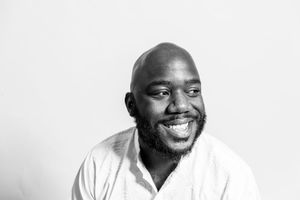
Joshua Rahim Vincent serves as the Executive Director and CEO at the helm of the Southern Vision Alliance, a prominent political nonprofit headquartered in Durham, NC. Hailing from Raleigh, North Caro
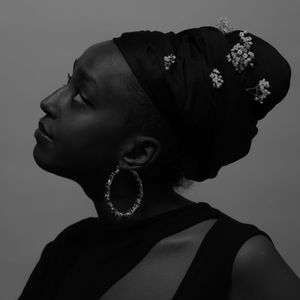
Nada Merghani is a movement journalist, digital communications expert, Scorpio, and a Type 1 Diabetic living in U.S. South. As a Nubian person born in Sudan, they are committed to the values of Pan-Af
Sign up for Prism newsletters.
Stay up to date with curated collection of our top stories.