In any other business arrangement, Enbridge would be long gone from the Bad River Reservation. The contract between the oil company and the tribal band says the easements permitting the Line 5 pipeline to operate on the reservation ended in 2013. A federal judge agreed in 2022, meaning the oil giant has trespassed on the land for years. Still, to the disappointment of the tribe, the pipeline remains.
A new documentary, “Bad River,” tells the story of the band’s resistance to Line 5. Through dozens of interviews with tribe members and tribal officials, it also describes how the pipeline’s trespass on the Bad River Reservation is part of a broader siege on the band’s sovereignty and culture. By one measure, the Line 5 battle started when the contract ran out in 2013. In every other way, this battle is two centuries old.
Line 5 is a 645-mile pipeline that runs from Wisconsin to Sarnia, a Canadian city about 65 miles north of Detroit. The section of pipeline in question is a part of the larger Lakehead System, which connects with the Enbridge Mainline to carry tar sands from Alberta as far south as Texas. In the 1950s, when the route was planned, it was cheapest for the pipeline operators to dip down into the U.S. and run the pipeline through the ancestral lands of the Bad River Band of Lake Superior Chippewa in what’s also known as northern Wisconsin, about 100 miles east of Duluth, Minnesota. At the time, the federal Bureau of Indian Affairs gave the green light for pipeline construction. The Bad River Band wasn’t consulted.
The section of Line 5 that tresspasses on the reservation runs through 3 miles of allotment land—parcels that were divided by the federal government and portioned off to individual heads of household in an attempt to weaken tribal power. For years, the Bad River Band has tried to buy back these unceded lands to rebuild what was once a contiguous ancestral territory. But Line 5 operators insist that the Bad River Reservation is as good as theirs.
The pipeline is a threat to that which gave the band its name. When the pipeline was first dug into the ground, it was 300 feet from the Bad River. But rivers move. And like a body that stretches and changes shape, the curve of the river—known as the meander—has also changed over time. There are just 12 feet of riverbank that separate the Bad River from Line 5. A pinhole leak in the 70-year-old pipeline could lead to thousands of gallons of oil spilling into the river, which connects to Lake Superior, the lifeway of the Bad River Band.
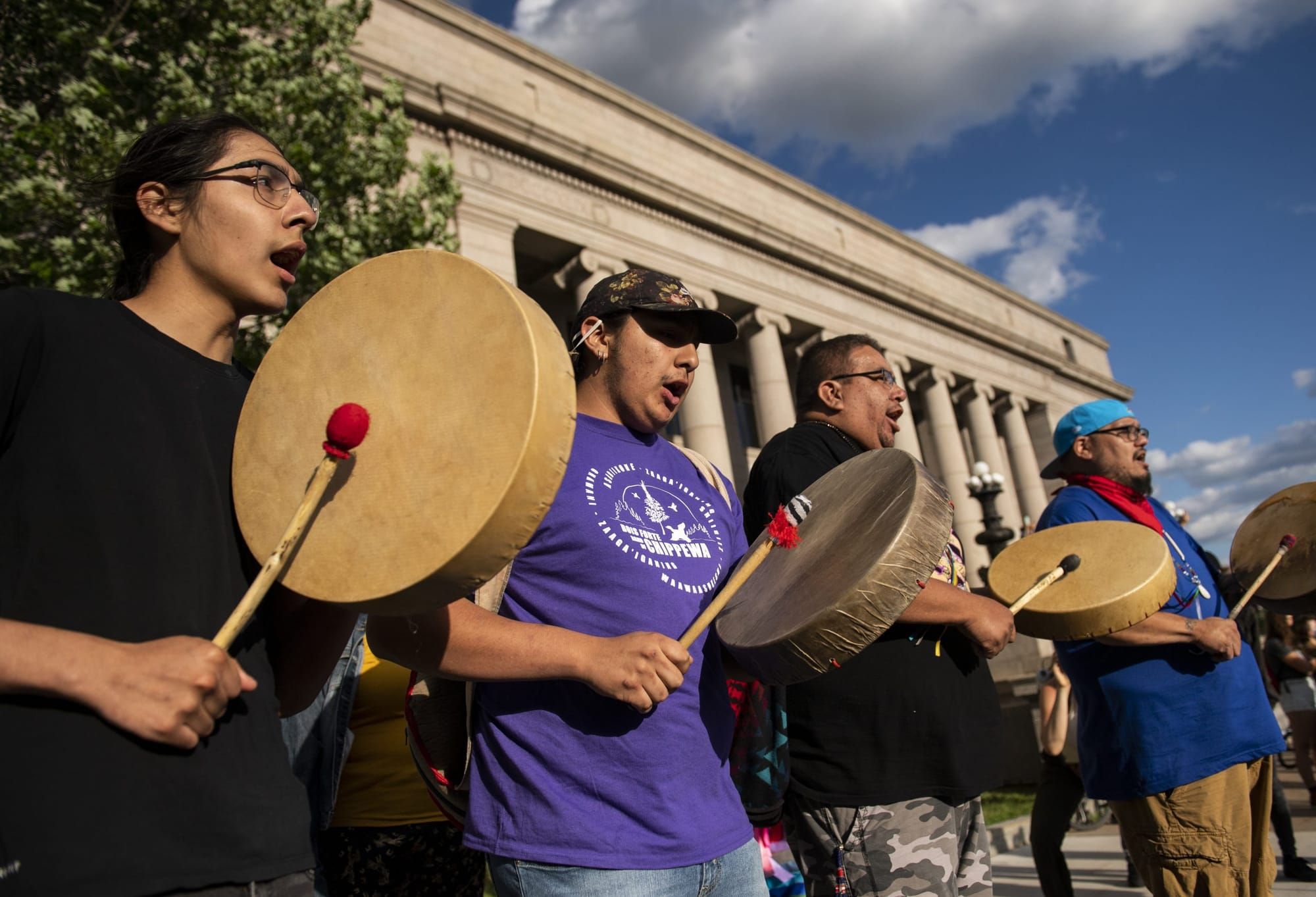
“Bad River,” directed by Mary Mazzio and narrated by Quannah Chasinghorse and Edward Norton, features interviews with dozens of Bad River Band members and tribal leaders to tell the story of the land, its people, and their resistance to Line 5. The documentary begins with the division of land—the original dispossession of the Bad River from its people who have stewarded northern Wisconsin lands since time immemorial. Three treaties, signed in 1837, 1842, and 1854, relinquished some territories and retained perpetual rights to hunt, fish, and gather. These legally binding documents between tribal nations and the federal government are now some of the guiding documents in the resistance against Line 5 encroachment.
Treaties were one of the formal ways the U.S. federal government gained access to Native lands. But there were other means of disappearing Indigenous peoples and cultures, namely by insisting there were none. In “Bad River,” survivors and their descendents describe how federal legislation sought to remove Bad River peoples from their land, assimilate them into white American culture, force Catholicism onto children through violent boarding schools, and terminate the status of federal recognition of Native nations. There are six Ojibwe bands that are federally recognized, including the Bad River Band, but from the 1940s to the 1960s, the federal government ended its treaty obligations with 109 tribes by “terminating” their contracts.
In “Bad River,” Syracuse University professor and citizen of the Akwesasne Mohawk Nation Dr. Scott Manning Stevens refers to this period as a “genocidal project.”
“If it didn’t mean to kill them physically, it meant to kill them spiritually, psychologically, and in any other way,” Stevens said.
This is the backdrop of the fight to protect water from Line 5 pollution. On one side, there is a tribe whose people were once forced from their lands, punished for speaking their language, and assaulted by white citizens and state agents for asserting their protected treaty rights when attempting to hunt and fish. On the other side is a multi-billion dollar corporation in Enbridge. For years, Enbridge has insisted that shutting down and removing the section of the pipeline from the Bad River Reservation is impossible. In “Bad River,” an Enbridge spokesperson has the gall to say the band doesn’t care about people and that decommissioning Line 5 would prevent customer access to a “vital” resource.
But the truth makes Enbridge’s laughable. The Bad River feeds into Lake Superior, one of the largest reserves of freshwater in the world. Dozens of fish, bird, and plant species rely on a healthy lakebed that’s already facing threats from man-made chemicals. The Bad River Band cares for the lake, and the lake cares for the band—and legally through the treaties, the Bad River Band is entitled to this care.
In “Bad River,” the proximity of the pipeline to the meander isn’t merely an environmental concern, but a material consequence of the siege on Native land that never ended. Tribe officials’ fear of spills is rooted in reality. In 2010, an oil spill leaked 800,000 gallons of oil into the Kalamazoo River, posing untold damage and requiring years beyond what federal regulators allowed for its clean-up. Kalamazoo was by far the largest onshore spill in the past 50 years, a period of time in which Enbridge has allowed a cumulative 1.1 million gallons to leach from Line 5 into surrounding ecosystems.
Enbridge continues to fight the Bad River Band to keep Line 5 in commission and on the reservation, offering almost no explanation for its plan to prevent a pipeline rupture or how it will address mitigation or clean-up if one occurs.
After the September 2022 ruling in which a federal judge acknowledged that Enbridge was trespassing on Bad River Band lands, a June 2023 court order gave the company until 2026 to remove the pipeline. But Enbridge is currently fighting to maintain operations on tribal land. The company’s appeal to the order was heard by a federal appellate court judge in early February. During the hearing, lawyers for the company brought up a later treaty signed by Canada and the U.S. that states that nothing should impede the flow of oil and gas between the two countries, suggesting the 1977 treaty between one sovereign nation to another supersedes those entered in 1837, 1842, and 1854.
The fight to protect ancestral waters from Line 5 does have to do with the legalities of treaty rights, a lawsuit, corporate surveillance, and the larger questions of what the U.S. federal government owes to its history of suppressing Native peoples. But in other ways, it’s more straightforward than that.
As tribe member Aurora Giizhigookwe Conley says in “Bad River,” “What we have they’ll always want.”
You can watch “Bad River” in select AMC theaters beginning March 15.
Author
ray levy uyeda is a staff reporter at Prism, focusing on environmental and climate justice.
Sign up for Prism newsletters.
Stay up to date with curated collection of our top stories.