Are heat days the new snow days?
With increased temperatures during the school year and summer, young people’s growing minds and bodies are on the frontlines of climate change
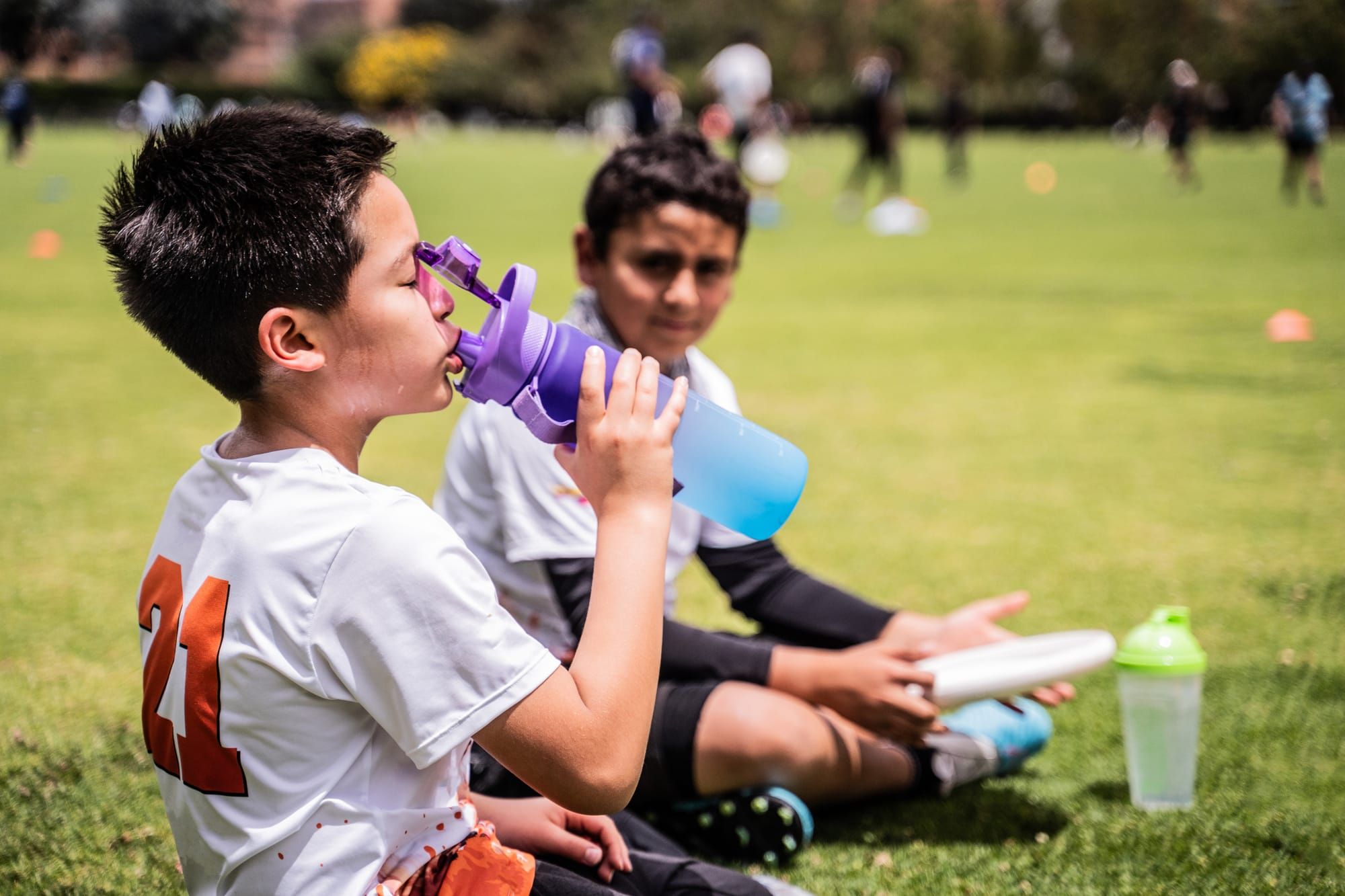
Phoenix is no stranger to blistering temperatures, but it experienced an extraordinary October this year, with temperatures rising above 100 degrees for 21 straight days. This streak sets a new benchmark for the region, marking a level of heat that is unprecedented even for the Southwest.
Climate change continues to warm the planet, creating chaos and displacing people across the globe. Until relatively recently, the U.S. has largely escaped the dire, immediate consequences of climate change, unlike the island nations slowly sinking under rising sea levels or the African countries facing drought or torrential flooding. But despite this relatively privileged positioning, rising average temperatures and an increase in extreme weather are having a palpable impact on an already vulnerable U.S. population: young people.
Students experience the impacts of rising average temperatures firsthand. During the summer, only one of the lower 48 states (North Dakota) had equal average temperatures. Meanwhile, children in cities like Philadelphia, San Francisco, and New Orleans will continue to “face more frequent, longer-lasting, and hotter heat waves” than children just a few decades ago, Scientific American reported.
Scorching weather directly impacts young people’s growing minds and bodies. More frequent sweating deprives other organs of oxygenated blood, and chronic health conditions are exacerbated by weather conditions. Increased temperatures during the school year also correlate to learning loss among students. Beyond the physical impacts, the youngest generation entering adulthood is now “shouldering a silent crisis of worry and fear,” Prism’s Ray Levy Uyeda reported: “Known more widely as ‘climate depression’ and ‘eco-anxiety,’ pre-traumatic stress disorder is growing among young people, researchers say.”
And now, not even summer provides the relief it once did for young people.
Summer dangers
Summer vacation used to be a season for students to spend time outdoors, free from worries and the constraints of the school year. It was a time for things that schools can’t always provide, namely unstructured adventure time for children to learn independently or engage with friends in new ways. But over the past decade, summer is now also known for record-breaking temperatures and heat waves. This past summer was the Northern Hemisphere’s warmest summer on record.
With the rising heat, children spending extended time outdoors can now be a dangerous experience. University of New Hampshire freshman Taylor Barry told Prism that during a summertime soccer practice in 100-degree heat, she experienced heat exhaustion. “I went to the emergency room after I vomited and started shaking uncontrollably,” Barry said. “I was given potassium and sodium supplements to replace the ones that I sweated out during practice…the experience was super scary.”
Barry’s experience is becoming more common among young athletes who do extensive physical activity in the summer months. With the threat of heat illness now constantly looming, summertime stress is also increasing.
“Excessive heat causes changes in emotions and behavior that can result in feelings of higher stress, anger, irritability, aggression, and fatigue,” according to Baylor College of Medicine. Dr. Asim Shah, professor and executive vice chair in the Menninger Department of Psychiatry and Behavioral Sciences at Baylor, noted that “children are a vulnerable population due to their physical and cognitive immaturity” and because “they are exposed to more pollutants and allergens as they spend more time outdoors.”
Summer camps once provided some relief, but even they are scrambling to pivot in the face of dangerously high temperatures. Camp administrators, counselors, and experts maintain that camps are a great way for kids to develop social skills, learn outside of the classroom, and connect with nature, NPR reported. However, operating camps is getting more difficult—and pricier—as access to water and cooling and better preparing staff to take care of young people become bigger challenges.
One of the most popular cooling methods for children is water-based activities. However, summer camps now cite insurance and lifeguard costs as surpassing what they can afford to stay open. Summer camps now also have to train counselors for signs of heat-related illness and be more cautious of how much physical activity children engage in during hot summer days.
Adee Cooper, a freshman at South Hadley, Massachusetts’ Mount Holyoke College, said that she now has a “love-hate relationship” with summer. “I have always loved the warmer weather after the winter time, but it became unbearable as our temperatures began to hit over 90 for several days. I remember thinking over 75 was a high temperature when I was younger,” Cooper said.
Broke and in need of fixing
An estimated 40% of schools were built before 1970, when extreme weather was less of a concern. Many of these institutions—approximately 13,700 public schools largely concentrated in the mid-Atlantic, Great Plains, and Southwest—lack the infrastructure to keep their campuses cool.
Residents in the South, who are typically accustomed to high temperatures and humidity, are finding that their air conditioning systems fail to keep up on hotter days. Lindsey Ivy, a middle school teacher in Florida, said her school air conditioning is often broken, and when it’s not, it’s “set to 75+ [degrees] to ‘save money.’”
At the start of this school year in August, schools in Milwaukee, central Ohio, and Detroit were forced to close or end the days early because of inadequate air conditioning. Of the students and educators from across the country who spoke to Prism, none have updated cooling systems at their schools. Between the need for new HVAC installations across New England, the Midwest, and the West, and the need for upgrades to existing-but-overworked HVAC systems throughout the South, the increasing number of hot school days will impact most public K-12 students.
Exposure to hot weather without adequate cooling can have serious consequences for students. A 2018 Harvard Kennedy School study based on student fixed effects models using 10 million PSAT-takers found that a 1-degree Fahrenheit increase in temperature during the school year correlates to a one percent decrease in learning. Black, Hispanic, and low-income students were found to be three times as impacted with learning loss when compared with their white or affluent peers. If average temperatures increase by 3.6 degrees Fahrenheit, Maine, Michigan, New Hampshire, Vermont, and Wyoming are likely to face the highest amounts of learning loss due to a significant lack of cooling infrastructure in schools.
Young people’s well-being and extracurriculars also suffer when it’s too hot. Outdoor sports during the school year are now sometimes dangerous. Between 1997 and 2022, at least 50 high school football players died from heat stroke, the most for any school sport. Even outdoor activities that require less exertion put children at risk.
Kinley, the 12-year-old daughter of Georgia-based mom Tyler, had to leave a school field day early to “come inside and go to the nurse because [she] felt sick [and her] head hurt.” At the Florida school where Ivy teaches, she told Prism that during gym, “kids pass out at least once a year.” As an educator, she used to love summer, but now she views the season as “exhausting, worrisome, and boring,” in large part because she is now constantly worried “about heat exhaustion and heat stroke.”
An immediate solution to the effects of rising average temperatures in schools is the installation, maintenance, and upgrading of school HVAC systems. The Department of Energy launched the Renew America’s Schools Program funded by President Joe Biden’s Bipartisan Infrastructure Law; the $500 million in funding is earmarked to help K-12 schools make energy upgrades that will decrease energy use and costs, improve indoor air quality, and foster healthier learning environments. But this funding falls short of the money needed to combat the rising average temperature’s impact on schools. The nationwide cost of updating existing HVAC systems would cost $414 million, while new installations would cost over $40 billion. Keeping students cool in the contiguous U.S. would require approximately $1.5 billion a year moving forward—money the incoming Trump administration may not be willing to spend.
Tackling climate change head-on
If global greenhouse gas emissions continue at their current rate, average temperatures could rise approximately 3.1 degrees Celsius by 2100 compared with temperatures before the Industrial Revolution. An increase of more than 3 degrees Celsius would trigger several points of no return that would dramatically alter the planet’s climate and increase sea level. Absent adequate spending to adhere to the Paris Agreement’s upper limit of 2 degrees Celsius of warming or achieving the loftier goal of only 1.5 degrees Celsius of warming, the impacts of climate change will compound to cause more harm. Similarly, in order to maintain a healthy and hospitable ecosystem, the limit of carbon dioxide parts per million in the atmosphere should not exceed 350. But today, the global atmosphere hovers around 420 carbon dioxide parts per million. As more carbon dioxide is released into the atmosphere, temperatures continue to rise. Among the impacts of this warming are rising sea levels, shifts in biodiversity, and more extreme weather. These tipping points could result in a lack of food, $38 trillion worth of damage to the global economy within the next 25 years, and disruptions to everyday life.
People of color, low-income people, and young people will face a disproportionate share of these harms. For instance, the global north is responsible for roughly 50% of carbon emissions despite only having 12% of the global population. The global south, in contrast, is experiencing deadly heat waves, monsoon rains, and significant flooding that has resulted in immense human loss and billions of dollars in infrastructure repairs. Of the estimated $2 trillion needed by the global south to combat climate change, $1 trillion should come from “rich countries, investors and multilateral development banks,” according to a United Nations-backed report.
The changes needed to address the magnitude of the climate crisis are steep but necessary. A human society that continues, let alone thrives, requires a shift in how we live, educate, eat, build, and form communities. The most central demand for combating climate change is ending our global reliance on fossil fuels. This requires a significant investment in renewable energy infrastructure and expansion, such as solar farms, offshore wind, and geothermal energy. These types of renewable and efficient energy sources could also be utilized in school buildings and public spaces.
Education must also adapt to our new climate reality. As climate change threats worsen, schools are emerging as important infrastructure in the quest to make communities more resilient. Federal funding has fallen far short of what’s needed to maintain schools; an estimated additional $38 billion in funding is needed to adequately maintain schools. Despite this funding gap, school districts and developers are beginning to design campuses to manage stormwater and cool neighborhoods, in part by including more green spaces and shaded areas. A tree canopy can reduce surface temperatures by 11 to 19 degrees Fahrenheit, turning nearly inhospitable outdoor areas on school grounds into more tolerable environments. Flooding is already the most common and costly natural disaster in the U.S., but with rising sea levels placing more parts of the country at flood risk, schools across the country must upgrade and manage their facilities.
Older generations experienced less heat while simultaneously having more indoor reprieves in the form of shopping malls and arcades. Ashley Releford, a Georgia mother of three school-age children, told Prism that as a child, she “could spend hours outside with no problem,” and it pains her that her kids “don’t get to enjoy the same outdoor summer activities as I did because it’s too hot for them to be enjoyable.” Third places, or spaces we regularly occupy outside of school, work, and home, are rapidly disappearing in general. Those that do still exist, such as malls and movie theaters, increasingly have policies restricting unsupervised minors during certain business hours. Public libraries already serve as cooling and warming centers and spaces to learn about climate change, but by expanding their youth-based programming and opportunities for community engagement, public libraries can play an even larger role in combating the effects of climate change.
In more ways than one, young people are on the frontlines of the climate crisis. Adults must protect their future and be a part of the push to ensure our systems meet their needs in a rapidly changing world. Schools are one of the most vital systems to address as part of this process, but there are many young people who already feel left behind.
Nikhil Chavda, a sophomore at Bates College in Lewiston, Maine, told Prism that changing weather patterns have him deeply concerned. “If you look at the kind of mild winters and hot summers we’ve been having, you can see that the temperatures are definitely having an impact,” Chavda said. “I’m concerned because I feel like nobody in power is actually doing anything to address that.”
More broadly, as the people who bear the disproportionate burden of climate change, young people need a seat at the table when it comes to strategizing solutions. They are already leading the way in climate change activism, so why not give them the opportunity to weigh in on solutions?
Cooper, Barry, and Chavda have all taken active roles in the 350 New Hampshire youth team, a climate justice organization across New Hampshire. The students noticed a gap in New Hampshire’s environmental education curriculum, which did not include information about climate change and its sociopolitical impacts. With the support of Rep. Wendy Thomas, the students drafted a house resolution for a more robust climate education curriculum in New Hampshire. They also provided training and education on the house resolution and climate education gaps in New Hampshire and spoke at school boards and legislative testimony hearings to advocate for the house resolution.
Climate change and its impacts worsen in the face of collective inaction—and the harms of climate change are felt most directly by young people. While feelings of climate anxiety are real, it’s important to remember that climate change is not inevitable.
Barry told Prism it’s a common misconception that climate change is hopeless or that it cannot be solved. “I believe that that is far from true,” Barry said. “Having engaged in climate activism over the past few years, I have come to see just how truly passionate and engaged so many people from across the world are on this issue. I believe that as the grassroots climate movement continues to grow, the environmental movement will only continue to be met with more wins.”
Significant investment in infrastructure and an end to our global fossil fuel reliance are critical first steps in ensuring a hospitable planet for young people to inherit. Until then, the institutions children rely on, like public schools, must adapt to a chaotic climate.
Authors

Nneka Ewulonu (they/them/theirs) is a lifelong Georgian committed to elevating the voices of marginalized communities. A civil rights lawyer living in Atlanta, Nneka’s work focuses on reproductive fre

Elisabeth Bialosky (she/her) is from Cleveland, Ohio and lives in Portland, Maine. She works in the environmental and energy industry doing community planning and events. Her background is in educatio
Sign up for Prism newsletters.
Stay up to date with curated collection of our top stories.