Archive of violence
In this Q&A with Prism, the Texas After Violence Project’s executive director Gabriel Solis discusses the power of community archives
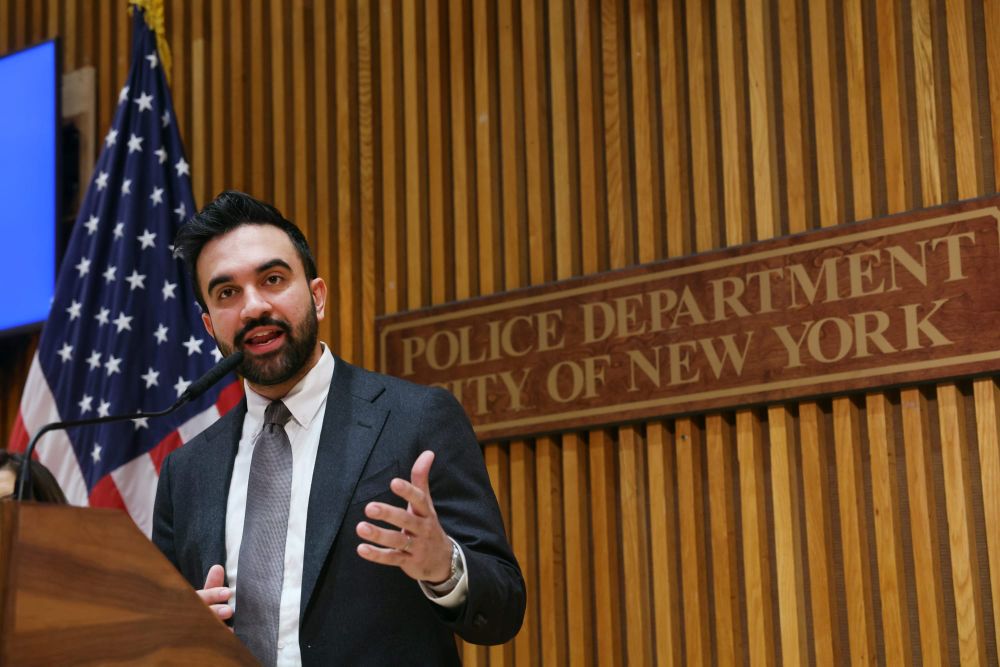
When a crime occurs in America, punishment usually follows. This retribution—levying of fines, withholding of civil liberties, or incarceration—is often framed as a solution. State violence that involves incarceration, surveillance, and family separation is the norm—even if there’s little evidence of its efficacy. This dynamic is rooted in white supremacy, and it is deeply linked with the “histories of lynching and white supremacist violence,” said Gabriel Solís, the executive director of the Texas After Violence Project, an organization dedicated to the telling, preserving, and sharing of personal experiences of people harmed by the criminal legal system.
According to Solís, a public archive like the Texas After Violence Project can reveal the criminal legal system in new ways. Solís first encountered the public archive and memory organization as an intern while completing his undergraduate degree in 2007. He spent much of his early days with the organization listening to the stories of loved ones who lost family members to execution. “That was quite an awakening for me as a young person,” Solís said.
Assuming the director role in 2015, Solís said that the project has expanded its focus to highlight the experiences of people who were or are currently incarcerated and documents state violence through relevant state records.
Prism’s climate justice reporter Ray Levy Uyeda spoke with Solís by phone in late June about the conversations that shaped him, the power of oral history work to challenge harmful narratives, and whether storytelling can disrupt violence.
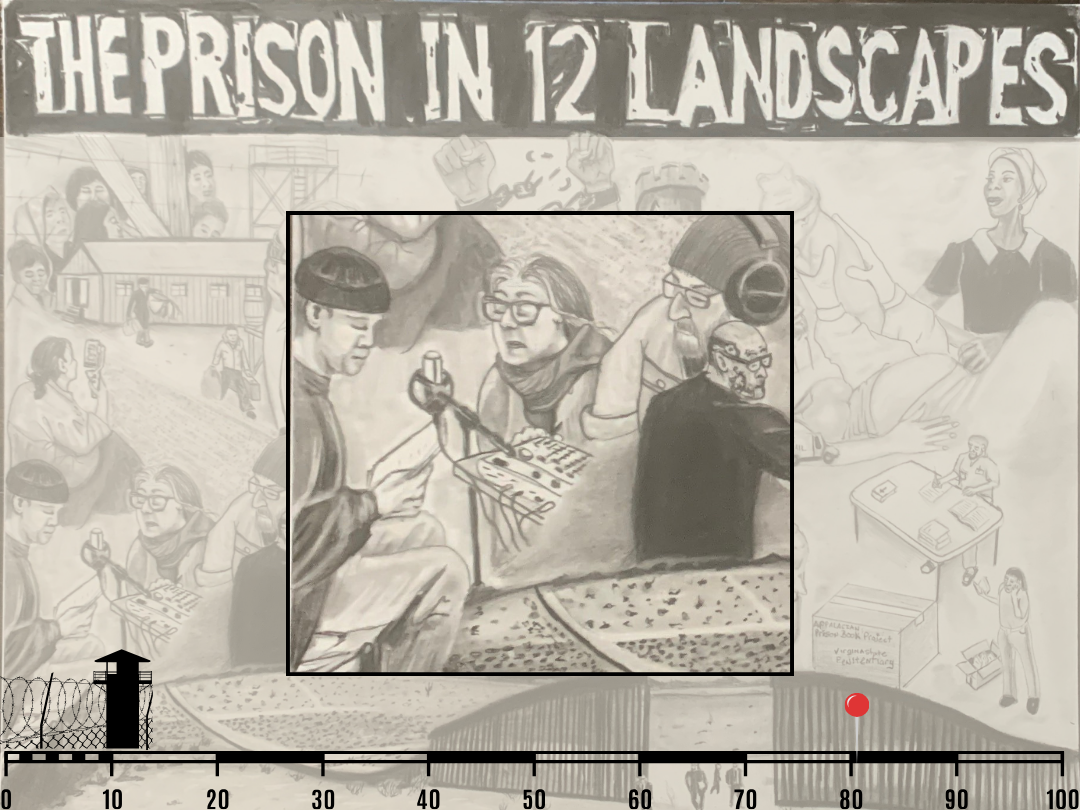
This Q&A is part of a series, Prison in 12 Landscapes, featuring companion pieces from Ray Levy Uyeda and Tamar Sarai. The series runs through September and is organized to introduce readers to subjects beginning with the most—and easing into the least—proximate to prisons’ material form. You can read through the full series here.
This interview has been edited for length and clarity.
Ray Levy Uyeda: Your work with the Texas After Violence Project initially involved traveling across the state and recording people’s stories to contribute to the archive. How did those conversations shape you?
Gabriel Solís: On an emotional and psychological level, there’s a very well-understood process of what some people call vicarious trauma, though we’ve always thought that it was a more direct form of trauma, opening yourself to the suffering of someone else. That changes you on a physiological level. That can cause problems around post-traumatic stress, but more so epistemically, the way I saw the world really shifted. I was interacting with other people on a level that typically we don’t really get to do day to day. That was special, but of course, it made me cynical and fearful about the world we’ve created. It definitely filled me with rage, and I think I’ve been trying to navigate that and try to figure it out. I wonder, what can I do? What can I do every day to fundamentally shift how we understand violence? What can we do about it that doesn’t perpetrate more suffering and violence?
Levy Uyeda: Oral histories and record keeping by, for, and about people of color often challenges white, normative, and institutional record keeping—a kind of record that’s preserved in/by news media. Can you talk about that?
Solís: What frustrates me is that the term “community archive” is relatively recent. Some scholar coined this term to differentiate it from more institutional archives. The efforts to create repositories of information have very rarely been about our communities, even while our communities have documented the violence against us—and our survival—forever. The fact that our communities have documented our own isn’t new, but whether that documentation has had the opportunity to be preserved and saved is a whole other issue. Small nonprofits like ours are increasingly documenting—whether it’s audio recording or video—and preserving cultural records from our communities. We’re digitizing records and locating archival repositories that will take them if far smaller groups aren’t able to do it. Increasingly, we’re obtaining state-generated records of state violence and human rights violations because we know that we need to be able to save those records and make them publicly available.
Levy Uyeda: There’s also this element of who is included in the archive, who is excluded, and how. When a lack of archives allows for further violence, or the archives, when housed by the hegemonic institution, can itself be a site of violence.
Solís: A couple of years ago, Immigration and Customs Enforcement (ICE) requested that the federal agency, the National Archives and Records Administration (NARA), destroy any records around violence that happened to migrants who were detained in ICE facilities, including sexual assault records. And NARA was going to do it. They were going to destroy these records. And luckily, there was a lot of litigation from transparency groups that put a stop to that before they could do it. That’s an example. We also know that police and prosecutors manipulate records, as well as state-generated records.
Recently, there have been efforts to obtain police and prison administration records to understand internal decision making, dynamics, plans, and budgets. This information is very revealing about how state violence functions daily. Increasingly, smaller community groups like ours are jumping into this work, recognizing the urgency there is to document individuals’ experiences and stories. We want to figure out how to preserve cultural materials as well as materials of collective memory, and then contextualize those against state records of violence.
All that work is so important and pushes back against the narratives that we’ve been fed around violence, as well as what’s important to remember and what is disposable. The issue around disposability is the same with records as it is with people in terms of throwing people away with mass incarceration and the death penalty. The threat of disposability speaks to why this work is so important and why documentation is linked with advocacy, abolition, and transformative justice.
Levy Uyeda: How does storytelling interrupt violence?
Solís: I think there will always be harm and violence. The organization’s aim isn’t utopian; it’s a liberatory vision. But I think realistically, for whatever reason, we will always hurt each other, but the key difference is really trying to minimize those things from happening. Then, the question is: How do we repair this harm or loss that’s happened? These are really very difficult questions.
A very necessary piece of liberation and transformative justice is gaining the respect and trust of somebody who has experienced violence—who has lost a loved one to violence, who has been incarcerated, who has been targeted by the police or brutalized by the police, who’s been separated from their family at the border, and who have, in a lot of ways, been disposed of. After that, trust is built in a compassionate way, recording what they went through and trying to create a condition in the interaction where they feel like they can do that with dignity and with purpose and with meaning. And then, working with them to a point where they’re able to say, “I am willing to put this into a public archive where anybody can access it and share that pain.” Then we are able to preserve these stories in perpetuity.
Something I think about often is when we ask people who share their stories with us why they do it. They do it because they want to help other families that are going through the same thing, and they do it because they want to prevent it from happening to other families.
Author
ray levy uyeda is a staff reporter at Prism, focusing on environmental and climate justice.
Sign up for Prism newsletters.
Stay up to date with curated collection of our top stories.