‘Anything is possible’ in the fight for climate justice
In a wide- ranging discussion with Prism, Professor David N. Pellow links climate injustice to the prison industrial complex, militarism, genocide, and ecocide, arguing people have the power to combat the institutions that harm us and our planet
The movement for climate justice has always been “multiracial, multi-gender, multilingual, [and] multinational,” said David N. Pellow, the chair and professor of environmental studies at the University of California Santa Barbara. “If this movement continues to grow and succeed, it [has] that potential to be a real threat to dominant institutions, to dominant ways of thinking.”
A leading scholar in Critical Environmental Justice studies, Pellow believes that the struggle for climate justice requires “new ways of knowing and seeing the world” that reach beyond what we commonly think of as the environment or environmental harm. Rather, Pellow’s approach implicates the same government agencies and actors that exploit nonhuman life as those that threaten, control, and violate disinvested and marginalized peoples.
Pellow asks, “What can the violation of Black bodies and spaces by ecologically destructive agents produced by states and corporations tell us about the violation of those same bodies by police and law enforcement agents?”
In late June, Pellow spoke with climate justice reporter Ray Levy Uyeda by phone about new ways of understanding intersectionality, how international militarism and domestic policing inform one another, and how climate justice requires taking a long view into the future.
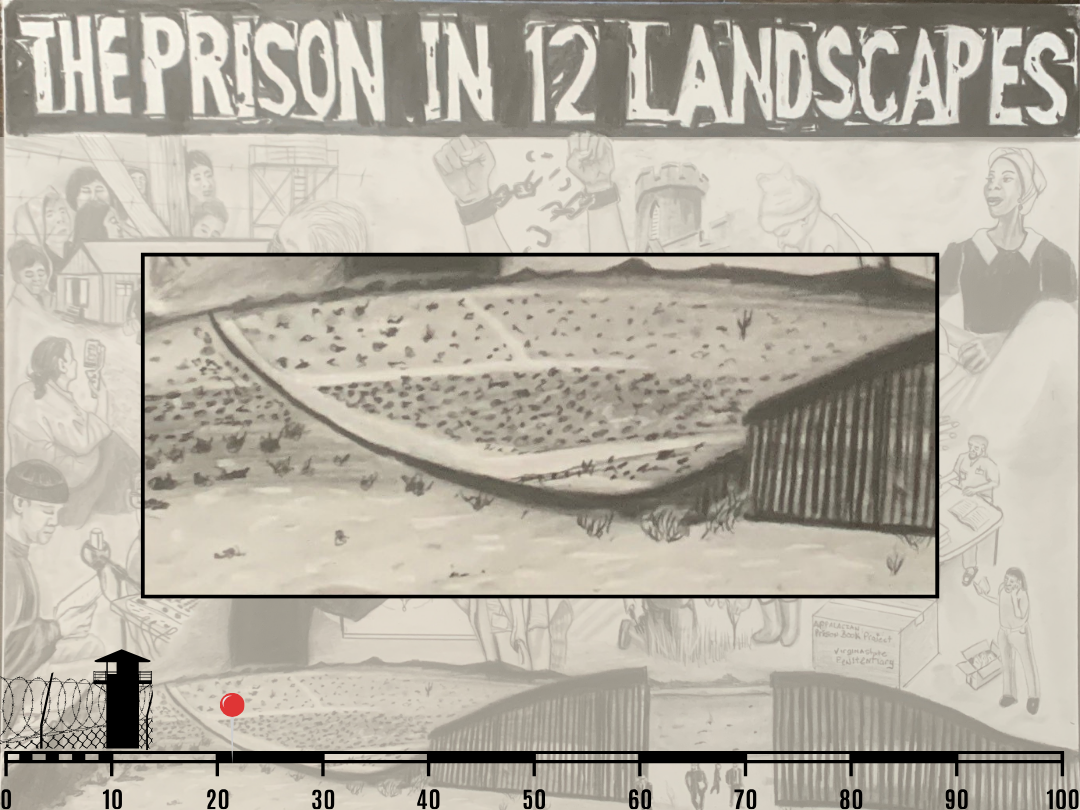
This Q&A is part of a series, Prison in 12 Landscapes, featuring companion pieces from Ray Levy Uyeda and Tamar Sarai. The series runs through September and is organized to introduce readers to subjects beginning with the most—and easing into the least—proximate to prisons’ material form. You can read through the full series here.
This interview has been edited for length and clarity.
Ray Levy Uyeda: Can you start by describing the field of critical environmental justice studies?
David N. Pellow: Critical environmental justice is a term that I’ve applied to ideas that other people—activists and scholars—have been thinking and writing about for some time. The term itself dates back to a 2005 book that I co-edited with Robert J. Brulle called Power, Justice and the Environment. I think every movement, and certainly every academic field, should take stock and ask, “How far have we come? Where are we falling short? What can we do to take our work and our vision to the next level?” Robert and I were drawing on ideas from scholars and scholar-activists like Dorsetta Taylor, Laura Polito, and of course Robert Bullard.
In my 2017 book, I charted four pillars that can offer a comprehensive understanding of what is causing environmental injustices and, by extension, climate injustices. I wanted to go beyond just talking about race and class and think about a whole range of categories of social difference that are bound up with the production of environmental and climate injustices. I wanted to use that as an opportunity to take intersectionality seriously, both within and beyond the human family. Then, the thinking was, if so many of us are impacted by climate and environmental injustices, there’s a real potential for a much bigger tent movement than would be suggested by simply framing this as a problem of racism.
Levy Uyeda: Your name is synonymous with the field of critical environmental justice studies, but I’m curious about those who have influenced your scholarly approach.
Pellow: My work has benefited from engagement with anarchists, anarchist-scholars, and people who’ve been in prison. One of the people who actually really impressed upon me as a person of color to take anarchism seriously was Ashanti Alston, a member of the Black Panther Party. He said, “I really feel like of all the groups, the anarchist mindset is open to understanding all the different oppressions.” He’s saying that anarchism, at least in its promise, is intended to actually address all forms of inequality. We can debate whether or not that’s true, but what’s probably been the most challenging, if not controversial, part of the critical environmental justice framework are the liberals and progressives still believing that the genocidal, ecocidal, misogynist, patriarchal state is going to somehow save us.
Levy Uyeda: Across the country, we’re seeing an expansion of policing and surveillance that mirrors an imperial expansion via militarism. Policing is a tool to crush resistance movements of all kinds. There’s a growing awareness that struggles for justice may have different factors that motivate their movements, but share a common enemy, like police and other arms of the state that enact violence through legal or lawful means.
Pellow: What illustrates this is the Israel exception, which is being applied to anything and everything. We see from Congress to state houses, including California’s Democratic Jewish Caucus, to our university systems, including the UC system, creating new laws, policies, protocols, and rules that are unabashedly and without question about protecting one thing and one thing only: the State of Israel’s right to do whatever the hell they want to do.
But it is now being applied to all other struggles. For instance, there’s a new bill in California’s state house that says if you want to protest anything on a University of California or a California State University campus, you have to get prior approval for when you’re protesting and where you’re going to protest it. I told a state assembly member here that if it passes, I and tens of thousands of other people will gleefully and openly violate it. There’s just no way I’m going to live in a society that says you’ve got to get permission to protest. We know what this is about. This is about supporting Israel and protecting Israel’s right to perpetrate ecocide and genocide. This is an example of what you’re talking about: the criminalization and attempt to neutralize and to control any and all forms of progressive activism.
We know that this so-called “war”—this genocide against the people and the land and our nonhuman relations in Gaza and in Palestine—has created a regional and global climate impact. We know war and militarization are the single most ecologically and socially destructive activities that humans engage in. Israel has the fifth-largest military on planet Earth, and as a perpetrator of genocide and ecocide, all of these things are connected to the movement for environmental and climate justice. Militarism is a threat to democracy, and it’s a threat to life on planet Earth.
Levy Uyeda: The stories we tell about climate change inform our beliefs of who’s to blame, what this rapid ecological decline is actually rooted in, and where solutions are located. How do you organize the story of climate change? What have you learned about how we measure climate change?
Pellow: Back in September of 1992, Robert Bullard gave a keynote address at a conference in Chicago on environmental justice. I remember him saying it took 500 years for this system to be built up and for all of this harm to be caused, so we need to come up with a plan for the next half millennium. You can say that’s really daunting, if not disempowering—especially if you were hoping we could knock this out in a couple of years. The other way of looking at it is that if it took this long for things to get this bad, we’re reminded that these systems of domination don’t just happen. They require enormous amounts of resources, financing, and labor, as well as enormous amounts of buy-in and conditioning of people to support them. The people in the institutions that are harming us and our planet require a lot of power, time, and resources to get this done, and these systems are constantly having to be maintained. If we withhold our support, then we can do anything. Anything is possible.
Author
ray levy uyeda is a staff reporter at Prism, focusing on environmental and climate justice.
Sign up for Prism newsletters.
Stay up to date with curated collection of our top stories.