Anti-fatness as anti-blackness: Violence at home, violence abroad
Anti-fatness is anti-blackness. In this way, fatness, as with blackness, is always and already criminalized, penalized, objectified, and marginalized
For all of my life, I have been fat. Even at my smallest, I was larger than everyone else around me. A lot of kids loved me—and I was a very argumentative child who learned at an early age how to advocate for myself, so I never necessarily allowed anyone who didn’t love me to bully me—but I was picked on often for being fat. And for eating. Eating is an essential part of life. If we do not eat, our bodies do not get the necessary nutrients they need, and our organs fail us. In other words, without food, we have no energy, no growth, and, ultimately, no breath in our lungs. But I was too fat to eat, and nothing I ate was ever right. The apple was too small to have any significance, and the salad had just a little too much ranch dressing to matter, but I couldn’t openly enjoy the pizza. There was no way I could publicly eat those cookies. So I didn’t eat—at least not in front of others.
I vividly remember multiple visits to my pediatrician that were centered solely around my eating. My mom scheduled these appointments after learning that I would go all day—sometimes even two—without eating. At those visits, we’d talk for long periods about what I ate, when I ate, and why I wouldn’t eat. Embarrassingly, I told my pediatrician that I didn’t eat because I didn’t want to become any fatter than I already was. In one appointment, I remember her responding with, “I understand that, Da’Shaun, but if you don’t eat, your body will assume you’re starving yourself and will store all those fats—this will make you gain more weight.” What I didn’t want to tell her, however, was that I didn’t want to get fatter because I was already increasingly antagonized for my weight, which translated to being judged whenever I did eat.
I’d grown such a fear of eating in front of others that the only solution I saw was not to eat at all. I was in elementary school. By this time, so early in my life, I already had such a toxic relationship with food and eating. I actively ate less so that I would not be berated, verbally abused, mistreated, or judged for nourishing my body. What I’d internalized was that everyone else thought that I should die. And as a kid who also lived with chronic major depressive disorder, I didn’t much disagree.
In the midst of this, while still in elementary school, I was diagnosed with a severe gastrointestinal (GI) disorder. Before anyone noticed the severity of this, I’d lost more than 25 pounds, give or take, in weeks. My weight was dropping rapidly because of how this disorder was eating away at me, but I was happy that everyone else around me was finally happy with my body. When the GI tract problem was first discovered, I was immediately flown to Chapel Hill’s hospital to be operated on. This was the first of three times I was hospitalized for this disorder between my elementary and middle school years.
This was all horrifying, but I still got no better with eating. I was afraid to not eat, I was scared to eat too much, and I was afraid of possibly eating the wrong thing. Developing that disorder only gave me more guidelines on how to remain in a relationship that was already harmful and was only worsening by the day. I eventually gained all the weight back and sat in countless appointments with varying GI specialists, nutritionists, and my primary care doctor, where each of them harped on my weight for the entirety of our appointment. Suddenly, I was back to square one: no solutions for my eating and more internalized shame for my weight.
In 2020, I was pushed to reflect on my childhood while working to complete the manuscript of my book, “Belly of the Beast: The Politics of Anti-Fatness as Anti-Blackness.” I had come to realize that no one ever referred to what I was experiencing as disordered eating. Not a single doctor or other medical professional who listened to me talk about my relationship with food and eating considered that I might have an eating disorder (ED). In fact, when my mom once named ED as a possibility to one of the doctors, without hesitation, he responded: “That’s not likely, as eating disorders aren’t typically seen in boys, especially when they are African American and overweight.”
These are the memories imprinted in my brain. While information about eating disorders and their impact on black communities were still developing during my formative years, it’s disappointing that I went through all of those years with what I’m sure was an eating disorder and was written off simply because I was perceived as a boy, black, and fat.
In my reflections, it was clear to me that I was failed; failed by every doctor who saw my body as an opportunity to support their abuse and didn’t see me as alive enough to recognize that what I truly needed was treatment and a therapist who specialized in treating patients like me. Failed by nutritionists and dieticians committed to reproducing the violence of the diet industrial complex, whose work was not focused on teaching me how to build a thoughtful relationship with food, and who engaged me with an understanding that my black and fat flesh placed me outside the scope of care.
I recognize this not only as intimate violence but because personal relationships to food cannot be divorced from the way colonial entities moralize and weaponize food. The medical industrial complex exacerbates this violence; it is permitted and sustained through the gendering of medical issues and treatment, as well as the cissexism, biological determinism, and anti-black anti-fatness at the very foundation of these institutions.
Anti-fatness as anti-blackness and diet culture
Fear of fatness and the preference for thinness are, principally and historically, not about health, but rather, they are a way to legitimize race, sex, and class hierarchies. “Belly of the Beast” seeks to clarify these modes of violence that justify defining anti-fatness as anti-blackness. Anti-black anti-fatness is the framework by which the black fat subject is relegated to a bifurcated abject human-animal experience; experiencing both the objectification and subjugation of its flesh and Being. The global structure determines how we are engaged in life and D/death as well as who lives and who dies. Anti-fatness is anti-blackness. In this way, fatness, as with blackness, is always and already criminalized, penalized, objectified, and marginalized.
In “Fearing the Black Body: The Racial Origins of Fat Phobia,” Sabrina Strings details how fatness on the black subject set the precedent for how fatness would be engaged in the u.s. and the world. What Strings makes clear is that the moment Europeans saw Africans for the first time, they decided they were too round and too black for care. It was in the early 19th century that anti-fatness was established as a coherent ideology. As the slave represented capital and forced labor, fatness had to become about greed and ungodliness. When fatness became blackened, it could only ever be impure, unrighteous, and beastly.
To better understand this shift to fatness as blackened and demonized, we can turn to examine diet culture.
Diet culture and the diet industrial complex are the written and unwritten pact between food, medical, and health care industries and billionaires with a vested interest in building and sustaining a socioeconomic system under which fat people are stolen from and harmed through restriction, abstinence, and carceral logics. “Morality” and “food” cannot be separated because the birth of diet culture—the same thing that helps sustain food deserts—comes from people who understood the two to be linked. Food has long been used as a way to indoctrinate us into a culture of abstinence and restriction, so if we abstain from foods we may enjoy, we can control other parts of our lives “better.”
From its origins, diet culture was intended to force fat people to deny our desires and to abstain from the things that bring us pleasure. This concept was introduced, at least in part, by Reverend Sylvester Graham, creator of the infamous graham cracker, and Dr. John Kellogg, the co-creator of the cornflake and Kellogg’s cereal. Kellogg and Graham both thought of food to be a gateway to sexual desire and sexual desire to be something immoral, evil, and dangerous. It is this belief that structures what we know as diet culture. And this is all dictated by desirability.
In “Mama’s Baby, Papa’s Maybe: An American Grammar Book,” Hortense Spillers details how american grammar defines and redefines black flesh in a way that makes our relationship to gender and humanness one that is complicated. She writes, “I would make a distinction in this case between ‘body’ and ‘flesh’ and impose that distinction as the central one between captive and liberated subject-positions. In that sense, before the ‘body,’ there is ‘flesh’…” With this, Spillers offers a profound distinction between body and flesh and an analysis that clarifies that those who are captive—slaves, by another name—are beings that are unintelligible due to the language, imagery, and structures that define what is and isn’t human, what gender is and does, and therefore to whom a body does or does not belong.
This is to say that as black folk are registered as and understood to be property, we are always defined by (and therefore must always struggle against) being dispossessed. And to be dispossessed is to be without a body. “Body,” here, is developed and defined over and against the flesh. In this way, “body” must always mean free, and “free” is defined by whose flesh can and cannot be owned. Flesh is the bodily possibility that discourse cannot and will not acknowledge; it is the unknown, innominate, and contested.
To be without a body is to be reduced to flesh—subjugated and deprived. As such, what is the utility of movements—or demands, at least—that assume we have the same access to the institutions that render the black body to flesh through policing, surveillance, forced labor, and incarceration? This is to say that justice relies on one’s ability to belong, and belonging depends on one being a citizen and not a fugitive. How can the black/fat belong if we are always on the run? At risk? If we are always being whipped, beaten, and killed as a means to maintain the social order of the world, what freedom can there be for us if the world does not burn?
Death, long-suffering, criminality, and even resilience, all give black fatness its meaning. That is to say that blackness is an “unknown and marked quantity.” Our flesh and (attempt at) embodiment act as anchors that ground these violences; that without a slave to patrol, there would be no police; that without a slave to control, there would be no health and medical institutions that manufacture the body mass index (BMI) or “obesity epidemic”; that without a slave to use as property and as currency, there would be no government-funded scientific institutions used to punch down at fat folks.
‘Kill the very things designed to kill us’
Any form of change that keeps civil society intact is a change that harms the black fat. Instead, all forms of resistance—through protest, writing, teaching, art, etc.—must be done with a commitment to destroy the structures that keep us bound and simultaneously force us to always be on the run. As I wrote in the foreword of Joy James’ book, “In Pursuit of Revolutionary Love: Precarity, Power, Communities,” revolution is about the death of Desire and of our desires. It is about sustained movements, political will, and laboring for the sake of revolution to kill the very things designed to kill us.
To clarify the throughline between war, eating disorders (or disordered eating), disembodiment, and fatness, I look to Palestine. Palestine is proof that the throughline is fascism and anti-fatness as anti-blackness. It is this on which food apartheid, body fascism, diet culture, and war preparedness are all built.
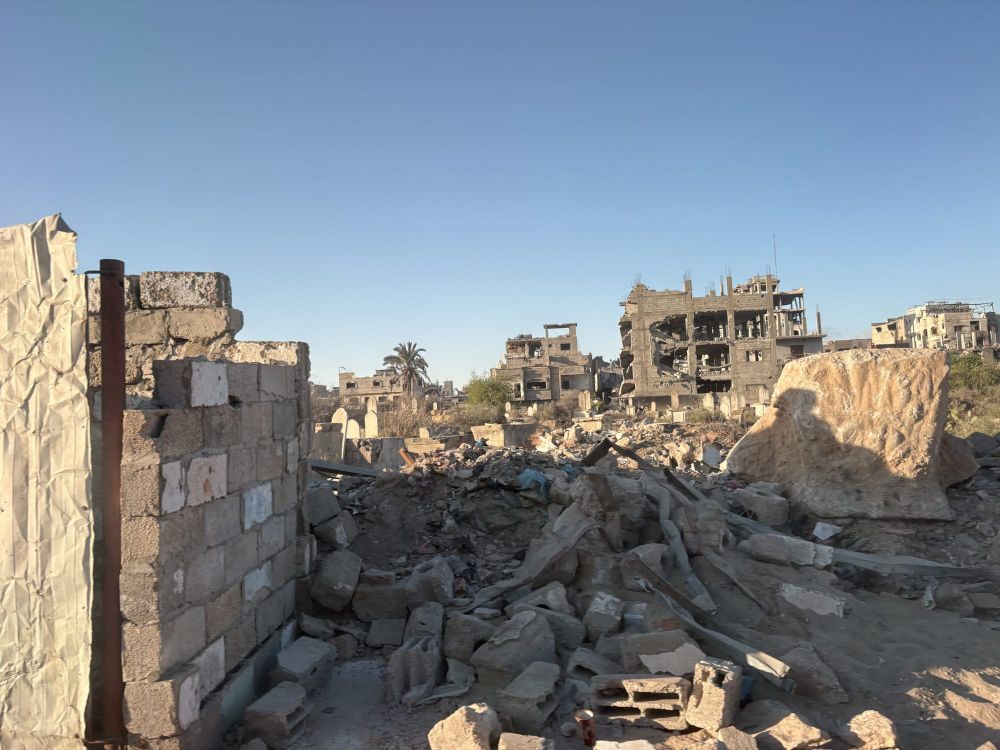
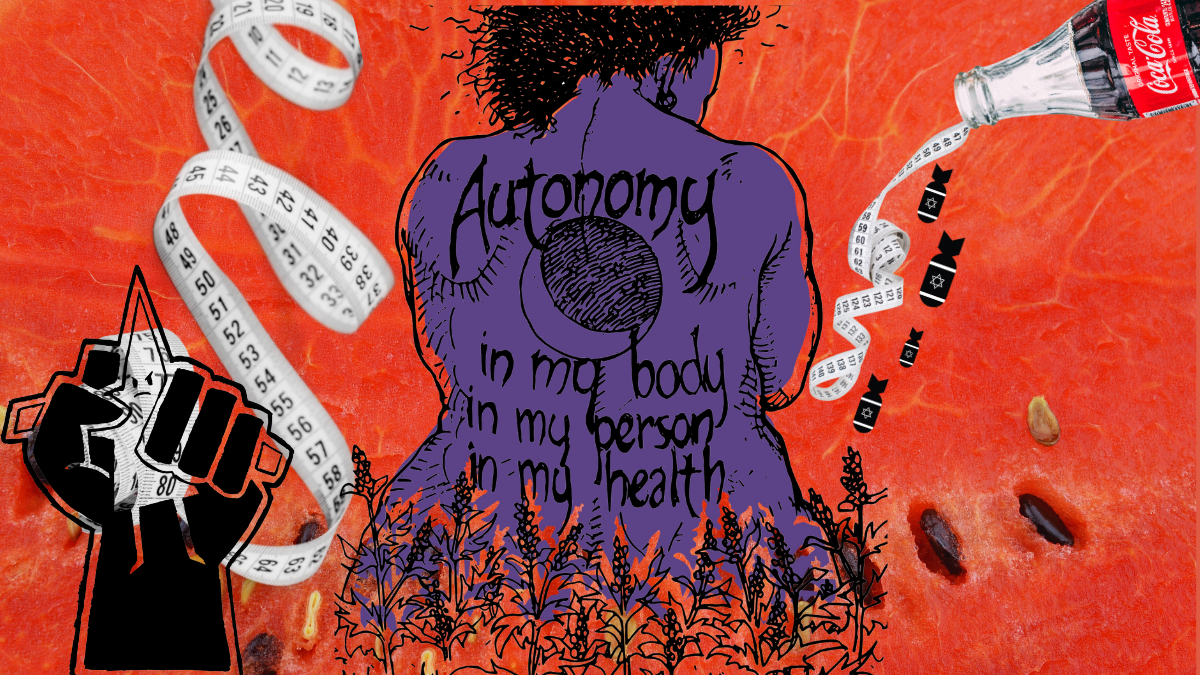
In 2007, Israel placed Gaza under a suffocating blockade, after imposing restrictions on movement and goods in Gaza since the 1990s. Dov Weissglas, who was the advisor to the israeli prime minister at that time, noted a year prior that the purpose of the blockade was to “put the Palestinians on a diet, but not to make them die of hunger.” Under this blockade, the israeli government has prohibited foods labeled as “junk” or “luxuries”—like chocolate and potato chips—from being imported, and has prohibited or restricted other essentials like water. It has been reported that the israeli government calculates the minimum amount of calories every age and gender group in Gaza needs to determine the amount of food permitted in Gaza each day. Deterred by settler death threats, fishermen and farmers are prohibited from utilizing parts of their farms to catch or grow more food. For all intents and purposes, Gazans have been starved—in many cases, to death, over time with long-suffering and intensified since October 7, 2023.
Despite the genocidal violence Gazans and other Palestinians in the region have been forced to endure, The Jerusalem Post—one of the oldest, largest, and most-read English papers in israel—published an article on Nov. 5 of last year titled “How to use the stress from the Israel-Hamas war to lose weight.”
The Jerusalem Post’s article calling for israelis to use the “ongoing stress and anxiety” to aid them in “shedding a few pounds” is about preparing israelis for the war they intend to continue waging on Gaza (and Palestinians in both the West Bank and East Jerusalem) for the sake of Western interests. In this way, israel is modeled after the u.s. and takes a page from its imperial playbook. Take, for example, Michelle Obama’s “fight against childhood obesity” campaign—which largely targeted black children and kids of color who are disproportionately affected by poverty—wherein she cites her imperialist interests as the basis for this push against “childhood obesity.” In 2011, the First Lady spoke at the National League of Cities conference to “make the economic case for communities to address childhood obesity.” She argued that “childhood obesity is not just a health or family issue alone. It is an economic issue that impacts workforces, job growth, and local budgets across the country.”
She plainly states,
“… And you aren’t the only ones whose priorities have started to shift because of the impact of childhood obesity. Just take the military, for example. Now, when you think about the issues that are keeping four-star generals up at night, childhood obesity is probably not one that comes to mind, right? But from the day we launched ‘Let’s Move’—and that’s our nationwide campaign to tackle this issue—high-ranking military leaders have been some of our strongest supporters.
And that’s because right now, today, nearly 27 percent of 17- to 24-year-olds are too overweight to serve in our military. And for many who make the cut, years of inactivity and poor nutrition mean that they often are still overweight, and out of shape, and they’re far more likely to injure themselves in basic training.
So military leaders realized way before many of us that obesity was affecting their core mission. They realized that it was driving up their costs. And then they decided to do something about it.”
There is an explicit connection here between israel encouraging their citizens to “use the war” as a means to “lose weight” and Michelle Obama’s campaign against fat children to prepare them for the u.s. military (which also means preparing them for war against Palestinian people).
But I want to be clear: these tactics are not new. War preparedness has been coupled with exercise-as-act-of-patriotism since at least the 1930s. It is, in many ways, central to military strategy and recruitment; it’s necessary to maintain an “effective” ethnostate.
This kind of campaign to prepare citizens in the West, or those whose countries are backed by the West, for war, helps to foster, generate, or sustain specific attitudes about food. As a result, food, or rather certain types of food, becomes directly associated with certain types of bodies (or flesh). This helps to reify the supposed need for state-sanctioned food apartheid, food deserts, and food insecurity. It is this that creates or maintains the position for food to be moralized. When we call some foods “junk” or “unhealthy,” we moralize that food, and in doing so, (im)moralize some bodies/flesh. This is what sets the black fat subject apart—a black, fat (or blackened and fattened) subject-position is always already understood as immoral as foods often associated with our being are understood as “unhealthy” or “bad.” It is not by chance that foods that are “moral,” “better,” “good,” or “healthy” are foods most often associated with (and afforded to) white, thin, affluent people.
When food is moralized—when we teach people that food is something that must be earned, worked for, monitored, and sometimes withheld—we are indoctrinated into a belief that food is not used for nourishment but rather for punishment and as a weapon; we teach ourselves and others that we must abuse our bodies or flesh for the sake of “earning” nourishment; we reify the notion that “unhealthy” relationships to food and size is foundational to being in right relationship with our bodies and others. What’s more, it reinforces, or perhaps confirms, the concept that certain bodies are superior to certain flesh, and that to obtain power one must be thin or muscular.
This violence and these structures create the conditions for thin and otherwise “healthy” people to believe they have moral superiority over fat folks, that their bodies—and the food associated with their bodies—are innately “better”; that fat folks are inept, and therefore are people who just “couldn’t become thin.” These attitudes spill over into our social movements, our collective politics, and our cultural identity.
It’s important that fat politics, fat activism, and all movement spaces actively work against these ideas; that the work we do clarifies the multilayered experience of existing under these circumstances. Food deserts, food apartheid, and food insecurity are the result of the black fat being understood as immoral.
If you care about any of the aforementioned issues, including food deserts and genocide, you must also care about anti-fatness. To not care about the latter is to make null your care for the former.
Editor’s note: non-capitalization and lowercase settings for American, U.S., Israel/Israeli, and Black are used as an intentional style choice by the author.
Author

Da'Shaun is a trans theorist and Southern-born and bred abolitionist in Atlanta, Georgia. They are the author of Belly of the Beast: The Politics of Anti-Fatness as Anti-Blackness, which was awarded t
Sign up for Prism newsletters.
Stay up to date with curated collection of our top stories.