Unanimous Supreme Court ruling clarifies legal standard for Title VII employment discrimination claims
The court ruled Thursday in Ames v. Ohio Department of Youth Services that majority-group plaintiffs are entitled to the same standard as minority groups
In a unanimous decision, the U.S. Supreme Court ruled June 5 that majority-group plaintiffs are entitled to the same legal standard as minority-group plaintiffs when bringing employment discrimination claims under Title VII of the Civil Rights Act of 1964. The decision in Ames v. Ohio Department of Youth Services clarifies, rather than changes, the legal framework for these claims, according to the NAACP’s Legal Defense Fund (LDF).
The case centered on the 6th Circuit’s application of the so-called background circumstances test, a heightened evidentiary standard applied when plaintiffs from majority groups, such as white workers, allege employment discrimination. The Supreme Court did not overturn Title VII standards or alter the foundational McDonnell Douglas burden-shifting framework used in employment discrimination cases.
The McDonnell Douglas framework is a legal standard used to determine whether a plaintiff can prove their claim of discrimination. The employee must first present evidence that creates a reasonable inference of discrimination. Then, the burden shifts to the employer to articulate a legitimate, nondiscriminatory reason for their action. Finally, the burden shifts back to the employee to prove that the employer’s reason is a pretext for discrimination. It is typically used when there is a lack of direct evidence of discrimination. Instead, the justices unanimously concluded that the 6th Circuit misapplied the law.
In an interview with Prism, Avatara Smith-Carrington, an attorney for the LDF, which submitted an amicus brief in the case, emphasized that the ruling offers legal clarity without endangering existing protections.
“It still allows for courts to consider the way that discrimination shows up in the U.S., especially in employment against LGBTQ people, Black people, and other historically marginalized people,” Smith-Carrington said.
Smith-Carrington underscored that the ruling clarifies how the first step of the McDonnell Douglas test should be applied: Plaintiffs alleging discrimination do not need to meet a heightened burden of proof merely because they belong to a majority group.
Given the climate of backlash and legislative efforts aimed at dismantling diversity, equity, and inclusion (DEI) initiatives, many feared that the decision might weaken workplace protections or stoke further anti-DEI sentiment. LDF, however, sees the ruling as neutral on that front.
“The court continues to recognize that this kind of standard was never intended to be rigid,” Smith-Carrington said. “There’s supposed to be flexibility to account for the fact that when a person is bringing a discrimination claim, the facts are going to differ according to the person, according to the events that happened.”
They noted that DEI practices aren’t about giving advantages to historically marginalized groups, but about “a recognition of barriers” that have long blocked equal opportunities in employment.
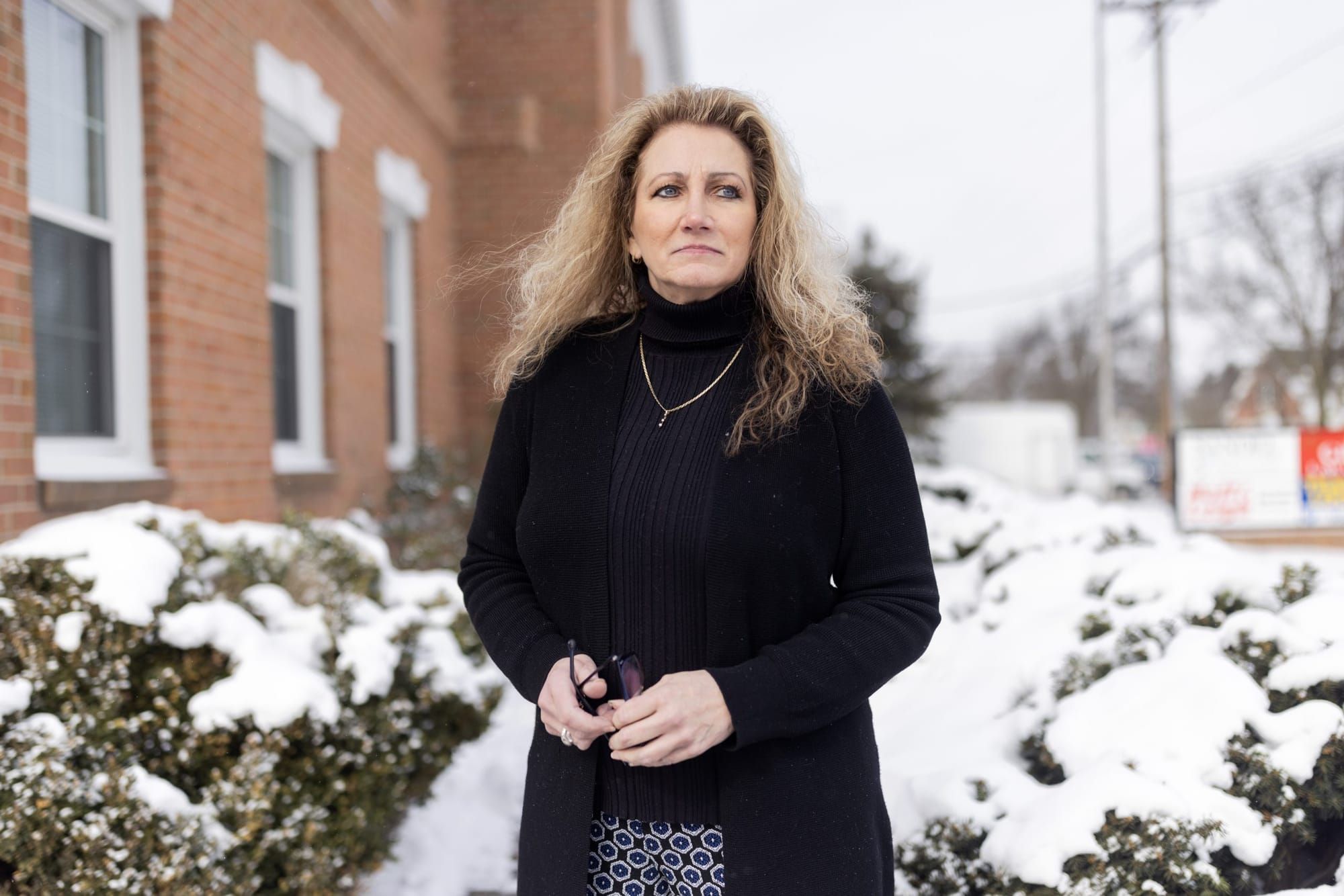
With the decision vacated and remanded, the case returns to the lower court, which must now re-evaluate plaintiff Marlean Ames’s discrimination claim using the correct legal standard. Ames, a straight white woman, alleged that she was discriminated against in her employment at the Ohio Department of Youth Services. Ames, who had worked in the department since 2004, claimed that she was denied a promotion and demoted in favor of less-qualified LGBTQIA+ colleagues.
Ames first filed a lawsuit in the Southern District of Ohio, which granted summary judgment in favor of the department. The court applied the background circumstances test, requiring Ames to provide evidence that the employer discriminated against the majority group.
The appellate court upheld the dismissal, stating that Ames failed to meet the background circumstances requirement. The Supreme Court has now ruled that that was a misapplication of the law.
LDF expects the lower court to apply the clarified framework, but Smith-Carrington stopped short of predicting the outcome.
“What the court is doing is just essentially saying, ‘We’re sending the case back to the lower court, we’re going to be instructing them that they need to correctly apply the legal standard to decide, essentially, whether Ms. Ames can continue her employment discrimination claim,’” Smith-Carrington said. “I think what’s fair to say is that the lower court maybe didn’t think of the right steps to get there, which is clear, but it doesn’t take away from the fact that the decision they reached was correct.”
The LDF lawyer highlighted a broader context of inequality in how discrimination claims are adjudicated. They pointed to statistics cited in LDF’s brief showing that white plaintiffs are significantly more likely to succeed in Title VII lawsuits than nonwhite plaintiffs.
“There might be a narrative that because of how this background circumstances test was being applied, that it disfavored, potentially, members from majority groups,” said Smith-Carrington. “But the statistics and the numbers are just not there. And in fact, what often is happening is that historically marginalized people just continue to face discrimination at much higher rates.”
The Supreme Court’s decision, while narrowly focused, lands at a time of increasing scrutiny and politicization of workplace equity programs. Advocates say that although the opinion does not change the law, it is a reaffirmation of the law’s flexibility to meet the complexities of discrimination in modern America, and a call to continue fighting for equity in every workplace.
“That’s why we have Title VII. It’s there to protect all individuals,” Smith-Carrington said.
Editorial Team:
Sahar Fatima, Lead Editor
Carolyn Copeland, Top Editor
Rashmee Kumar, Copy Editor
Author

Alexandra is a Cuban-American writer based in Miami, with an interest in immigration, the economy, gender justice, and the environment. Her work has appeared in CNN, Vice, and Catapult Magazine, among
Sign up for Prism newsletters.
Stay up to date with curated collection of our top stories.