Powered by renewable energy, Alaska growers envision the future of food
The Gulf of Alaska has become one of the world’s most economically productive commercial fisheries. But in Kodiak, Indigenous leaders, community growers, and grassroots food cooperatives are helping neighbors value homegrown produce
This is the third article in a three-part series called “Reseeding the Land.” This series explores land revitalization, cultural stewardship, and food access in a time of significant decline of ecological health and climate upheaval across the U.S. Read Part 1 and Part 2 here.
When the Alutiiq Museum in Kodiak, Alaska, reopened in late May after a four-year renovation, its refreshed collections included a colorful portrait of abundance, ancestry, and neq’rkapet—“our food,” in the Alutiiq language.
“When We Were Seals,” a painting from Alutiiq artist Lena Amason, portrays 29 animal relatives of south-central Alaska’s Alutiiq/Sugpiaq people. A vibrant marine medley, themes of coexistence churn in each brushstroke.
Tunnangaq (puffin) and uyaqurtuliq (loon) float in fellowship atop turquoise ocean flows. Wiinaq (sea lion) and isuwiq (harbor seal) propel in pairs. Arlluguaq (salmon shark) and iqalluarpanguaq (capelin) share slipstreams at depths. Qanganaq (ground squirrel) and kaugya’aq (fox), standing shoulder to shoulder on the horizon line, survey their swimming kin from shore.
“At the heart of my work are stories and memories of adventures on and in the waters surrounding Kodiak Island,” Amason, who is also a museum assistant at Kodiak History Museum, said in her artist’s statement. “Beach walks, skiff rides, hunting, subsistence, and commercial fishing days … the days of all kinds of weather and attitudes of animals and people of this Island.”
“When We Were Seals” celebrates a rich Sugpiaq tradition of living with and from the sea and land. The scene is not a distant world, but the ongoing story of health and cultural practice in Kodiak’s communities.
“Relying on wild resources is more than subsistence,” reads an educational pamphlet associated with the artwork, written in partnership with Boston University. “It is suumacirpet—our way of living.”
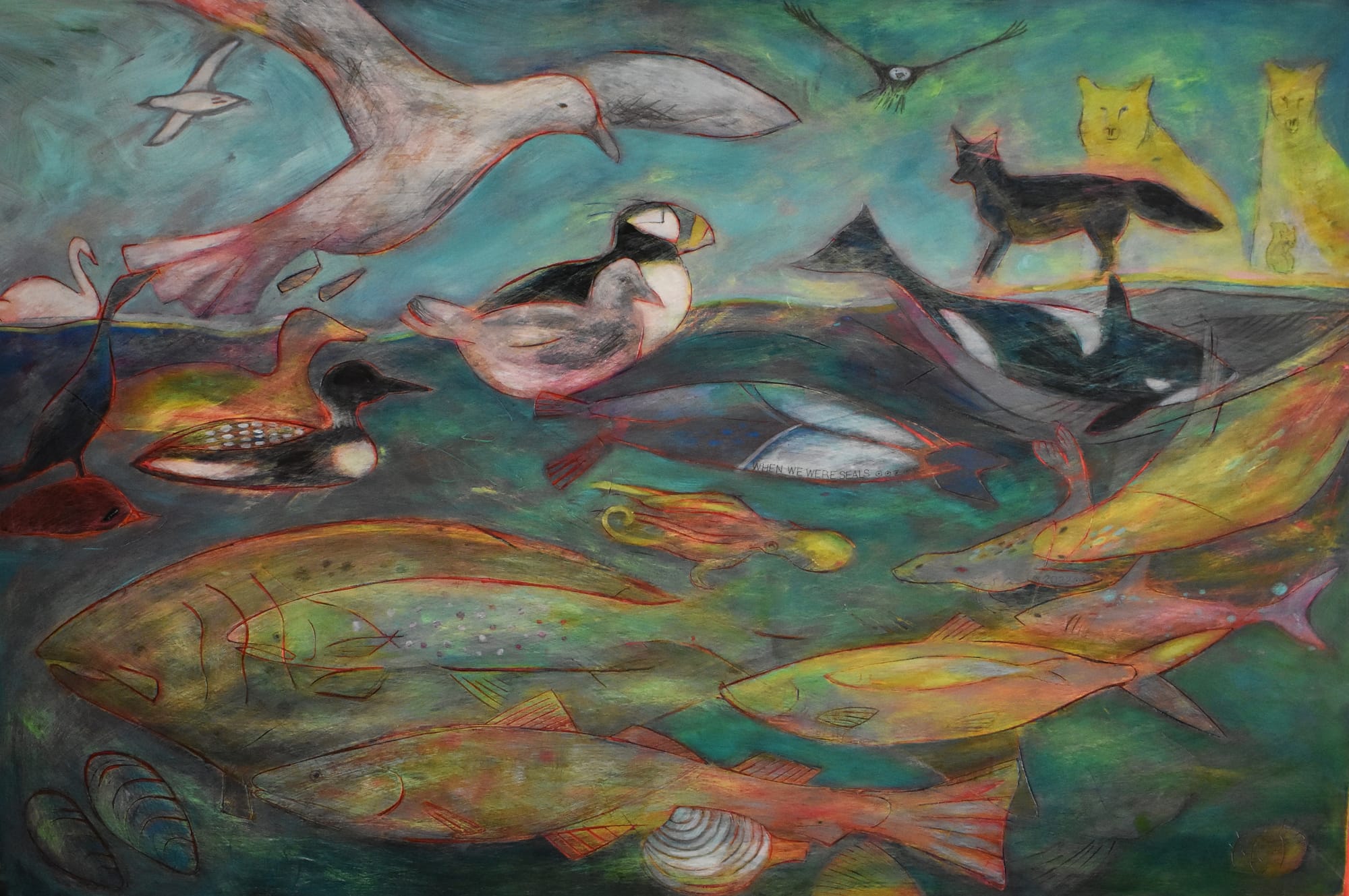
“This project illustrates the breadth of local resources used by our ancestors,” said April Laktonen Counceller, the Alutiiq Museum’s executive director, in a press release. “Archaeologists have identified at least ninety local animals harvested for food and materials— from whales to periwinkles. The impressive list reminds me of the incredible knowledge our people have about the natural environment—of weather patterns, animal behavior, and harvesting techniques.”
For more than 7,500 years, lifeways in the villages of Kodiak—Alaska’s largest archipelago and the ancestral homelands of the Sugpiaq people—are marked by full bellies and fuller hearts, sustained by skill and careful study of the wild world. Generations of Sugpiaq kayakers steered their wooden hunting boats through powerful sea currents, tracked animals on foot across the islands’ rocks and crags. The proteins and fats brimming in niklliq (salmon), saqiq (halibut), amikuq (octopus), and taquka’aq (brown bear) paired deliciously with the vitamins and antioxidants packed within native flowers, kelp, and berries sprouting from soils above and below the water line.
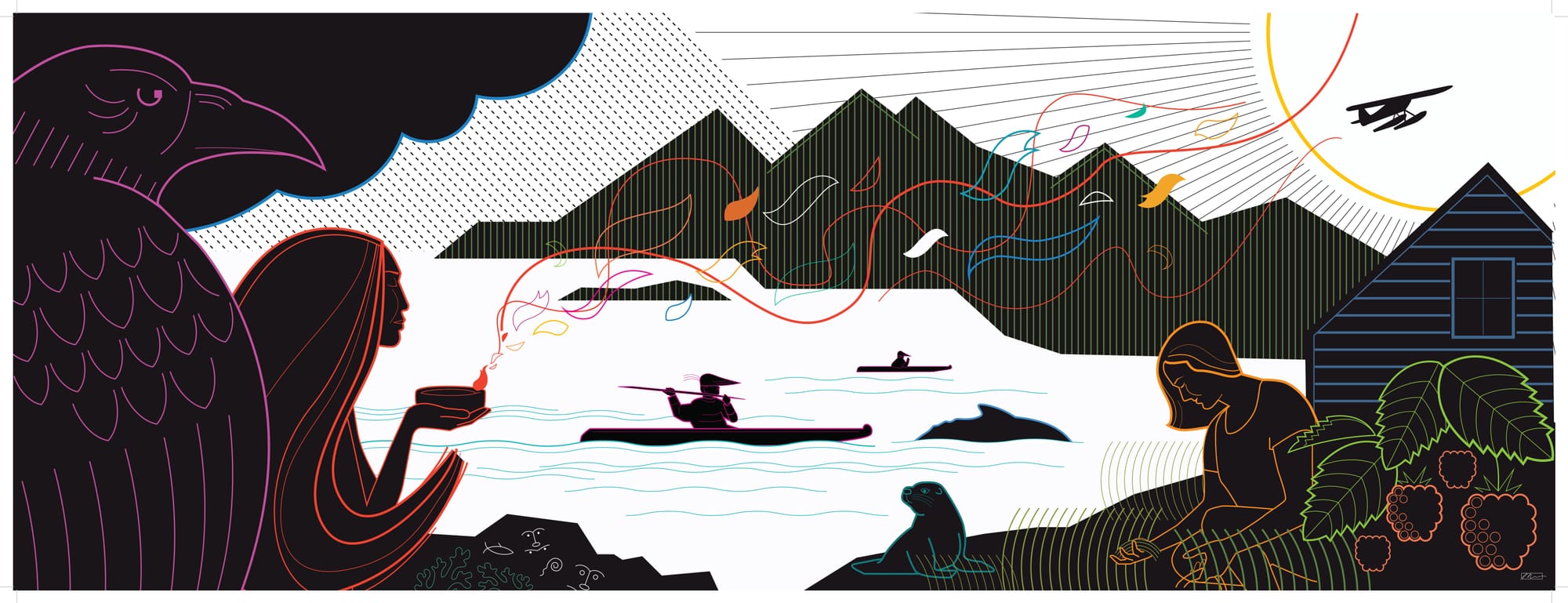
Recent efforts by the Alutiiq Museum to document these culinary traditions have resulted in cookbooks featuring wild foods and instructional videos on plant crafts. Each recipe begins and ends with two reliable ingredients: the effort required to fulfill a harvest and gratitude for the wild foods that make each meal possible. “The Fire of Living Culture,” the museum’s new outdoor mural by Sugpiaq artist Todd Metrokin, which debuted during the museum’s reopening, brings these scenes to life by centering the naniq (oil lamp).
“My design concept connects our past to our future—from creation (represented by the raven) to our ancestors, to modern life and beyond—through the enduring flame of the naniq,” Metrokin said in a press release.
As is true across many Alaska Native communities, kitchen tables are a vessel for kindness, and one’s wealth is measured by how much one gives. Sugpiaq stories, carvings, and meals have been shared for thousands of years around the naniq’s glow.
“The naniq’s flame echoes through time and grows richer in colors as it reflects a culture continuing to grow,” Metrokin said. “This represents the resilience of our people and is meant to act as a counterpoint to the notion that our culture is only a reflection of the past. It is a living, evolving blend of experiences, knowledge, and creativity that we bring forward and enrich with each generation.”
Sugpiaq lifeways are moving forward vibrantly in the wake of a violent regime. Russian fur traders colonized and occupied Kodiak beginning in the late 18th century. The United States furthered this legacy following its purchase of Alaska in 1867. Settlements were established across Kodiak Island, and Sugpiaq communities endured mass murder and enslavement. Children were separated from their parents and shipped to far-off encampments. Some were forced to attend the federal government’s Indian boarding schools, a system where at least 973 Indigenous children were killed. More than a century later, Alutiiq communities continue to wait for the remains of their children to return home.
Marine meals remain a staple of the Alutiiq diet, although their value on Kodiak Island today extends beyond nutrients. Just as Alutiiq culture and language faced erasure, the archipelago’s lands and waters were similarly co-opted to support the momentum of industrialization and Western settler-capitalism. Fishing and canning industries, which began to boom following U.S. annexation and subsequent statehood, continue to drive the island’s economy.
The Gulf of Alaska has become one of the world’s most economically productive commercial fisheries. Today, hundreds of millions of pounds of seafood is packaged and shipped from their homelands each year, routinely generating upwards of $100 million annually, depending on the size of the year’s harvest.
But for all the meals that leave Kodiak’s ports, a staggering amount of goods arrive in turn. The archipelago’s legacy of colonialism has fundamentally reshaped the demands and function of food in the region. Roughly 95% of the food eaten in Alaska is imported, and locals estimate that this figure is even higher in the Kodiak Island Borough, whose population today exceeds 12,000 people 1,500 of whom are Alaska Native.
In the late 1700s, more than 60 Alutiiq communities thrived across the archipelago. Today, just six remain: Larsen Bay, Akhiok, Old Harbor, Ouzinkie, Port Lions, and Karluk, with the majority of people living in and around Kodiak. Resisting the impacts of extraction, each comprises one part of Alutiiq Grown, a tribal collective with the mission of increasing the region’s food security by providing fresh and local foods to elders and community residents.
At the same time that Russian traders left a tragic legacy on Kodiak, Russian Orthodox priests often protected the Alutiiq people and were the first to introduce the practice of gardening, said Max Lyons, the project and marketing coordinator for the Kodiak Archipelago Leadership Institute.
“In this way, gardening becomes more than a practical act,” Lyons, who is also involved with Alutiiq Grown, said in an email. “It is also a way to reclaim our relationship with the land and reassert cultural identity on our own terms.”
The six Alutiiq communities engage in growing practices that combine tradition with creativity. Greenhouses, chicken coops, underwater farms, soil farms, and hydroponics hubs all continue to expand. But with just one farm—in the city of Kodiak itself, located on the island’s road system—the costs associated with expansion and development are high.
“We are increasing both the variety and quantity of what we grow,” Lyons said. “We’re also deepening our focus on seed saving, both to preserve native species and to adapt diverse crops to the unique challenges of the Alaskan climate. With so much reliance on imports, we see growing and saving seeds as a key step toward long-term food sovereignty.”
Alutiiq Grown is joined by other community leaders, non-Indigenous growers, and grassroots food cooperatives who are helping neighbors consider the value of homegrown fruits, vegetables, and starches. At a glance, growing produce makes financial sense in a borough where grocery stores are among the country’s most expensive.
But convincing a community of fishers to invest in farming is no small feat, especially when the challenges of cultivating fresh food are greater than simply changing people’s minds.
Much of Kodiak’s soil is infertile, growing space is greatly limited across the island’s mountainous landscapes, and seasonal temperatures and rates of precipitation make it difficult for crops to thrive.
Ian Zacher, the agriculture outreach and education coordinator for the Kodiak Soil and Water Conservation District, is among the small group of growers working to shift the community’s prevailing attitude: that the second-largest island in the country can endure forever on imports.
Zacher, who spent his youth growing in Humboldt County, California, practices what he preaches to community members in the affectionate Irish lilt that has never left his family, two generations removed from Ireland. His own farm, Feirme Béar Donn—“Brown Bear Farm” in Gaelic—persists through his own hard work and the support of his wife and two young boys. Zacher said the 2,040 square-foot family-run operation produces hundreds of pounds of leafy greens, potatoes, apples, berries, and carrots each summer.
That which Zacher doesn’t simply give away to neighbors in need of fresh food is stocked at the Kodiak Harvest Food Co-op and sold at weekend markets. The broader lack of harvested produce is a reminder that growing food on the island is still a new idea.
“You have to be insane to do it,” Zacher said. “You have to be deeply committed to the raising of food.”
The locally grown movement on Kodiak is small. To be mighty, it needs the next generation to step up. “Food is a lot like music and math,” Zacher said. “It’s a bridge.”
The average age of a farmer in the U.S. is roughly 58 years old; in Alaska it is nearly 57 years old. But there is also a healthy dose of optimism in the Land of the Midnight Sun: Compared to any other state, Alaska leads the nation in its percentage of new and beginning producers. In 2017, 46% of Alaska’s farmers were new and beginning.
Recouping a growing tradition will take time and investment, especially from Indigenous growers. This year, the Kodiak Area Native Association, through a partnership with the Alaska Climate Adaptation Science Center, is producing an island-wide food vulnerability assessment that will help the community, small businesses, and tribal growers envision and plan for their ideal food future.
A series of photographs taken by the reporter over a drizzly week this spring capture quiet moments and vivid scenes on the archipelago.
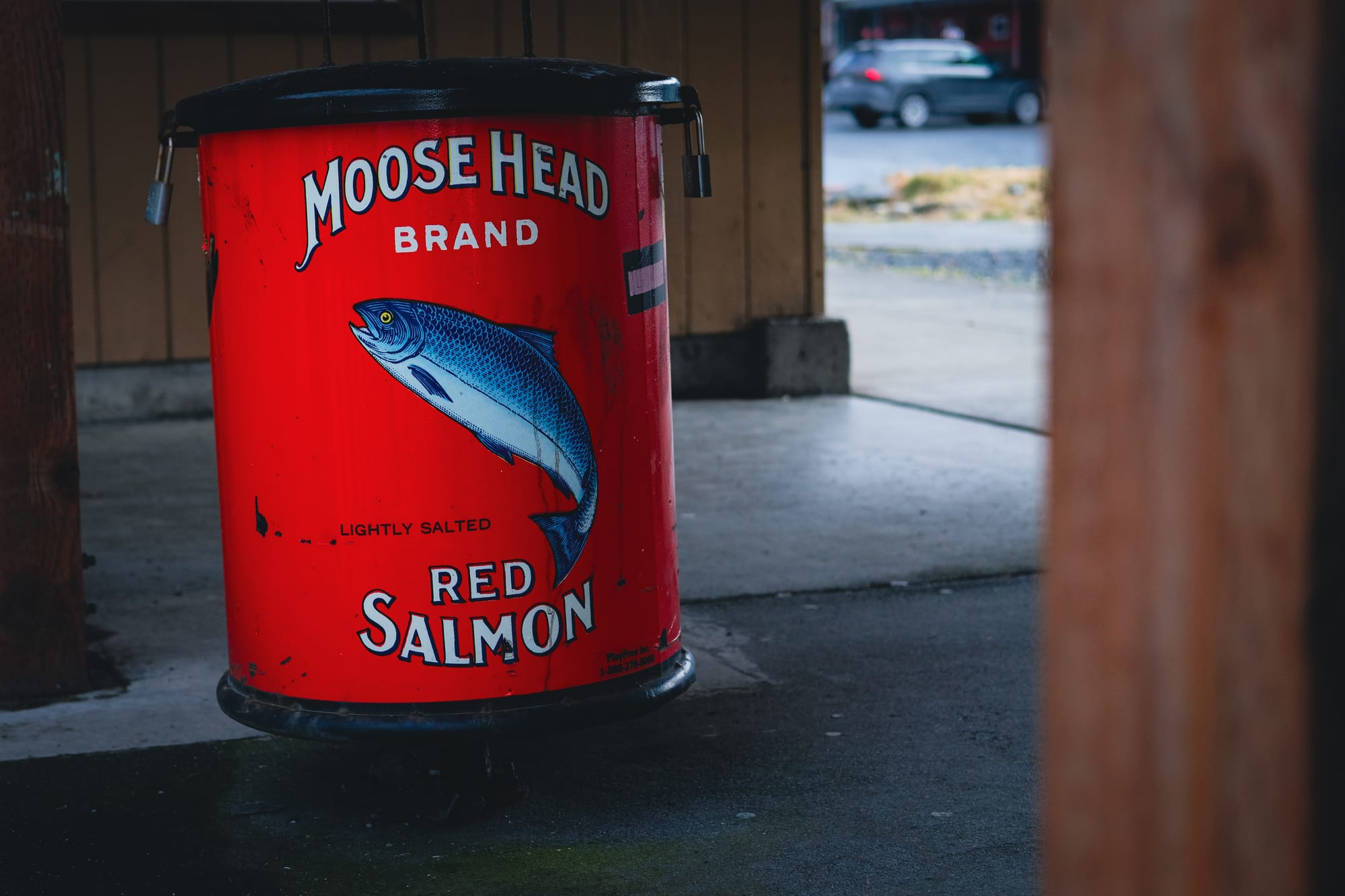
Kodiak’s maritime pride is always on full display. Trash bins styled as cans of salmon color the town’s street corners red.
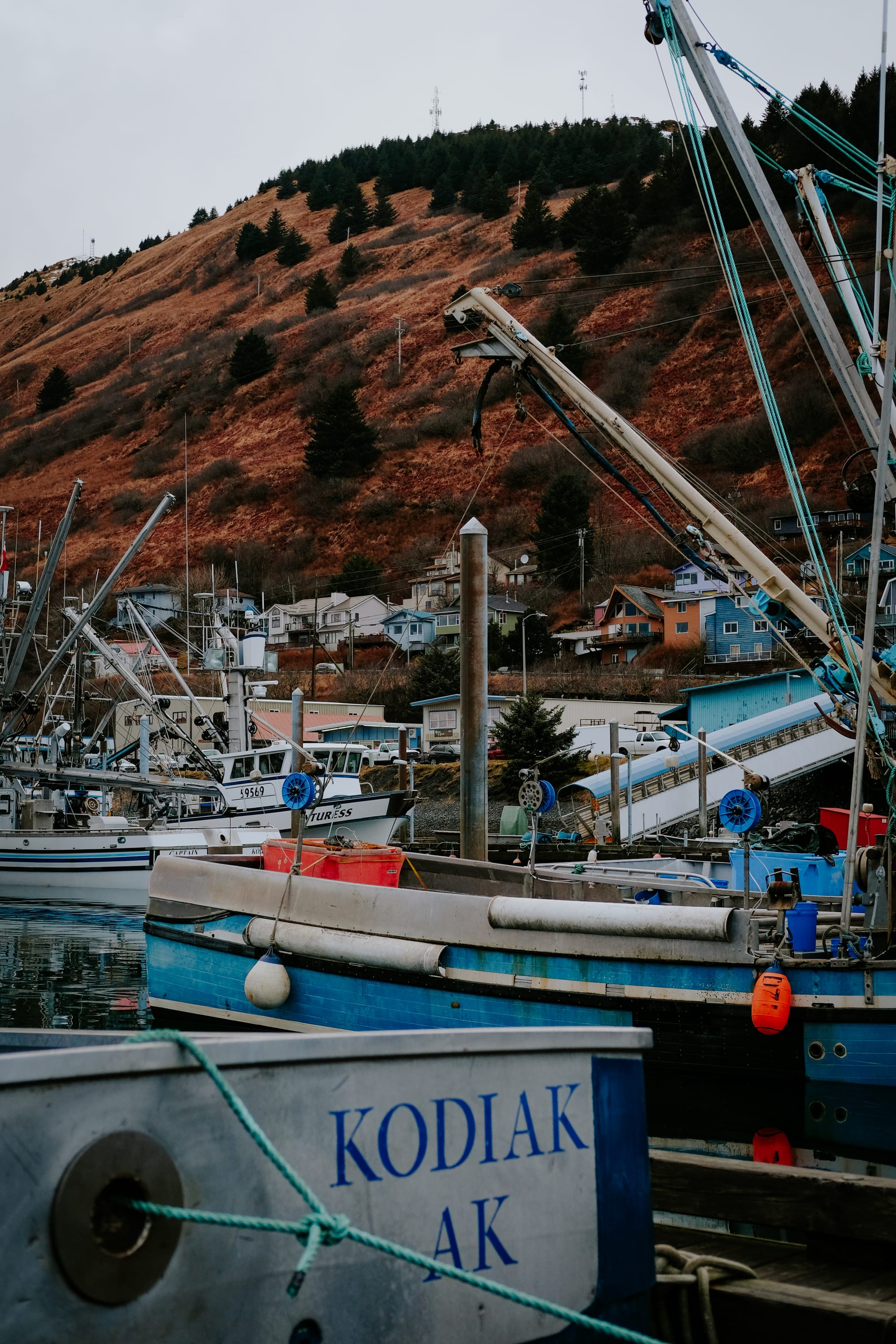
Vessels named for former loves and fiery skies fill the harbor with nostalgia, the wakes of Jacquelyn, June, and Beverlee Jo jostling New Dawn and Morning Star as they come and go through Chiniak Bay. The bustle of boatmen on the quays return these poems to the present, to stows that brim with fresh-caught pollock and cod, tomorrow’s hard-earned paychecks.
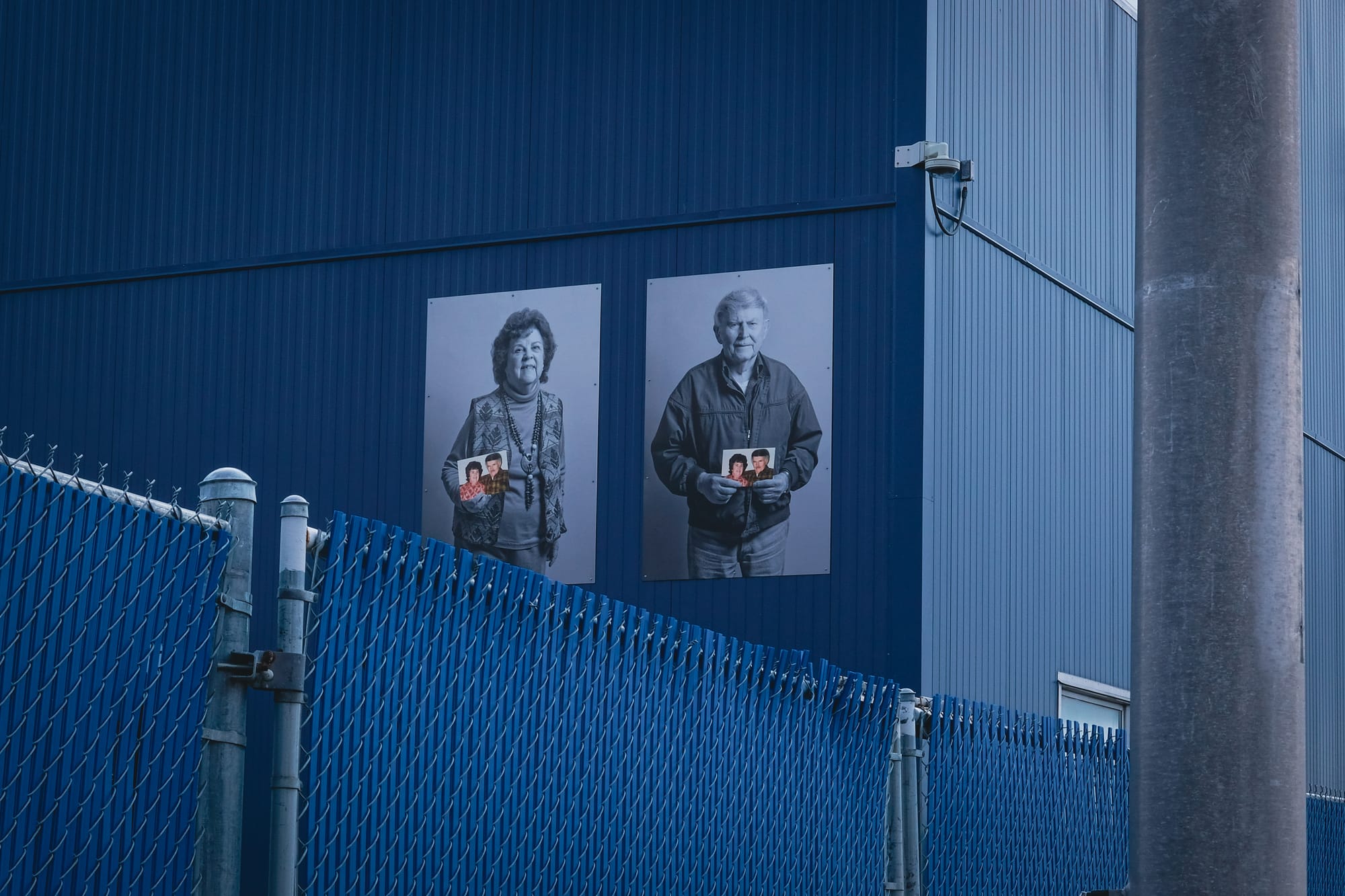
These jobs pass under the eyes of those who once held them: the retired fishers and dock workers whose portraits hang on many harborside buildings; coffee houses and hardware stores honoring Kodiak’s mothers, fathers, and grandparents. Their deep laugh lines harbor the joke that has danced on the tongues—and stuck in the noses—of generations of Kodiakans. You smell our town before you see it.
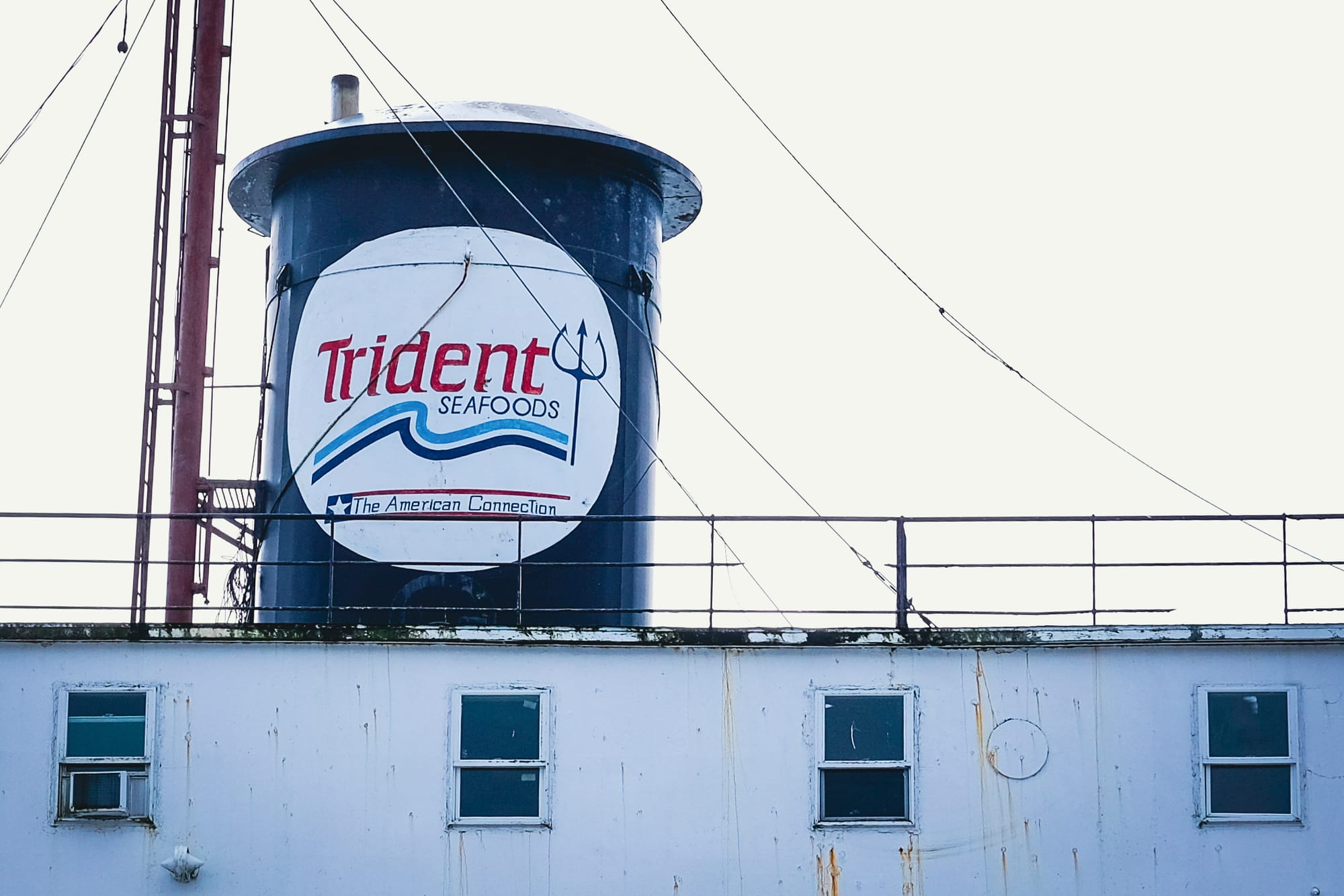
Chum, guts, and refuse give off the fishy scents that effuse through the workfloors of Kodiak’s many canneries, including Trident Seafoods. The scent carries onto the lone road that leads into town from the airport. The pungent punchline strikes visitors as they pass Pier III, Kodiak’s main port.

For Ian Zacher, the 65-ton crane that lifts more than 95% of Kodiak’s meals off a barge is a reminder that farming is a forgotten trade among many of Kodiak’s fishers.

Even the crane itself bears a resemblance to a fishing rod. The island’s most prolific angler, it reels in several tons of shipments at least twice a week, its catch stocking grocery stores, restaurants, and refrigerators.
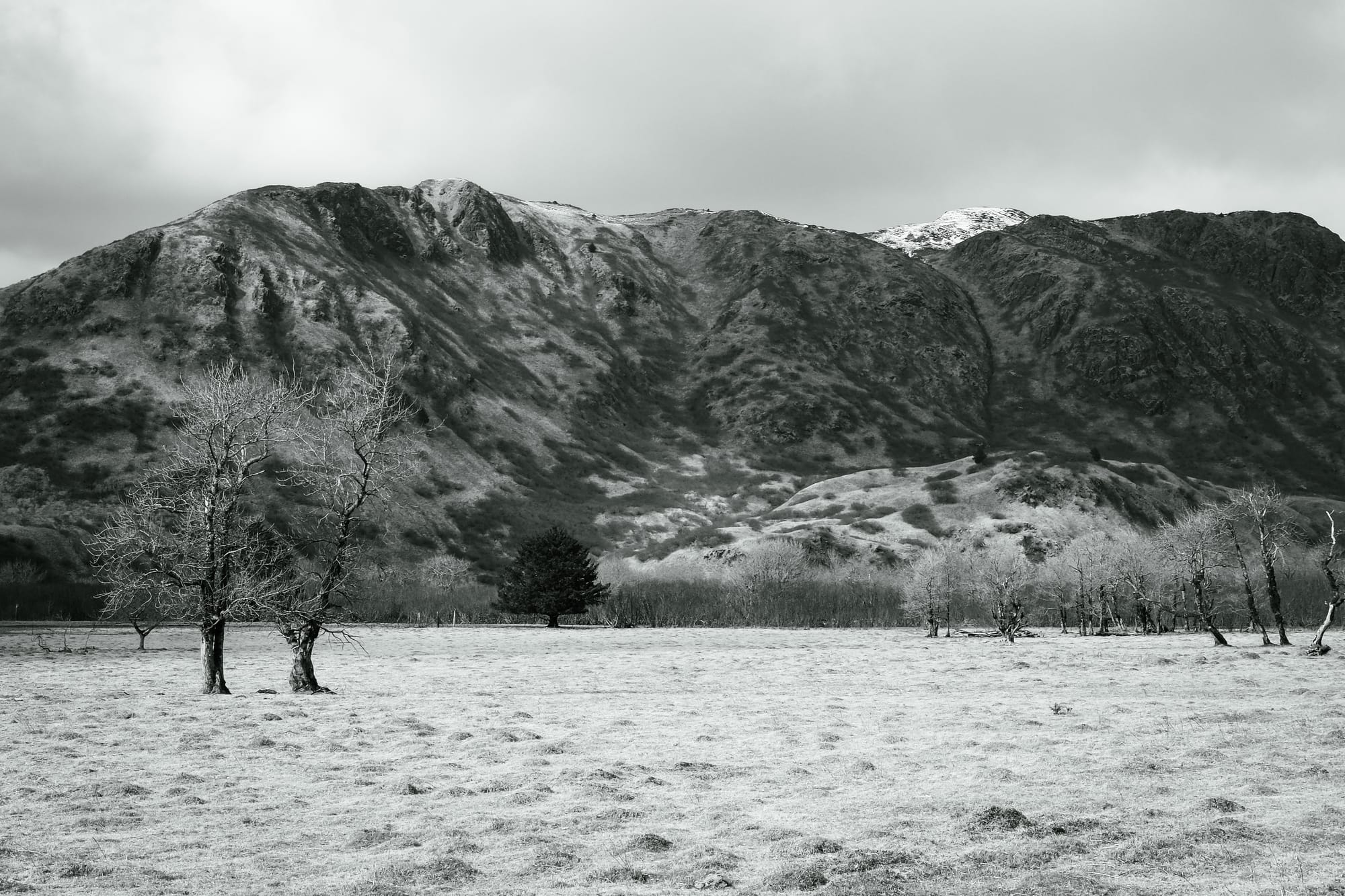
Mountainous and recently glaciated, the island’s landscape makes survival difficult for young crops. Ash from the Novarupta volcano’s 1912 eruption lingers in shallow soils, which are silty, young, and nearly entirely infertile. An expanse of bedrock just beneath this layer stymies the spread of roots. Strong and frequent winds regularly batter the flora that manage to cling to the hope for growth.
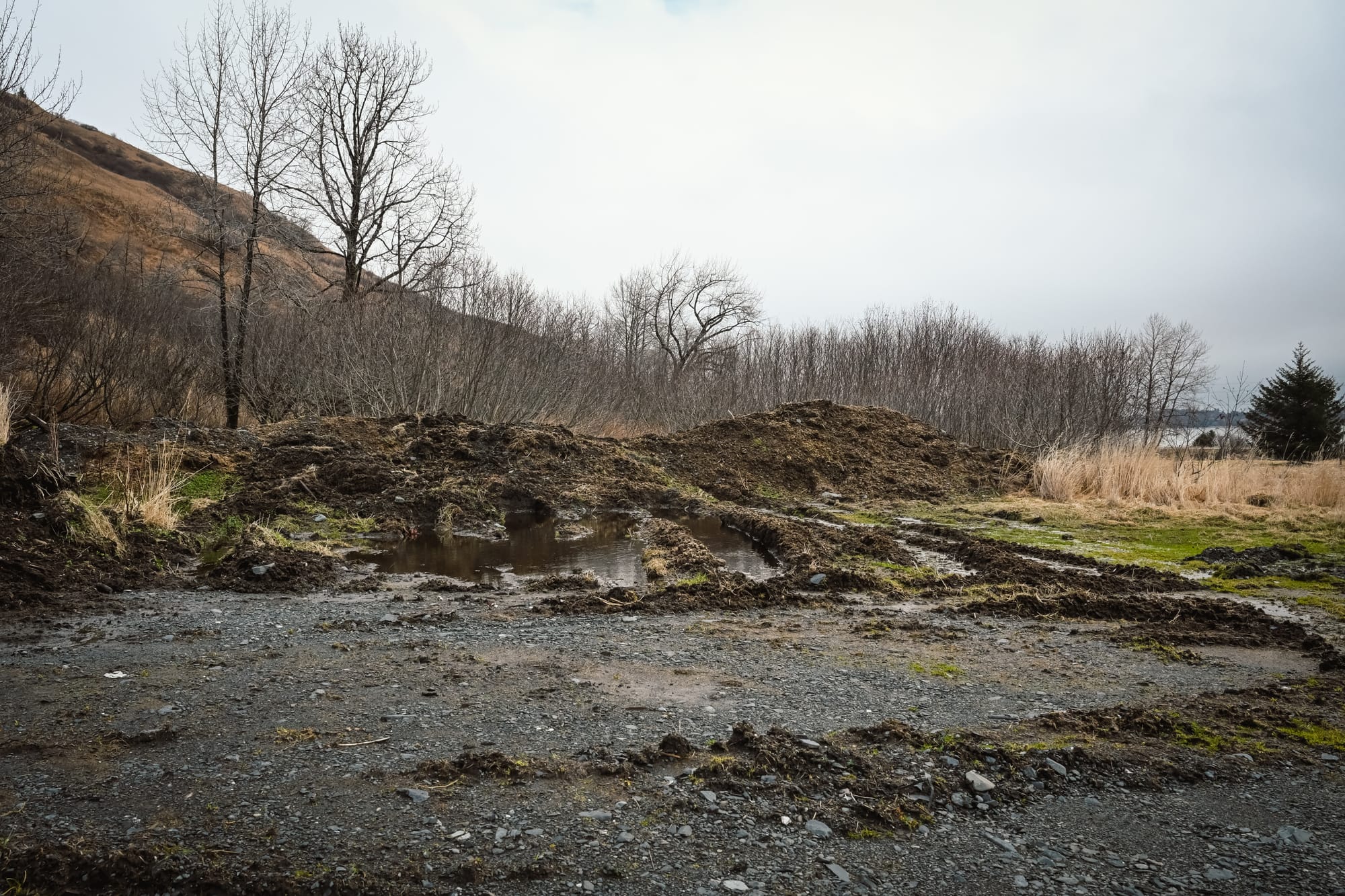
Growing produce on Kodiak necessitates making healthy soil from scratch. However, many people are hesitant to collect and spread compost—a cheap, natural additive—for its potential to attract brown bears to their yards.

As a result, many growers order potting soil, Miracle-Gro, and fertilizer online, accepting costly shipping rates and the chemicals these mixtures contain.
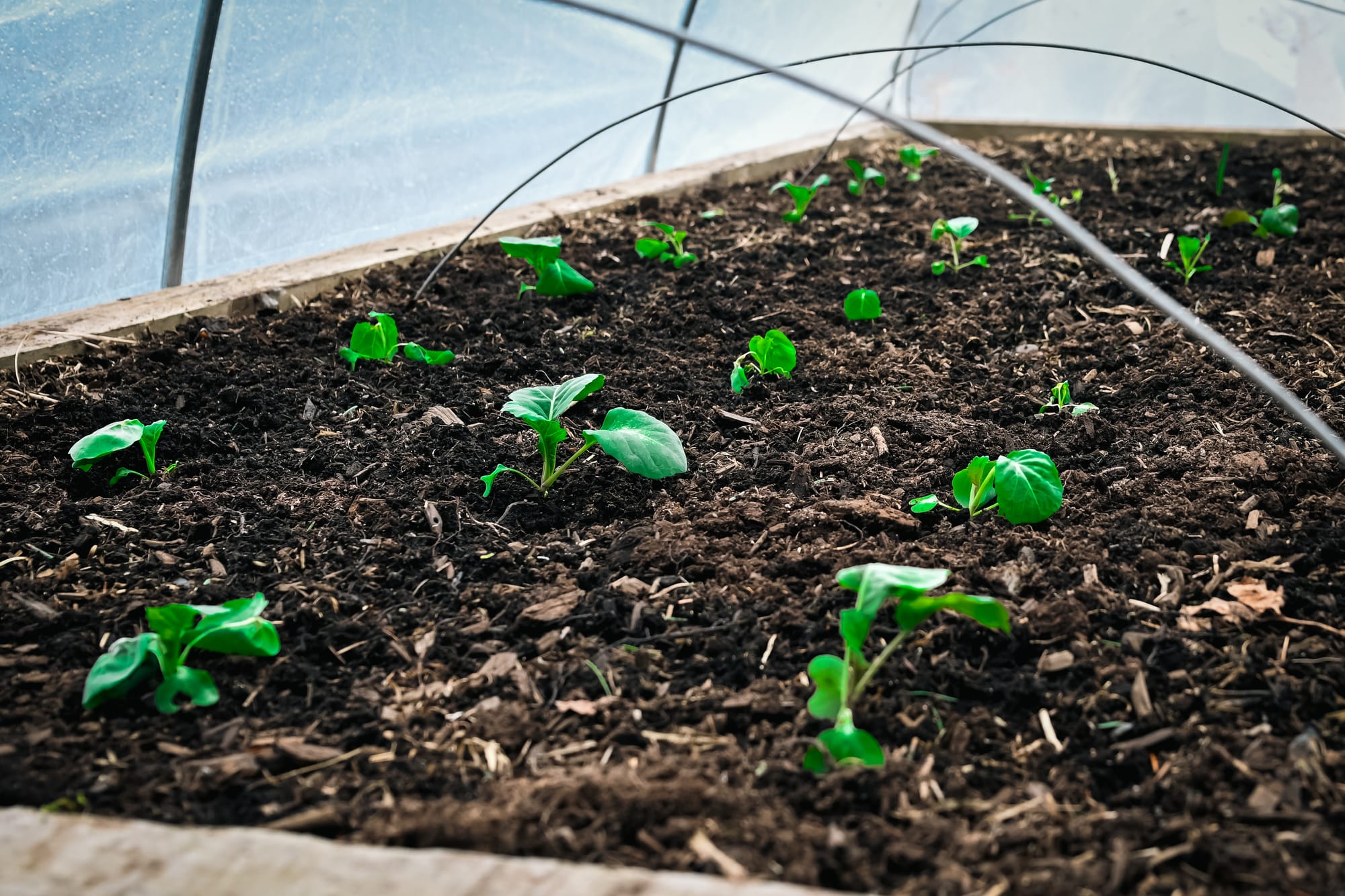
Once the question of soil is answered, vessels are considered. Raised beds are the easiest to build and maintain, though the structures are vulnerable to Kodiak’s springtime snap freezes and relentlessly wet weather.
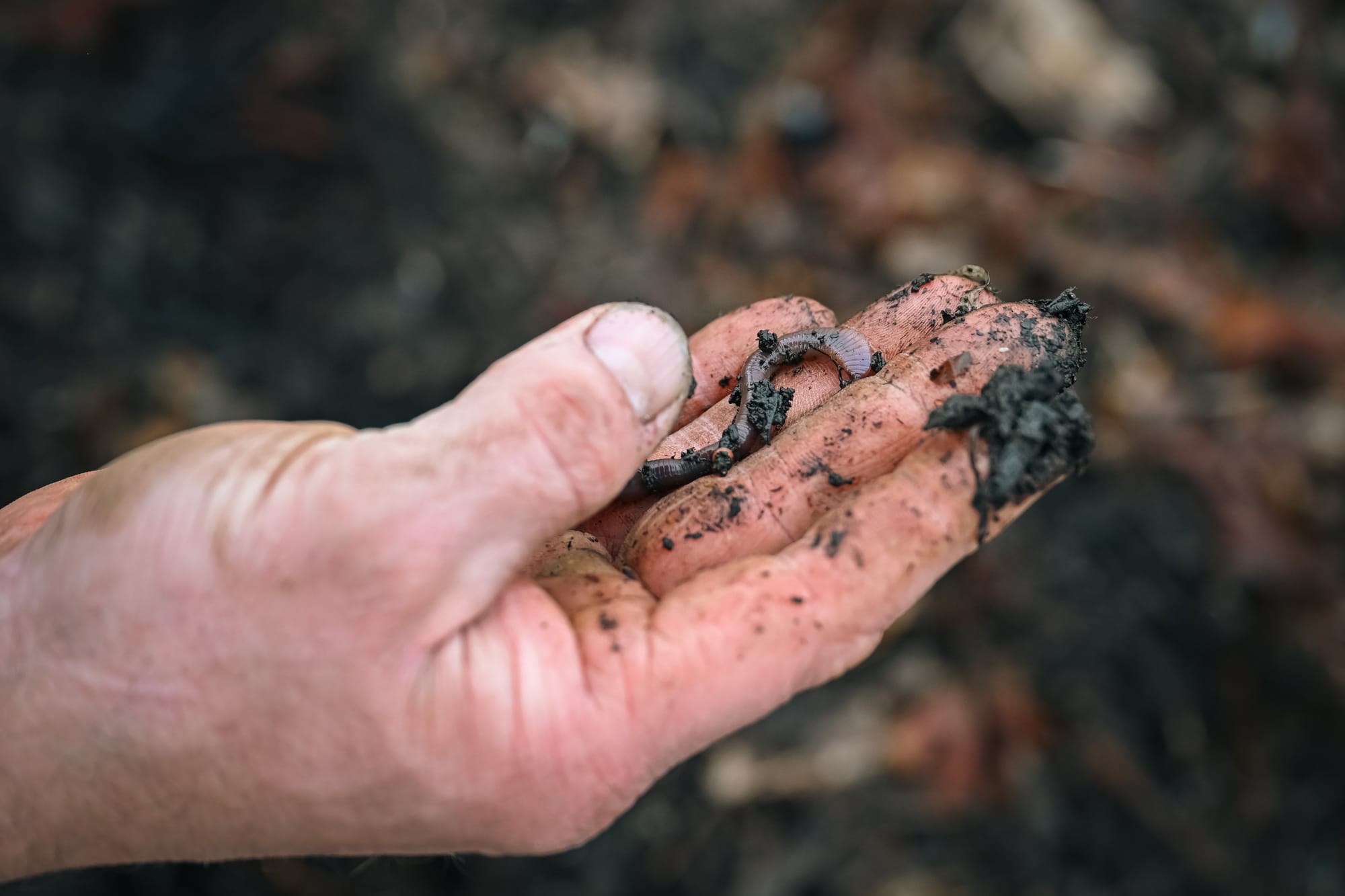
More than 60 inches of rain falls on the island annually, with models projecting even more spring, winter, and autumn precipitation by the end of the century, a consequence of climate change.
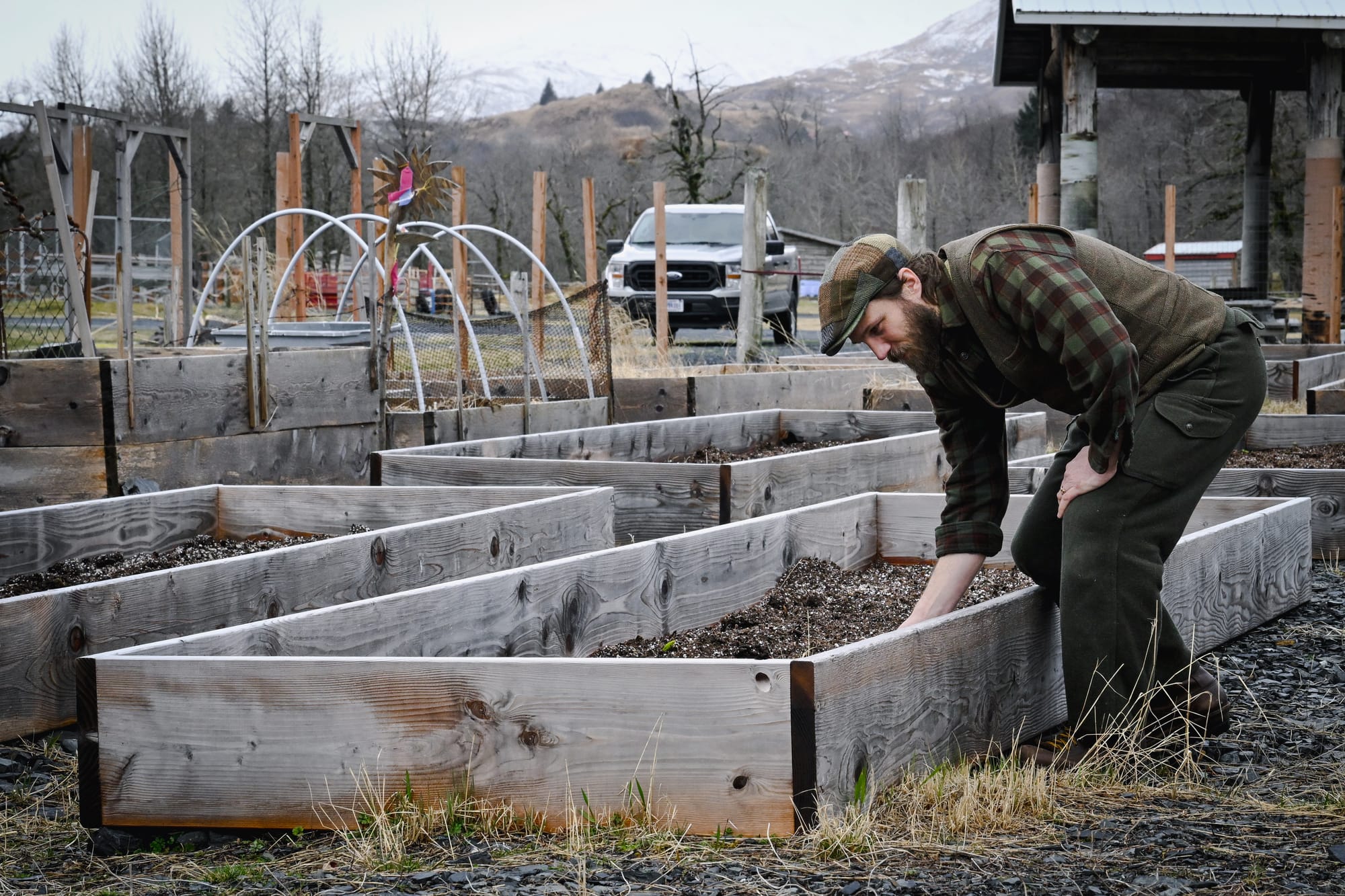
For the summer, residents can rent raised beds for $25 at one of Kodiak’s several community gardens, including one in a downtown neighborhood and another at the fairgrounds. But the 19-hour growing days are long, and turnout and commitment are hit or miss. “One thing I’ve found about the community garden is that they don’t really emphasize the community parts,” Zacher said. “ No, they barely emphasize the gardening.”

The youngest participant in the community gardens is around 30 years old, and few are well into their 80s. It’s representative of the generational gap in growing and farming on Kodiak, which exists for both Indigenous and non-Indigenous populations.
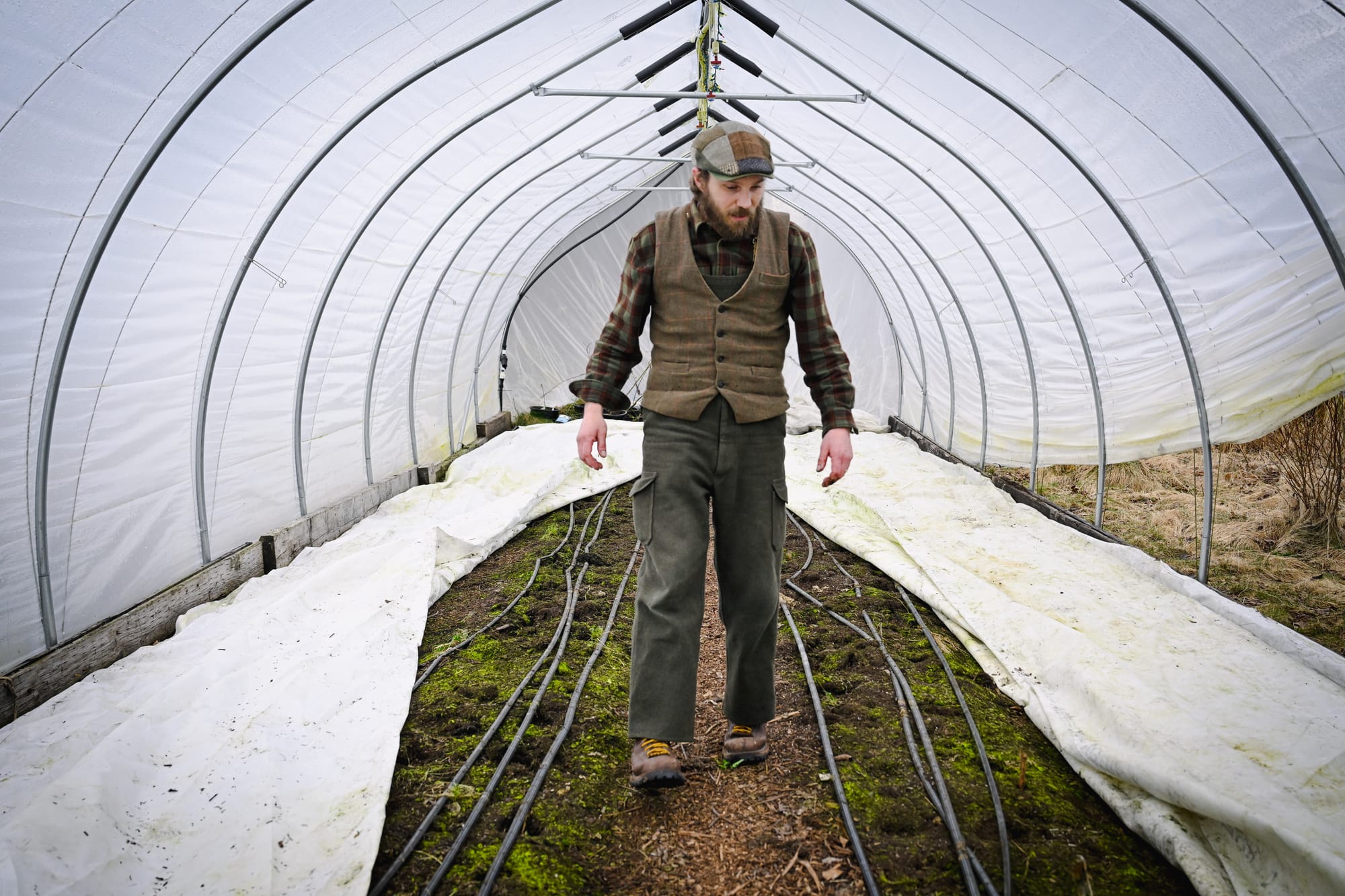
Hoop houses, high-tunneled structures that insulate soils in a temperature- and water-controlled environment, are a more effective alternative to raised beds, offering crops better protection from Kodiak’s unpredictable micro-bursts of rain.
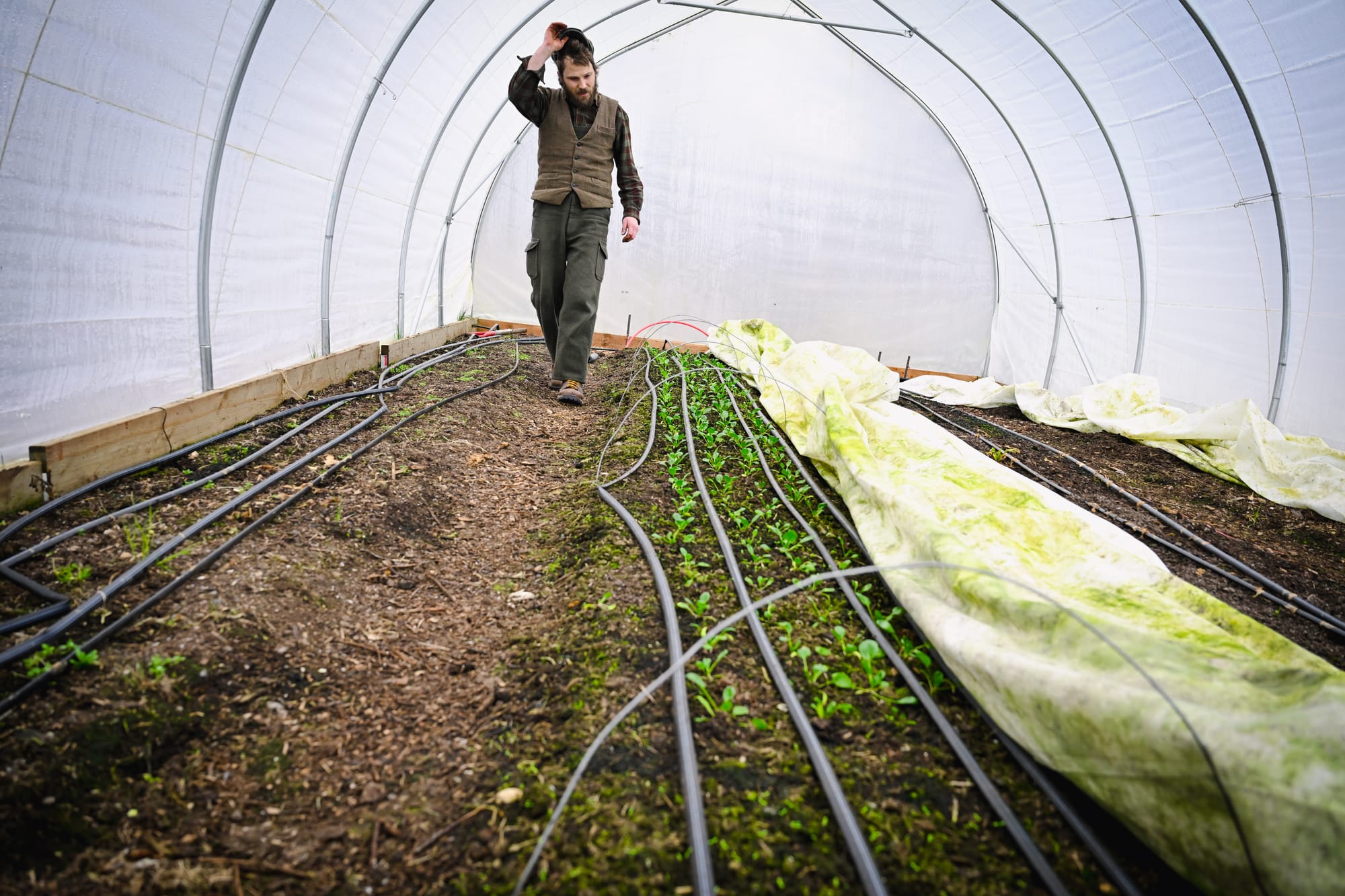
They also require significant effort to maintain. Their climate-controlled interior means the crops are completely reliant on irrigation, and warmer temperatures typically translate to faster cycles of growing, harvesting, and soil recycling.

According to Zacher, 78 hoop houses exist in Kodiak today, although this number has fluctuated as their owners have grown older. “A lot of these hoop houses have become something other than what they were intended for,” Zacher said. “Some people use them now for wood shops, sheds, observatories, [and] picnic areas. Not for growing. That has taken a lot of potential out of Kodiak’s food production.”
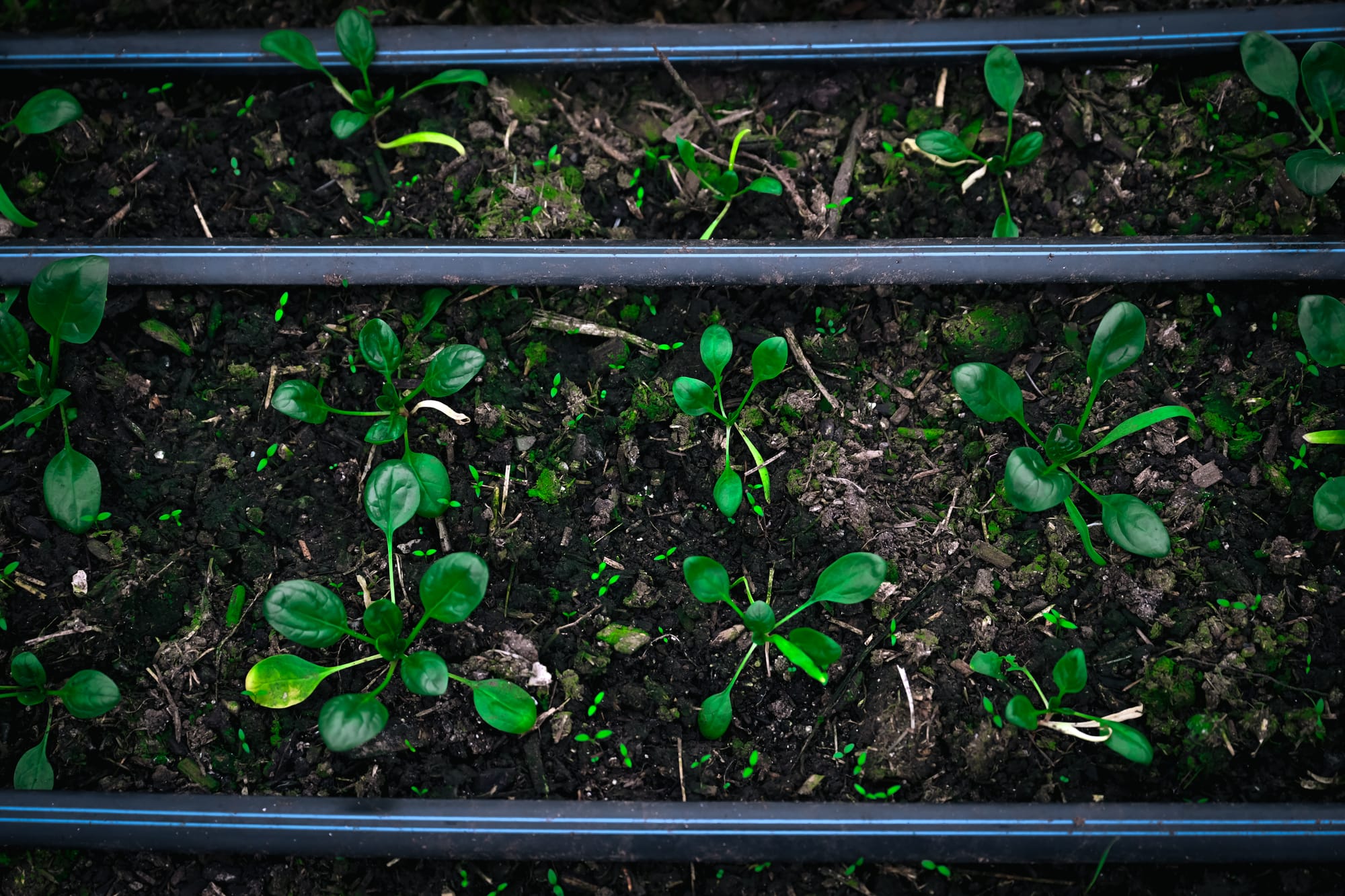
Zacher works hard to maintain his farm. Spinach is one of many crops that grow at Feirme Béar Donn. Last year, production included 200 heads of broccoli, 180 heads of cauliflower, 400 bunches of radishes, 400 heads of bok choy, 200 bunches of turnips, 300 pounds of potatoes, and 120 pounds of carrots, Zacher said.

Kodiak has a Safeway and Walmart, but the Kodiak Harvest Food Co-op, which opened its doors in 2022, is the only community-owned grocery store.

The co-op places an emphasis on selling healthy, locally sourced seafood and produce.

In late March, Kodiak Island’s Chef Spanky sells his homemade garlic in style at the Kodiak Homemade Food Fair.

Kodiak Island Brewing & Still serves both a gin and beer made from locally grown kelp.
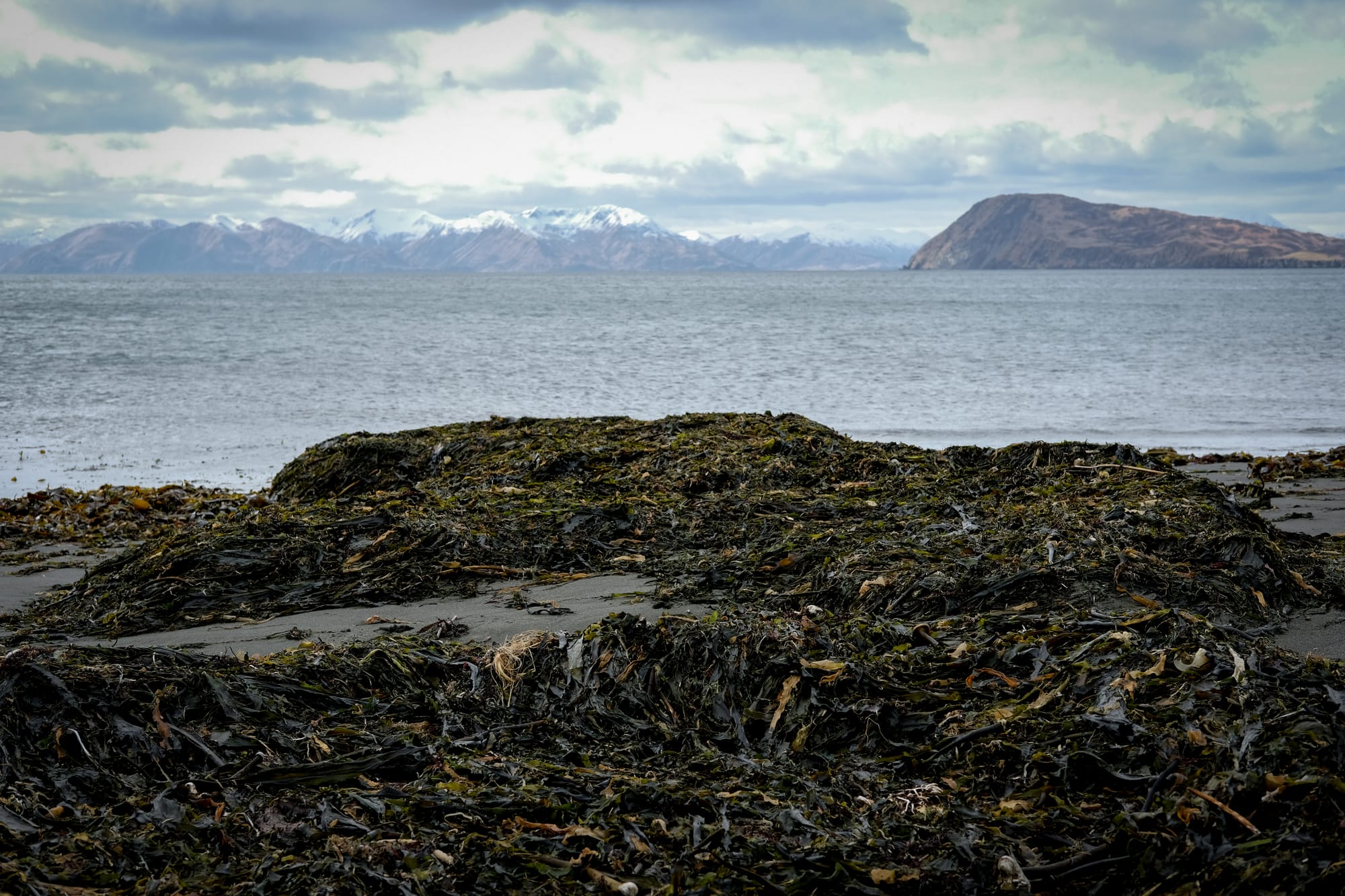
Unharvested kelp washes up on Fossil Beach. Kelp farms and other mariculture operations are becoming more popular in southcentral Alaska. Last fall, the archipelago received an $80,000 grant from the U.S. Department of Agriculture to help growers expand the practice.
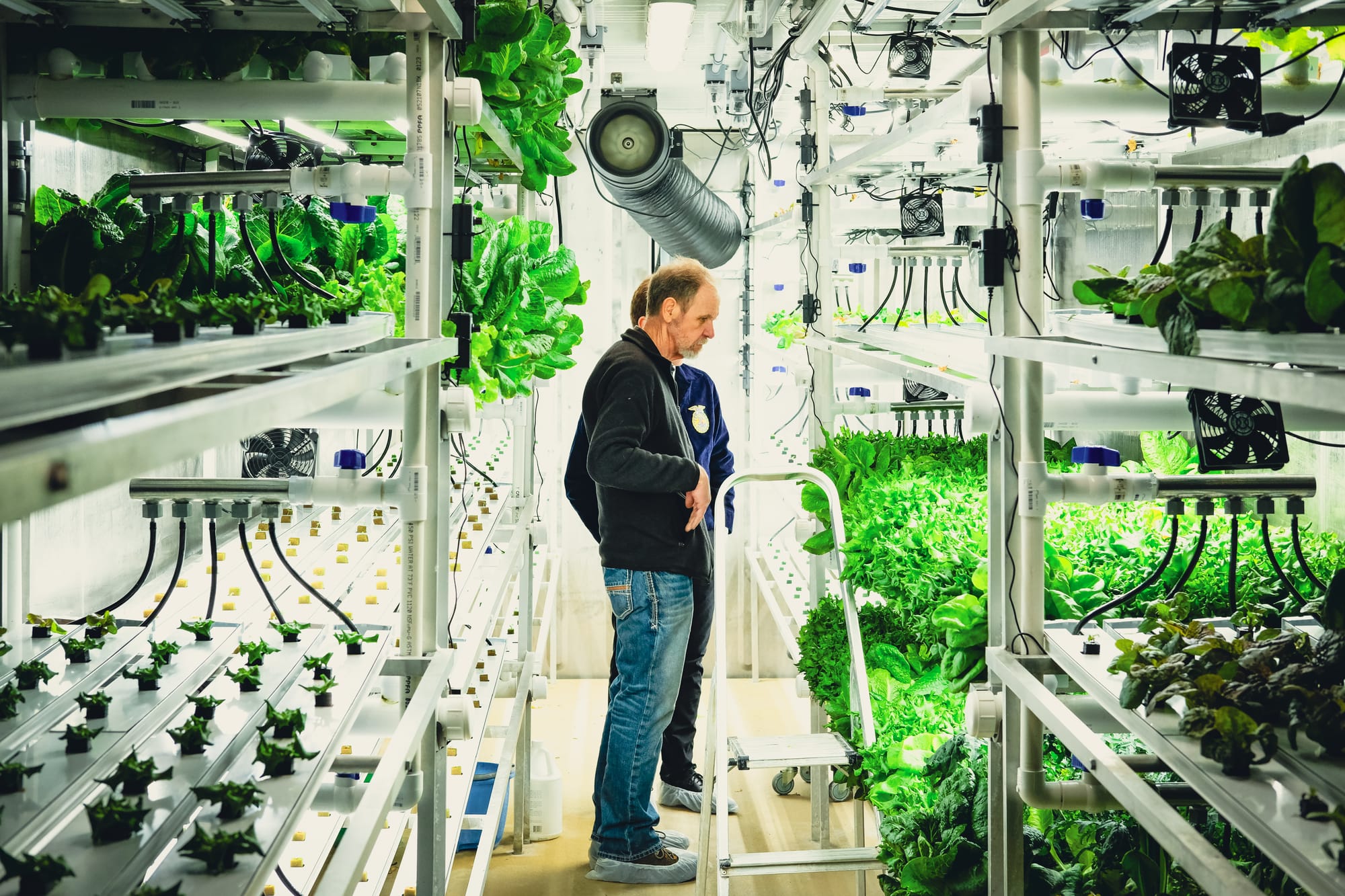
Mal’uk Farms, a women- and Indigenous-led hydroponics farm, produces 300 eight-ounce bags of fresh lettuce and kale each week. It is one of six members of Alutiiq Grown, a collective of tribal and community-owned farms located throughout the archipelago.
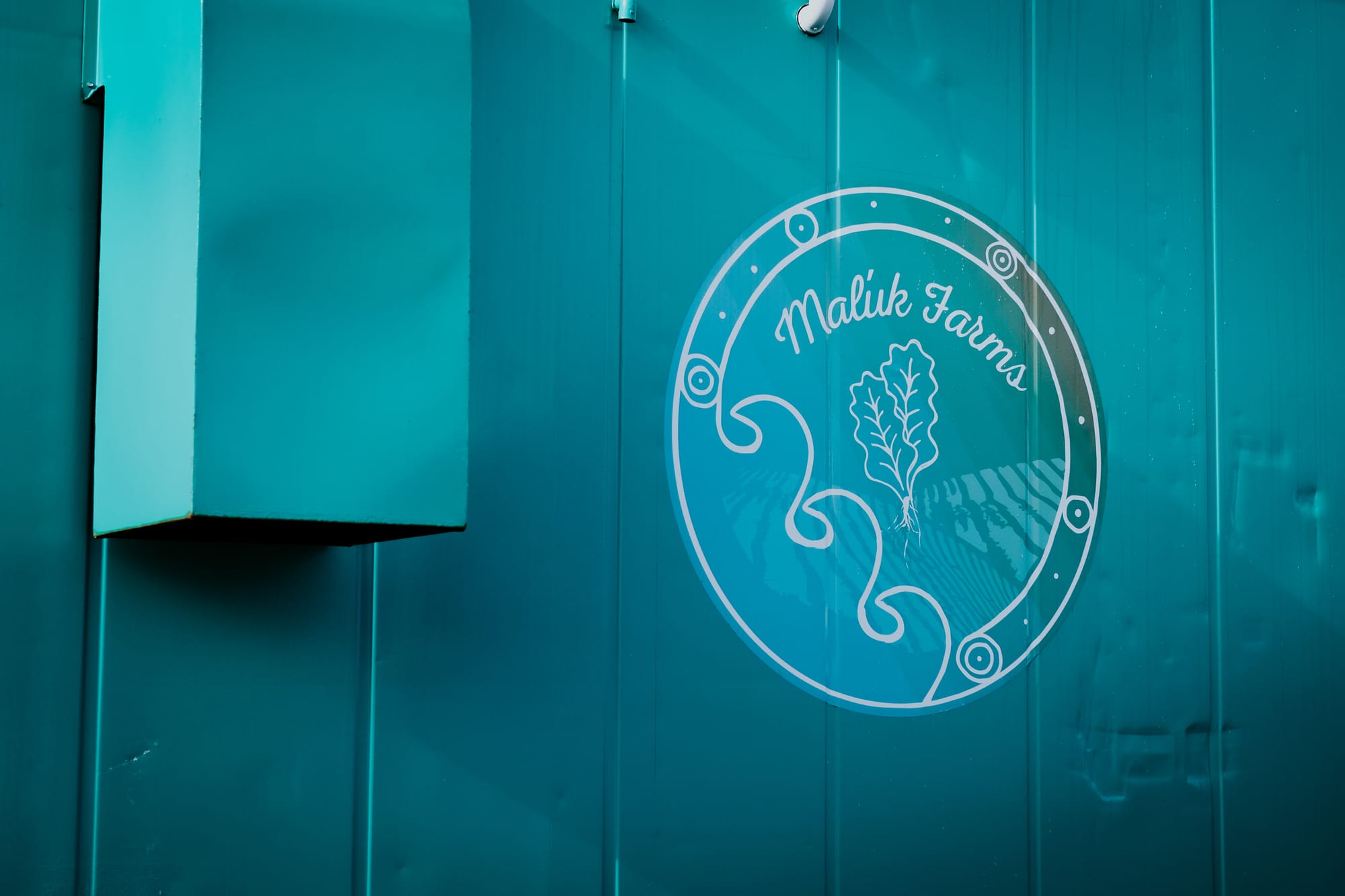
The produce is stored in one of two coolers; Mal’uk means “two” in the Alutiiq language. One is sold to local grocers and restaurants, and the other is given to elders and community members. All of the leafy greens stay on the archipelago. To date, the Alutiiq Grown network has distributed almost $110,000 worth of produce to 493 households, according to the collective.
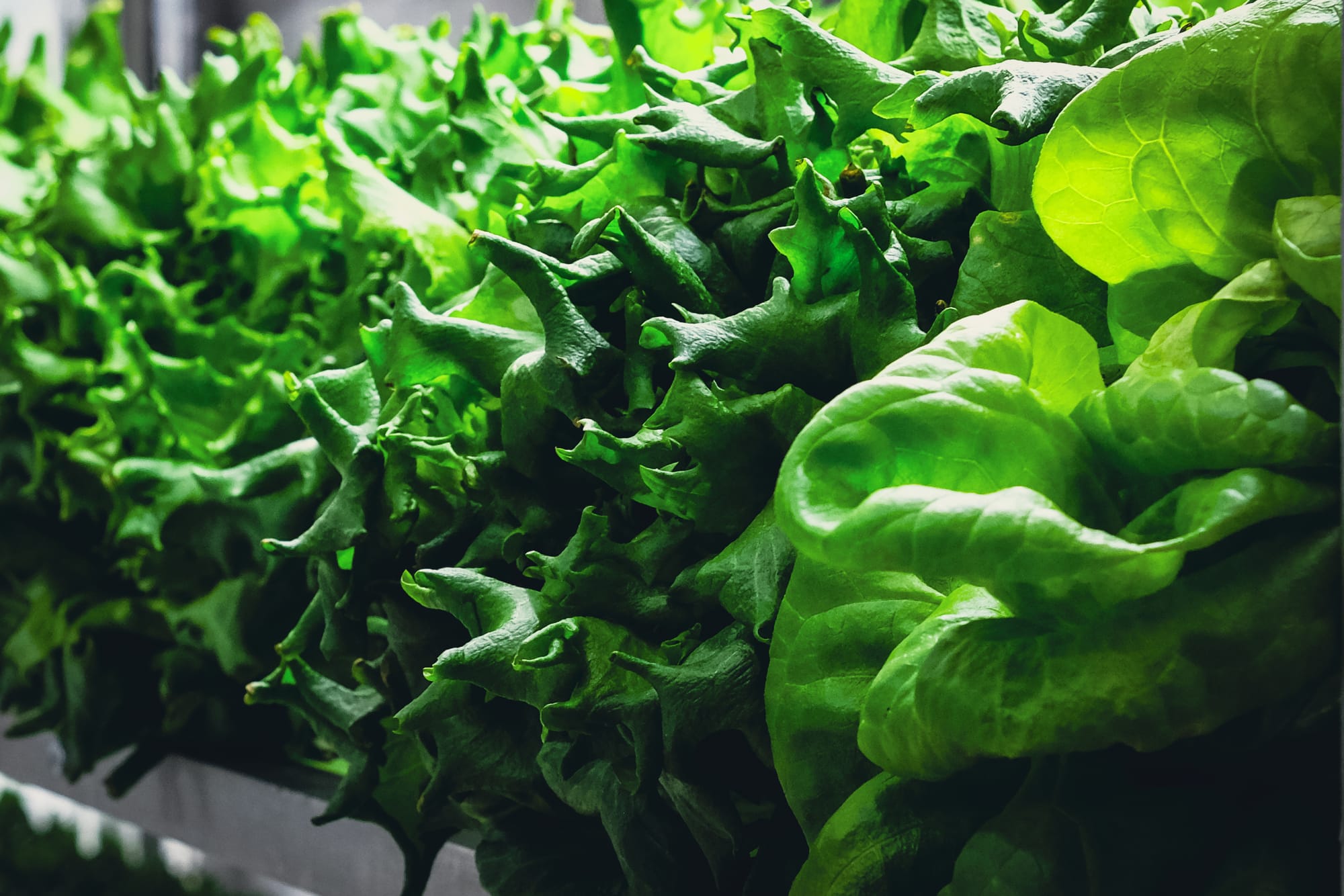
Though the hydroponics farm requires round-the-clock power, operating costs are kept to a minimum due in large part to the island’s fully renewable electric grid.
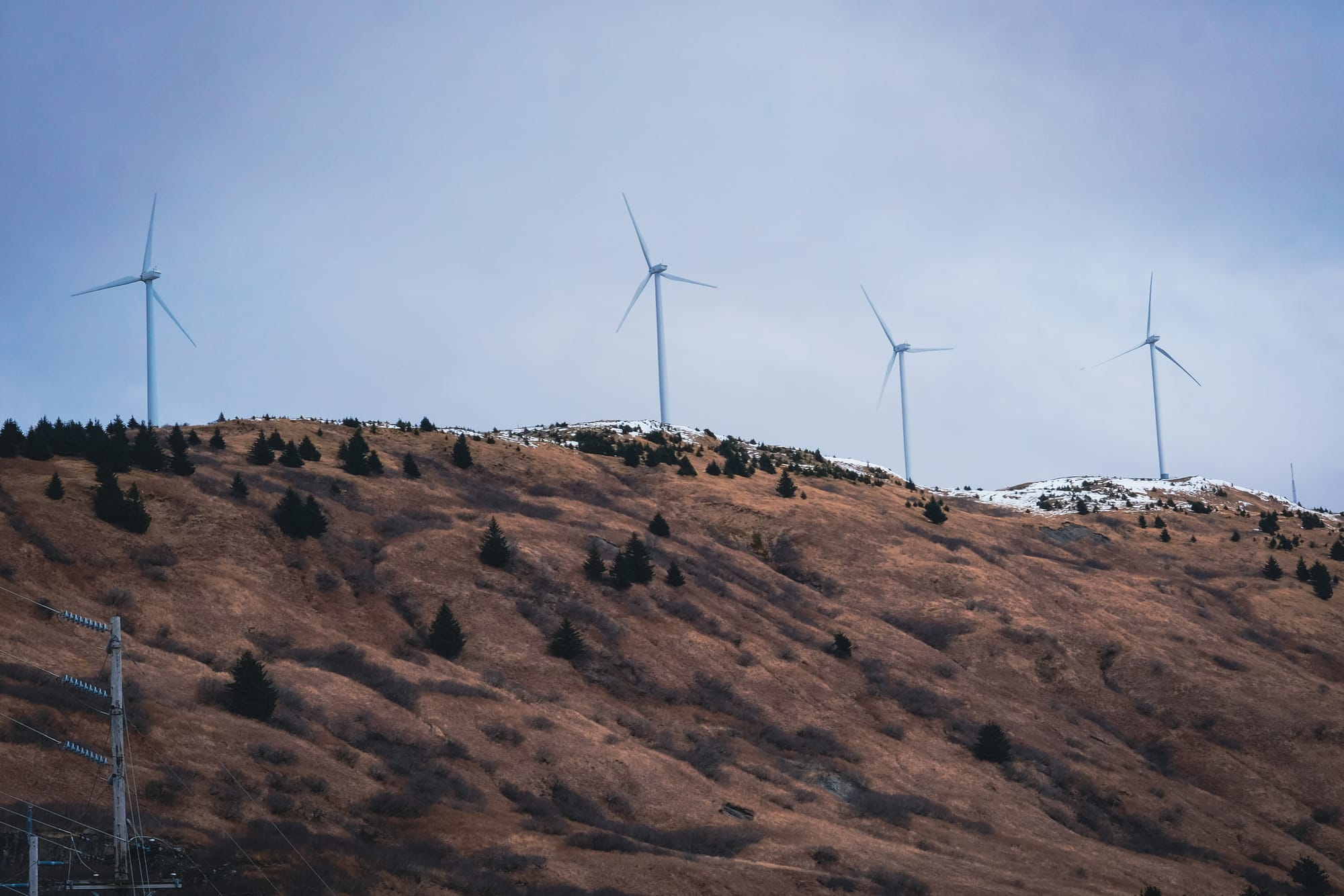
Renewable energy powers more than 99% of Kodiak. Wind turbines account for roughly 18% of the island’s energy. The Terror Lake hydroelectric dam, accessible only by plane, covers up to 85% of the grid annually.
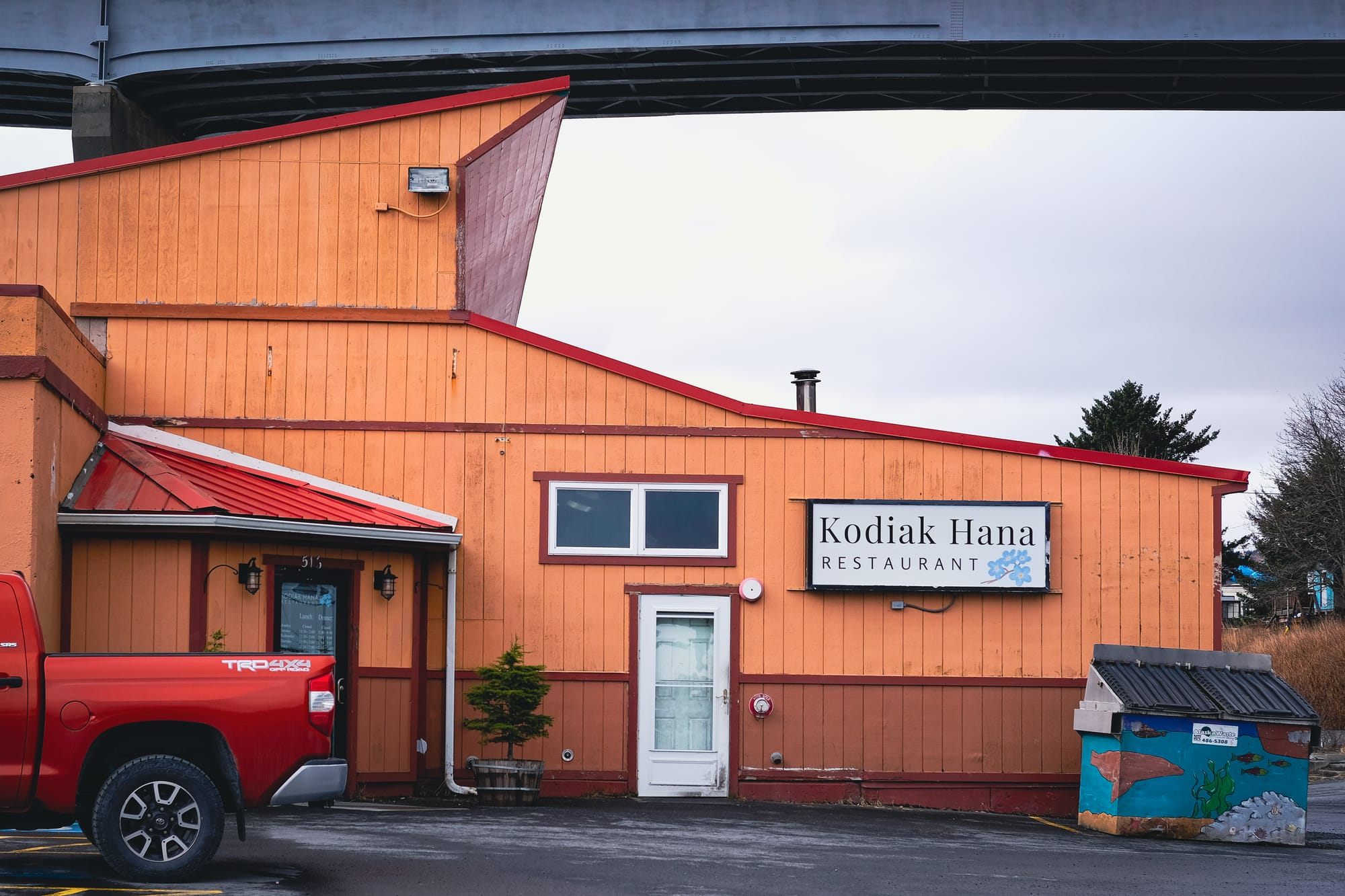
Where two mighty diesel generators once hummed, generating the borough’s electricity, sushi is now served. The establishment is known among locals as the “Old Powerhouse Restaurant.”

Protein is found toward the southwestern end of Kodiak Island’s 70-mile road system.
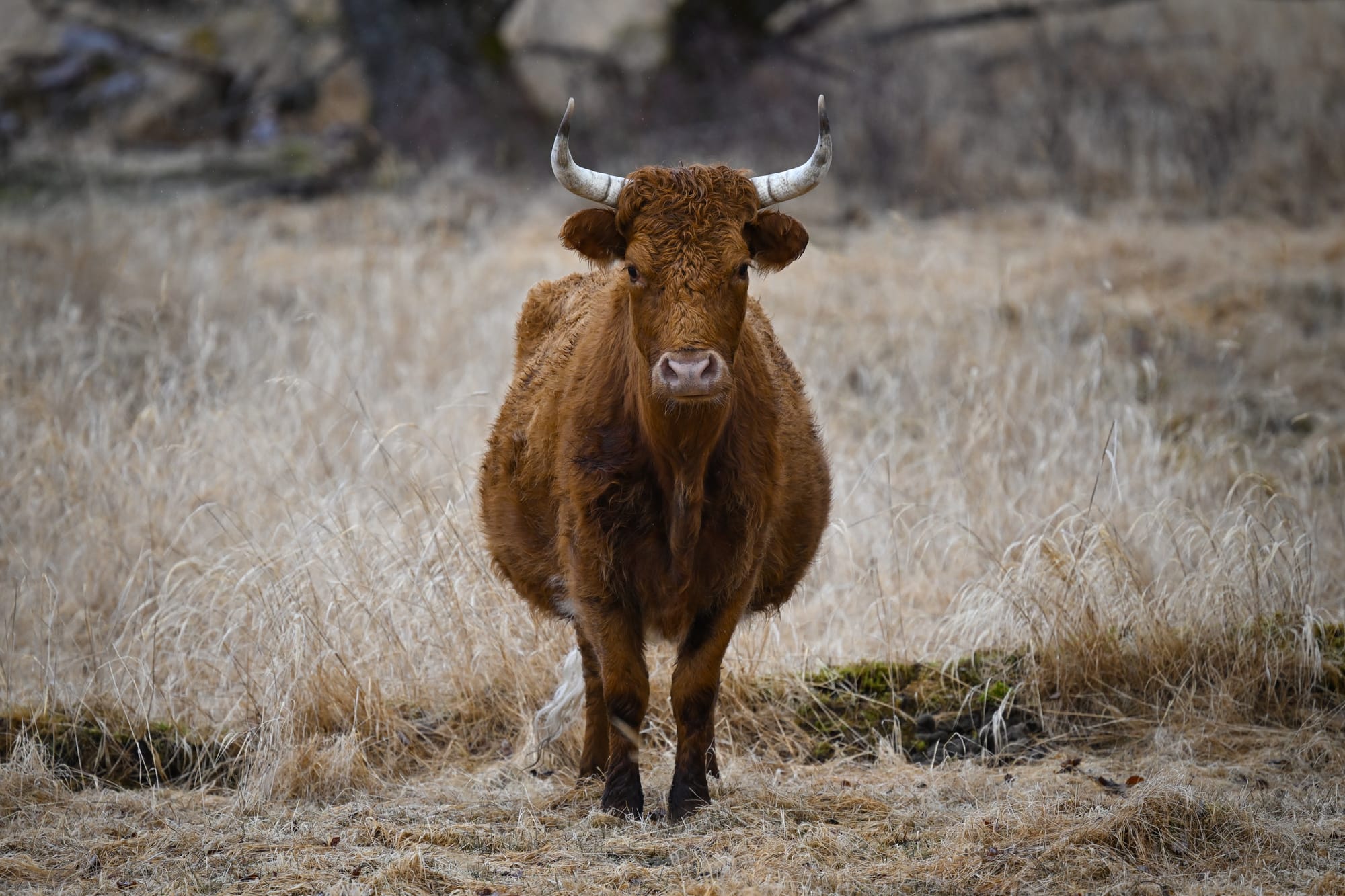
Several hundred free-range cattle roam the property of a few ranchers.
Editorial Team:
ray levy uyeda, Lead Editor
Tina Vasquez and Carolyn Copeland, Top Editors
Rashmee Kumar, Copy Editor
Author
Christian Thorsberg is a journalist and photographer from Chicago, now living in Alaska. His work can be found at thorsberg.me.
Sign up for Prism newsletters.
Stay up to date with curated collection of our top stories.