To address the longstanding challenges in the state’s education system, the Alabama House of Representatives has approved a $9 billion education budget for the 2024-25 fiscal year, which includes a 2% pay increase for education employees.
The new budget, which marks the first official step for the Education Trust Fund, aims to bolster the state’s education system. The 2% pay raise matches Gov. Kay Ivey’s recommendation and comes as a relief for educators who have faced stagnant wages in recent years.
Under the newly approved budget, an array of increases across various educational domains is set to unfold. Higher education institutions will see their funding swell by $110 million, a 7.1% hike pushing allocations from $1.55 billion to $1.66 billion.
The K-12 Foundation program is not far behind, with a proposed $196 million increase (4.3%), elevating its budget to $4.68 billion. In addition, the Alabama Community College System and the State Department of Education are poised for significant boosts, with increases of $36 million (6.5%) and $147 million (27%), respectively.
The average annual salary for Alabama’s public school teachers was $55,834 in the 2021-22 academic year. The real value of educator pay has dwindled when adjusted for inflation, highlighting a growing disparity between teacher compensation and the rising cost of living.
The 2% increase in pay comes as the state’s education system continues to confront challenges around test scores. According to a 2023 Wallethub study, Alabama ranks 46th in math scores nationally, 45th in reading, and 47th in student-to-teacher ratios.
The new budget aims to address these needs by significantly increasing funding for pivotal programs like the Alabama Math, Science, and Technology Initiative (AMSTI) and the Alabama Reading Initiative (ARI), which are aimed at improving the STEM and reading curricula and teaching across the state through applied learning. Both of these will see boosts in funding of 42% and 52%, respectively.
Despite progressive steps to address struggles in the education sector, enrollment is still declining, high school graduation rates were trending down from 2019 to 2022, and fewer teachers are entering the workforce through traditional pathways like a bachelor’s degree, passing teaching exams, and enrolling in a teacher education program.
Between 2020 and 2021, the student population decreased by about 10,000 throughout the state due to COVID, a lack of funding, and an aging population, especially in rural communities. In the 2023-24 school year, enrollment dropped again primarily due to a decline in white students, with white students making up 51% of the state’s public school population compared to 62% in 2000. However, the Black and brown student population is growing steadily, with 32% Black students and 11% Latinx students compared to 2000, when there were hardly any.
Voices from within the educational sector have highlighted several key issues and initiatives that have helped students perform at grade level, like the Literacy Act and the Numeracy Acts. These acts are similar and provide “for the identification of Full-Support and Limited-Support Schools; the use of recommended early assessments, intervention programs, and core programs; required summer achievement programs for students identified with a mathematics [and literacy] deficiency; and many other strategies to improve student mathematics proficiency.”
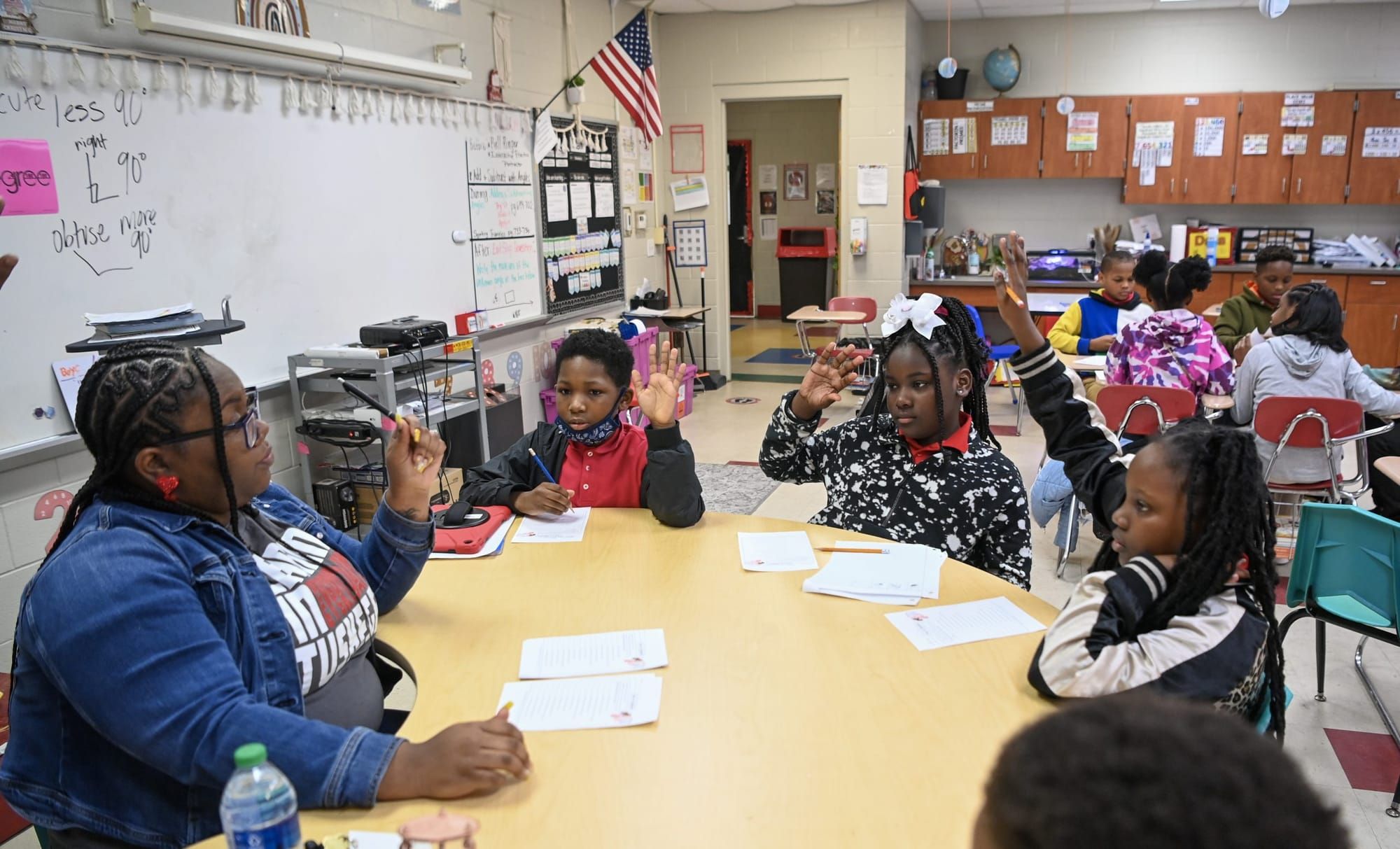
“In both reading and math, those programs have come with teachers who build portfolios for students and intensely track their progress through the classroom and through instruction and assessments,” said Allison King, the government relations manager for the Alabama Education Association (AEA). “With that legislation also comes literacy and numeracy coaches who have been responsible in the schools for working with instruction with students.”
King also emphasized the state’s efforts to enhance teacher certification pathways in response to the ongoing teacher shortage. Recent bills have addressed teacher certification, making it a more flexible process for individuals who want to become teachers.
“AEA [wants] to make sure that any additional certification option that comes into our state is a quality option that still produces quality teachers,” King said. “And so those are all things we look at when those bills arise.”
The average educator’s pay in Alabama has failed to keep up with inflation. When adjusted for inflation, teachers nationally make $3,644 less, on average, than they did 10 years ago. In Alabama, they make about $6,000 less than they did in the 2009-10 school year. The AEA is actively recruiting future educators through its Future Teachers of Alabama program.
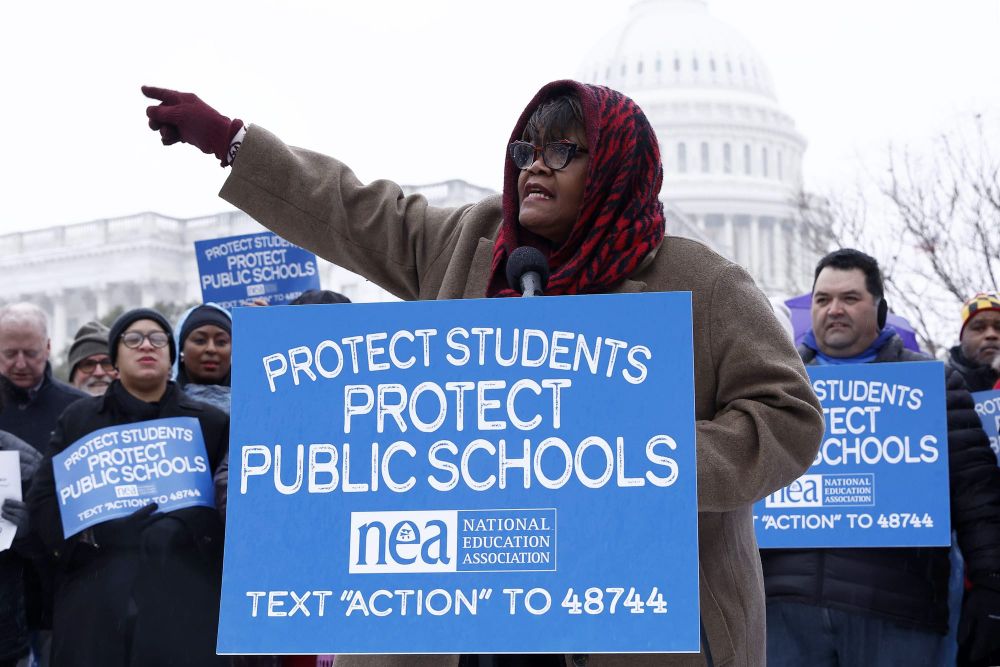
Since 2003, Alabama’s educator prep graduates have declined 19.6%. The number of bachelor’s degrees earned in traditional teacher fields dropped 26% over the last 18 years. Brian Massey, the director of government relations of the Alabama Education Association, said educators and other public servants are dealing with a lack of respect from the state. He said many teachers are moving away from teaching in the public sector to work in different industries.
“We’ve done a lot of work to make sure that we continuously get pay raises for all education employees across the state,” he said. “We’ve seen a learning slide due to COVID and being out and not in the classrooms.”
On a broader scale financially, King said money management has become tighter.
“The challenge that we’re facing right now in Alabama is the COVID relief dollars are drying up,” King said. “They’ve run out, and our state [has to] absorb some of the costs for programs that we have started in our schools that are excellent programs, but now they’re having to be funded at the state level.”
As Alabama continues to confront issues in the educational sector, the state plans to invest in ongoing reforms to sustain and enhance teacher wages, instructional programs, and infrastructure.
Author

Matt Olszewski is a freelance content and news writer based in Boston. In his free time, Matt enjoys running, hiking, skiing, and writing. Matt recently graduated with his MPH.
Sign up for Prism newsletters.
Stay up to date with curated collection of our top stories.