Al-Rimal, once the crown jewel of Gaza, is now a mass grave
The economic and cultural hub symbolized Gazans’ strength and prosperity—until Israel transformed the neighborhood into a killing field
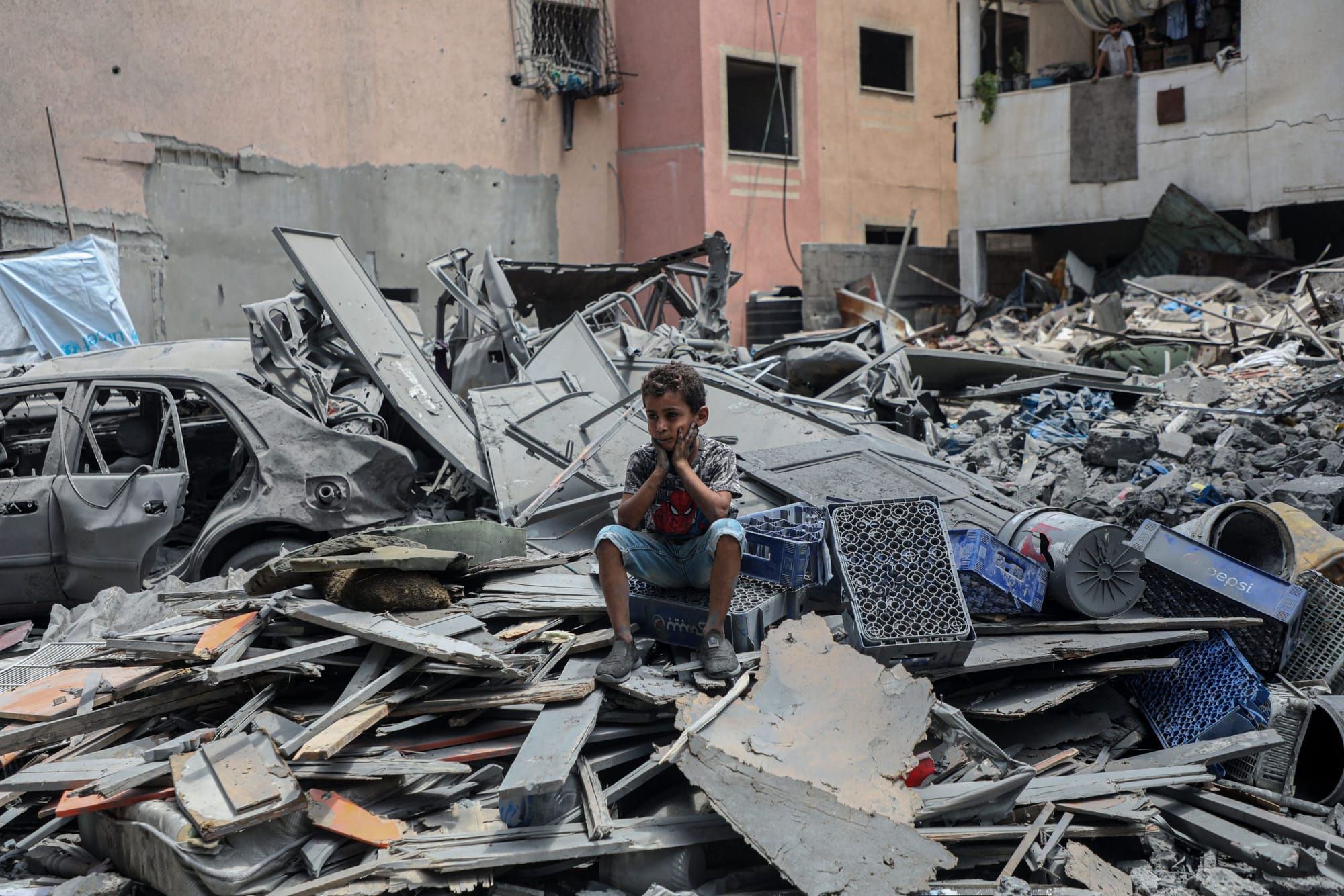
In Gaza, the mere mention of a ceasefire once filled us with overwhelming joy.
Now, we know better than to get our hopes up.
Ceasefire negotiations take time, and that time might cost us our lives. The genocide has already taken the lives of more than 62,000 Palestinians, and we have come to anticipate more deaths in the time leading up to a potential ceasefire, which we have now think of as deadly decisive moments. Every time ceasefire talks reignite, Israel unleashes hell with heavier bombardment, intensified killing, and deeper starvation.
In the final hours before the world celebrates a ceasefire, thousands of Palestinians are slaughtered. Israel commits its most brutal massacres in the hours before a truce.
For Gazans living through the brutality, it feels as if Israel is racing against a clock to complete its campaign of killing, destruction, and starvation before it is bound by a ceasefire. The closer the ceasefire comes, the more savage the killing—like a final sprint to erase as many Palestinians as possible before the world demands a pause.
Now we wonder: If the only way to end the war on us is Prime Minister Benjamin Netanyahu’s plan to take over Gaza, will Israel first wipe us out?
A symbol, destroyed
Many of Gaza’s neighborhoods have been annihilated, but the story of Al-Rimal, the neighborhood where I reside, sheds light on Israel’s pattern of escalating incredible violence before entering negotiations for a period of relative peace.
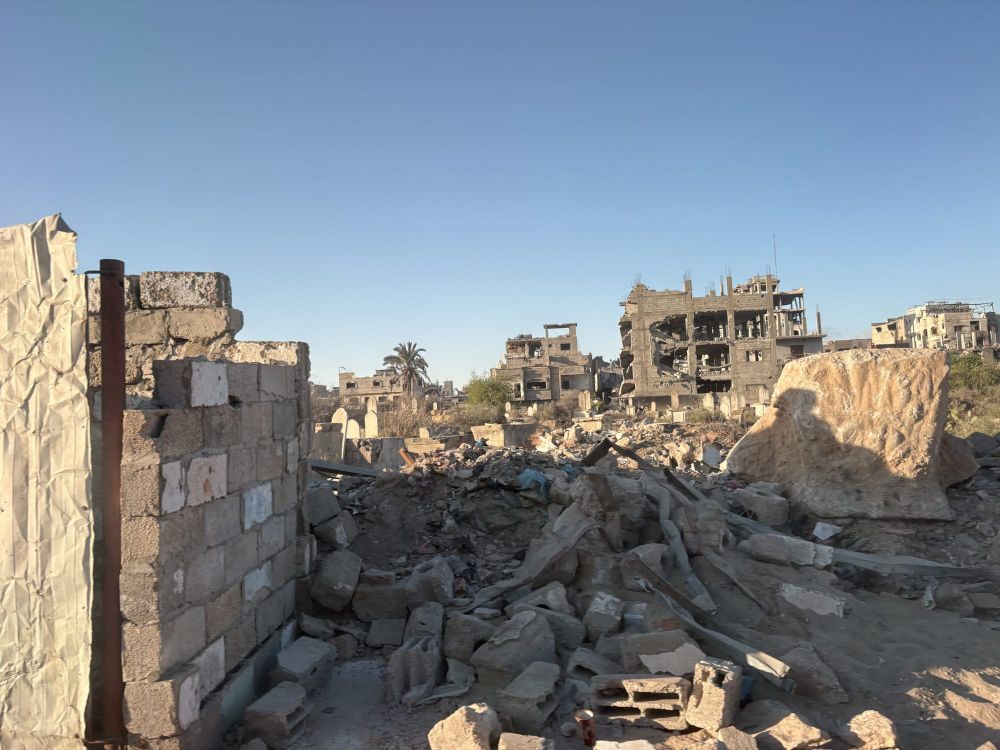
In recent weeks, Al-Rimal has witnessed a shocking escalation in violence. Israel strikes with relentless force here, inflicting destruction and fear before briefly pausing for a fleeting calm. Once vibrant and full of life, Al-Rimal now bears the marks of this orchestrated terror, with streets and homes in some areas standing as the only remaining witnesses to the merciless destruction.
Al-Rimal is one of Gaza’s most cherished districts, known for its beauty, prosperity, and life.
A blend of residential elegance and commercial vitality, Al-Rimal stretches along the city’s coastline, once drawing residents and visitors alike with its towering modern buildings, upscale restaurants overlooking the sea, and renowned educational institutions. Its thriving job market also made it an economic and cultural hub at the very center of Gaza. During the holidays, families from the north and the south flocked to the vibrant market in the neighborhood, which was often thought of as being for the wealthy—a symbol of dignity and prosperity amid a decadeslong siege and blockade.
It should come as no surprise, then, that during its ground invasion, Israel took pride in devastating Al-Rimal. It was a strike at a symbol of Gazans’ strength and prosperity; a calculated attempt to break the spirit of its residents, who have tried to remain steadfast in the face of bombardment and destruction.
Though it remains one of Gaza’s most densely populated areas because of its location away from the northernmost edge of the Strip, Al-Rimal is now unrecognizable. After the 60-day ceasefire in 2024, many believed Al-Rimal was safer than front-line towns like Jabalia, Beit Lahia, and Beit Hanoun, which lie directly along the northern border and have been constant targets of Israeli attacks.
It was as if the sheer presence of civilians became Israel’s justification for turning the neighborhood into a killing field.
In search of safety, residents from these border areas flocked to Al-Rimal. Though the neighborhood was also bombed, it had never previously suffered the daily, relentless bombardment Israel unleashed once large numbers of people began to gather there in May 2024. It was as if the sheer presence of civilians became Israel’s justification for turning the neighborhood into a killing field. No neighborhood in Gaza is completely safe during the genocide, but Al-Rimal’s sudden population surge made it a more visible and deliberate target. The more civilians crammed into its buildings and streets, the more ferociously they were hunted.
One of the most horrific massacres occurred just before talks of a ceasefire: the May 7 massacre at the Thai Restaurant on Al-Wahda Street.
That area, the heart of a bustling marketplace in Al-Rimal, was bursting with people when massive explosions shattered the sky. Two Israeli airstrikes slammed into the restaurant, and a third hit the nearby market.
My brother Mohammed was on Al-Wahda Street when the airstrikes hit. We heard the explosions nearby and froze in terror. The bombing sounded like thunder, and the screams of people filled the streets, as if it were the end of the world. We quickly called Mohammed. He answered, gasping: “I’m OK, but there are body parts all around me.” Then he hung up. We waited anxiously, burning with worry.
There has been no end to Israel’s brutality, but still we find ourselves wondering how its military could bomb a place in broad daylight that was so crowded with civilians. About 17 people inside were killed, many of them students and graduates gathered for study, determined to continue chasing their dreams despite the war. At least 16 passersby were also killed. In total, there were 33 martyrs and 86 wounded.
As shocking as the details of the bombing were, it wasn’t entirely surprising to hear of another strike on Al-Rimal. Many homes in the area had already been bombed, even when they were packed with displaced families seeking safety.
Conditions on the ground only worsened, and amid American and international pressure, talks of negotiations and a possible temporary ceasefire began in late June 2025. This fragile window of time was marred by massacres against displaced civilians. One of the most horrific was the tent massacre on the night of June 27, 2025, when Israeli forces targeted tents near the Holy Family School in Al-Rimal.
On social media, I watched civil defense teams and paramedics describe the chaos:
We buried the bodies with our own hands beneath the sand in the midst of overwhelming chaos. Tragically, some of those we buried were not yet dead—they were unconscious and critically injured. We couldn’t tell who had already perished and who was still clinging to life. We did not intend to bury the living; it was an unintended outcome forced by the rapid pace of the violence and our lack of proper medical resources.
According to the Palestinian Information Center, about 19 were martyred and many were left missing. Yet the tragedy did not end there. One massacre was scarcely absorbed before there was another, even more savage attack. We live through a relentless succession of atrocities that have turned Gaza into a land defined by death and the unending tallying of martyrs.
The horrors of war
One of the most painful realities we face is that now some massacres in Gaza go unnoticed—not because they’re any less brutal, but ostensibly because the number of victims is too small to make global headlines. The relentless Israeli airstrikes that pound our neighborhoods day and night have made death so frequent, so normalized, that even six lives lost barely stir the world’s attention.
Media coverage is further stifled by the silence forced upon Gaza. As Israel continues to target journalists, very few remain to tell our stories. Now, survivors of the genocide such as myself are stepping up to inform the world of these ongoing massacres, including one that occurred in Al-Rimal—my home, where I know every shadow of the neighborhood, every broken wall, every face that once smiled here before the war.
The relentless Israeli airstrikes that pound our neighborhoods day and night have made death so frequent, so normalized, that even six lives lost barely stir the world’s attention.
As part of a larger series of attacks in June, the Israeli military again hit Al-Wahda Street, targeting Al-Shawa Tower and a charging station filled with civilians near Al-Jarjawi Restaurant. Ten people were killed and several others were injured.
These were people with families, with futures, and with dreams. My sister knew one of them, Jana Bakir. Jana was excited to turn 15 on Aug. 1, but she never made it. She was a determined, bright girl who refused to let the war stop her from learning. After her school was reduced to rubble, she continued attending makeshift education centers. On the day she was killed, Jana stepped out to get juice on her way to class. She was killed at the doorstep of her home.
How many stories like Jana’s will the world continue to ignore?
Sometimes the deaths of young people are eclipsed by more public bombings, such as the Al-Baqa massacre on June 30 in South Al-Rimal, where at least 41 martyrs were claimed and more than 75 were brutally wounded.
Before the war, my friends loved gathering at Al-Baqa, a simple cafe overlooking Gaza’s beautiful sea. The beach was an escape, the one place where we still felt free. This is why, even during the horrors of war, people continued going to the sea and meeting at Al-Baqa.
In a city with no safe spaces left, no functioning cafes, and limited internet, Al-Baqa remained a place for us to gather. On the afternoon of June 30, a group of artists, journalists, university students, families, and friends gathered there to drink coffee and talk. But their brief reprieve was shattered by violence when an Israeli airstrike hit the cafe.
Most of the people there were killed, but nothing about the tragedy has stopped the genocide. We continue to be killed in every way imaginable: bombings, shootings, starvation. And the world just watches. The news is reported, the images circulate, but who will stop it?
As I write about massacres in my part of Al-Rimal, massacres are taking place in other areas too.
The images that haunt us
My family has been displaced many times. On July 3, we were on Al-Rimal Street when we woke up to the sound of people screaming. It was around 2 a.m. when we looked out the window to see flames erupting from Mustafa Hafez School and people on fire running from the building. It was one of the worst scenes I’ve witnessed during the genocide. An ambulance just sat there, unable to do anything because there was no water or equipment. According to news reports, survivors tried to use jugs of water and their bare hands to put out the flames and rescue the wounded.
The school was sheltering displaced families, and most of the victims were women and children. Imagine the resulting terror of families in the neighboring school buildings, knowing they could be targeted next. But the truth is, there’s nowhere else for them to go. Displacement is not a choice, and there is no safe place left.
An estimated 15 people died in the bombing. A 13-year-old girl named Hala Hejeila witnessed the building collapse and saw people burning. The girl told the media that one image in particular stuck with her: a father clinging to his son, their flesh fused together in the flames. Hours later, I saw a photo of that father and son. They were found together, the child dying in his father’s arms.
Throughout the summer, missiles have chased us from every direction in Al-Rimal, which shelters both locals and displaced people from the northern border areas. Also in early July, Israel targeted the area’s water desalination plant. Located near Unknown Soldier’s Square, which houses the tents of countless displaced families, I can see the square from my window. The screams and terror of the people fill my heart, each bombing only getting closer.
The square has been in my life since I was 10 years old. It was beautiful and filled with trees. It’s almost as if that place no longer exists, even though I can see it from my window. It’s now a ghostly space, filled with tents, smoke, and relentless shelling and gunfire.
The plant was targeted again on July 21, killing at least five people and wounding many others. It seems the occupation is determined not only to starve us, but to subject us to gruesome deaths from dehydration. We already suffer from contaminated water that causes illnesses; clean drinking water is one of our hardest necessities to obtain.
It’s frightening how the sights and sounds of genocide become a part of daily life. On a late July afternoon, my mother was on the phone with my uncle, who lives just one street away from us, when suddenly we heard a powerful explosion. Screams then erupted over the phone. Al-Qahra School, located directly across from my uncle’s home, was hit by an airstrike. According to the Palestinian News Agency, Israeli warplanes bombed the school that served as a home to hundreds of displaced people. The initial toll was five martyrs and dozens wounded, including women and children.
All that was
Almost two years into the genocide, I still cannot believe everything I have lived through since the ground invasion first began in October 2023. At one point, Al-Rimal was part of northern Gaza because it lies just before the Netzarim checkpoint, the barrier separating northern and southern Gaza, and because it housed Al-Shifa Hospital, one of the first medical centers Israel targeted and destroyed. After the destruction of the water infrastructure between October and November 2023, we survived on only rice and contaminated water for 20 days. In those days, journalists had to risk death to cover the news anywhere in northern Gaza. Tanks were stationed everywhere, and airstrikes were relentless.
We were also cut off from the internet for nearly three months. Imagine: no media coverage, no way to convey what was happening. It was three months of slow, suffocating death. I still recall a ground invasion during Ramadan in March 2024; we were trapped under a nonstop barrage of bullets for weeks. Even looking out the window was a risk; if Israeli soldiers saw you, they would target you immediately for displacement—or worse.
I remember a young man who rode his bike around the neighborhood in search of food; he was killed by a tank at our doorstep. He was hit in the shoulder, an injury he could have otherwise survived. But no one could save him. There were no ambulances operating during the ground invasion, and anyone who tried to rescue him would endanger themselves and their family. The image of him from my window, helpless and bleeding out, will always haunt me. He died before our eyes.
Yet, despite all of this, we’ve held onto the belief that the injustice would soon end and that relief was near. In reality, each day feels worse than the one before, and the occupation’s claws have only further tightened, dragging us deeper into despair. The unbearable has only become more agonizing, as promises of peace are shattered, replaced by louder bombs and darker nights. We watch helplessly as our world crumbles, realizing that the nightmare is far from over—and that every breath we take is a fight for survival.
Now in August, anxiety gnaws at our bodies more fiercely than ever before. The occupation of the Gaza Governorate—and the displacement of the people of Al-Rimal—feels utterly insane. The people from the north have fled to the Gaza Governorate. But where do we go? Where can we all go?
After enduring nearly two years of bombing, killing, and destruction, we resigned ourselves to life among the rubble. But the idea that Gaza—our heartbeat—will not be ours to resurrect is unimaginable. The city lies in ruins: homes flattened, streets unrecognizable, neighborhoods emptied of life. We endured relentless bombings, gnawing hunger, and the heartbreak of losing loved ones—yet we clung to this land, carrying the memories of those gone and the life that once filled its streets. And now, Israel wants to force us out, erasing not only the rubble but also the memories we have borne for years, threatening to wipe Gaza from our hearts forever.
One night earlier this month, as I spoke to my friend, venting my frustration with our dire situation, a blast shook the Al-Rimal neighborhood. To my shock, I later learned that the blast signified the voice of journalist Anas Al-Sharif being extinguished. Israel has targeted our journalists, one by one, leaving us to tell these stories as weary souls burdened with endless pain.
Al-Sharif was martyred after spending 673 days in the courtyard of Al-Shifa Hospital in our once beloved Al-Rimal neighborhood. How painful it is to think of what this neighborhood once was and all of the people who once inhabited it—all of it now gone.
Editorial Team:
Tina Vasquez, Lead Editor
Carolyn Copeland, Top Editor
Rashmee Kumar, Copy Editor
Author
Dalia Abu Ramadan is a Palestinian writer from Gaza whose evocative storytelling brings to life the humanity amid siege and pain. Her articles have appeared in Truthout, Washington Report, We Are Not
Sign up for Prism newsletters.
Stay up to date with curated collection of our top stories.