She refused to induce her labor. She ended up losing custody of her newborn son.
A North Carolina woman’s story shows how the U.S. child welfare system perpetuates white supremacy and settler colonialism, abolitionist groups say
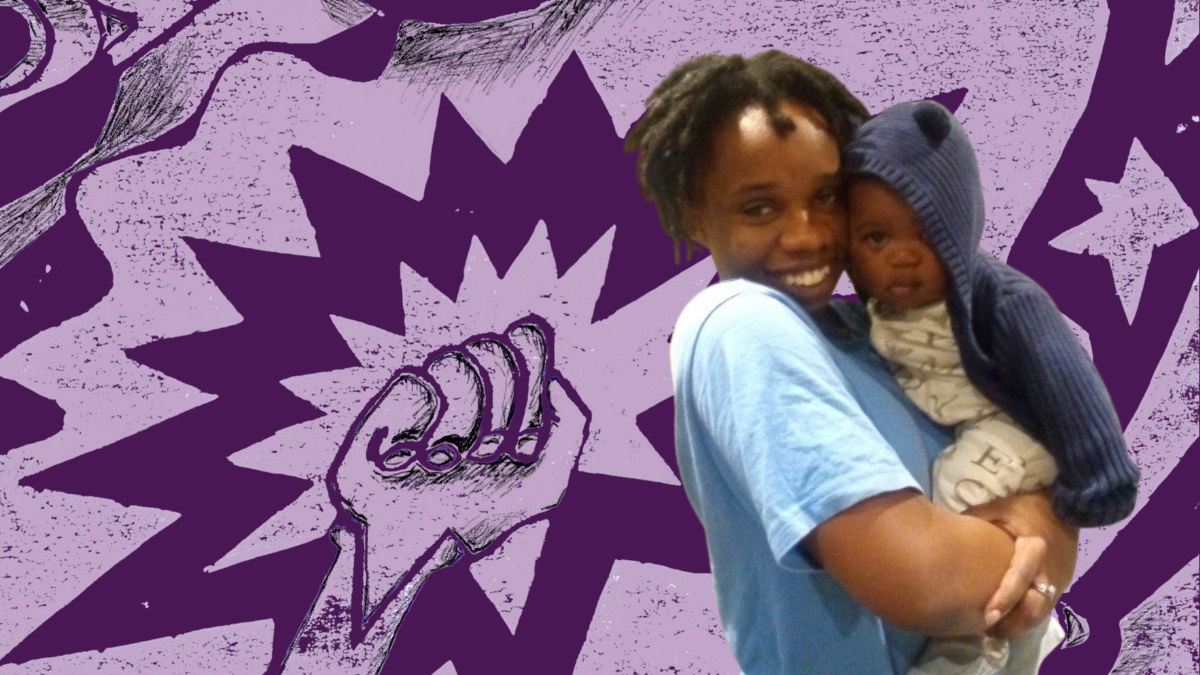
This past May brought a painful anniversary for Walidah Burns. Not only was it the month of her son’s first birthday, but it also marked the one-year anniversary of losing him to Durham County Child Protective Services.
As she prepared for her son’s arrival last year, Burns, a first-time mother, knew she wanted a natural delivery and arranged for a doula to join her when it was time for her to give birth.
But Burns’ plans were upended when she became involved in a “scuffle” on public transit, according to her doula, and went to Duke Regional Hospital’s emergency room to check if her baby was okay. Nurses at the hospital encouraged Burns, 37 weeks pregnant at the time, to induce her labor, which she refused to do.
That decision, Burns told Prism, sparked a chain of traumatic events, including involuntary commitment and an emergency cesarean section, that ultimately caused her to lose custody of her newborn baby.
The nightmare continues a year later as Burns, 28, is still waiting for a judge to be assigned to her case to regain custody of her son, after two others recused themselves. Instead of bonding with her son at home, Burns is only allowed monitored visitations in what’s commonly referred to as “baby jail”: a room at the Durham County Social Services office.
“The impact of me not having him in my care, and getting to know his character, who he is, what he likes to do, what he doesn’t like to do—I’m missing a lot of milestones,” Burns said. “He’s started walking, he’s talking, he’s doing a lot of things that I would have liked to have experienced.”
Duke University Hospital, where Burns was eventually transferred and which also runs communications for Duke Regional Hospital, did not provide comment regarding Burns’ allegations, which her doula, Whitney Williams-Black, backed up in an interview with Prism. A review of Durham County civil cases involving Burns did not show any cases for child abuse or neglect. Durham County Social Services directed Prism to the Durham Police Department, which held no reports about Burns involving a child.
What Burns experienced is “unfortunately, not unique,” said Amanda Wallace, who worked as an investigator for child protective services in North Carolina for more than 10 years. Wallace founded Operation Stop CPS in 2021 after “seeing all the corruption from the inside.”
Members of the abolitionist organization joined hundreds of others for the Black Mothers March in Washington, D.C.’s Lafayette Park on May 11 to build out a new path for keeping families such as Burns’ together and supporting stronger communities. Advocates and experts told Prism it’s long past time to end the systematic criminalization of Black, brown, and Indigenous communities through child protection laws, whose fundamental nature, they said, is rooted in settler colonialism and white supremacy.
Traumatic separation
More than 50% of Black children in the U.S. will experience a child welfare investigation, research shows. Nearly 10% of Black children will enter the foster care system, and 1 in 41 Black children will have their relationships with their birth parents legally terminated.
“Family separation is embedded in the foundation of the United States,” Wallace said. “How can we believe that the same government and systems would care, and miraculously believe, that they should protect Black bodies?”
For Burns, the saga began, she alleges, when Duke Regional Hospital staff did not heed her refusals of birthing interventions.
After Burns refused to be induced, Williams-Black told Prism that doctors informed her that they filed the paperwork necessary to involuntarily commit Burns to the hospital, and that they “could let her go,” but that it’d be easier if she “cooperated.”
Burns, feeling unsafe, was transferred to Duke University Hospital, where she eventually went into labor naturally. Complications led to the baby’s heart rate lowering, and he had difficulty breathing. The baby was rushed to the neonatal intensive care unit (NICU) following an emergency C-section.
Williams-Black, who was incorrectly included in Burns’ file, though they are not related, received a call from the Durham County Department of Social Services. A nurse had reported Burns. “The only thing they had in the report was that she was homeless,” Williams-Black said, and that she had received mental health support as a teenager.
The involuntary commitment order was lifted immediately after Burns’ C-section, said Wallace, who has been supporting Burns. But then Burns was surveilled in the hospital by CPS agents—“sitters.”
Burns alleges hospital workers petitioned CPS with “false statements,” including that she fed her newborn son juice and crackers while in the hospital. She was discharged while her son remained in the NICU, and Durham County took custody of her son.
Since then, Burns has been waiting for her case to be heard by a judge so she can regain custody. She was ordered to get a psychological evaluation, therapy, parenting classes, and provide proof of housing and employment, all of which she said she has completed. Wallace told Prism Burns currently has housing and is in school for nursing.
Assessing abuse
What constitutes neglect or abuse is often vague and up to the discretion of the individual investigator, Wallace told Prism.
“This family policing system turns teachers and counselors and police officers, and every person in North Carolina, into a mandated reporter, and this vigilante system means people just make reports on people when they don’t even understand what abuse and neglect mean,” Wallace said.
Wallace said that when she first started working as an investigator, policies left “wiggle room” for workers to use their judgment when assessing situations, in an effort to keep families together when possible. But then, she said, things began to change.
For example, when a child has injuries, such as bruises or broken bones from accidents, many counties in North Carolina require that the child is removed from the home. Wallace, when advocating for families, said she was reprimanded for insubordination when she disagreed. “I really had less power than I thought I did in the system,” she said. “I was just supposed to be somebody that they paid to do their dirty work.”
The negative outcomes for both the child and parent following family separation are well-documented. Wallace said there are higher rates of homelessness, incarceration, and high school dropouts. The American Academy of Pediatrics noted that family separation “can cause irreparable harm, disrupting a child’s brain architecture and affecting his or her short- and long-term health. This type of prolonged exposure to serious stress—known as toxic stress—can carry lifelong consequences for children.”
These consequences can lead to what’s commonly known as the “foster care to prison pipeline.” According to a 2020 report by the Children’s Bureau under the Administration for Children and Families, more than 50% of foster children will have an encounter with the juvenile legal system through arrest, conviction, or detention by age 17.
Children’s health and legal experts, as well as advocacy groups such as Operation Stop CPS, Black Mothers March (which Wallace also co-founded), and Repeal ASFA, argue that certain laws around the issue are inherently harmful to Black and brown families. These include the Adoption and Safe Families Act (ASFA) of 1997 and the Child Abuse Prevention and Treatment Act (CAPTA), which institute mandatory timelines for states to file for termination of parental rights after children spend a specific amount of time in foster care, in addition to mandatory drug testing of infants and mothers. These laws, however, did not mandate funding for social programs to struggling families.
As a result of family separation, it is not uncommon for parents to relapse, extending foster care stays, and increasing the likelihood of successful termination.
A legacy of settler colonialism
Family separation has a long history in the U.S., starting from when white settlers snatched Indigenous children from their homes and forced them to attend boarding schools rife with illness, death, and abuse.
In a July 2021 paper published in the Columbia Journal of Race and Law, researchers Theresa Rocha Beardall and Frank Edwards argued that modern child welfare legislation advances this legacy of white supremacy and settler colonialism.
When a family’s dynamic doesn’t follow models of appropriate behavior based on white, middle-class nuclear families, “settler assumptions suggest that children have been abandoned, live without care and intention, and need rescue and stewardship, much like the Native lands from which the children were taken,” the researchers write.
Indigenous children were further alienated from their social and cultural customs and forced to assimilate into European, settler-colonial society through the use of boarding schools run by Christian missionaries.
In 1958, the Bureau of Indian Affairs launched the Indian Adoption Project to “save” Native children from impoverished parents and place them with white, middle-class families. After widespread displacement of Indigenous children, the Indian Child Welfare Act (ICWA) was passed in 1978 to stop unnecessary removals, stipulating that Indigenous children must be placed with extended family, or at least an adoptive home which “reflect the unique values of ‘Indian culture.’”
Indigenous children are the most likely of any other racial group in the U.S. to be removed from their families today. Rocha Beardall and Edwards found that Indigenous children “are more likely than white children to have a case substantiated if they are investigated” by child protection services.
Indigenous children are also more likely to enter foster care than white children. About 27% of Indigenous infants who are investigated are placed into foster care nationally, compared to about 15% of white infants. About 55% of Indigenous infants who are the subject of a substantiated maltreatment allegation are removed into foster care, compared to about 37% of white children, Rocha Beardall and Edwards found.
In an interview for Prism, Rocha Beardall said that she doesn’t believe the federal government actually believed Indigenous children were being abused, or that it wasn’t healthy for them to be in their communities.
“They understood that healthy, vibrant native families who were together also meant healthy, vibrant tribal nations that were together that then posed an obstacle to settler colonialism and racial capitalism, so you manufacture a problem when there isn’t one,” Rocha Beardall said.
Family separation also proliferated during American chattel slavery. Enslaved Black people were forced to have children, often through rape, who were then separated from their families to create more profit and free labor for the enslaving class.
Today, agents of the family policing system work in ways where they need to find “bad” families to make a profit, Rocha Beardall said.
“The United States was designed to create inequality in society … because that goal is profitable for some and horrific for the rest,” she said.
Though the number of children entering the foster care system declined nationally in 2021 compared to 2018, the child welfare and family policing system still constitutes a big business. States and families that foster or adopt children receive financial incentives such as adoption tax credits, grants, and adoption subsidies.
Currently, the U.S. government spends 10 times more on foster care and adoption subsidies than on programs that keep kids with their families. Child Trends reports that in fiscal year 2020, its most recent analysis, child welfare agencies spent $31.4 billion of federal, state, local and other funds. In addition to the major federal funding sources, child welfare agencies reported spending $458 million in other federal funds, a 91% increase from 2018. Meanwhile, in 2023, 6.2 million additional children lived in poverty than in 2021, following the end of pandemic-era federal relief measures that had reduced child poverty to historic lows.
Building community
Beyond repealing child welfare legislation, Operation Stop CPS demands replacement of the family policing system with a “family defense network,” a mutual aid network of community members who can make recommendations and attorneys who can advocate for families at risk of separation.
Wallace also said that if community members are concerned about a child, they should try to build more community or offer child care, housing, and food to meet the family’s immediate needs.
Erin Miles Cloud, an activist and senior attorney with legal advocacy nonprofit Civil Rights Corps, said that currently, money is only allocated to foster and adoptive families that better represent the model settler-colonial family.
“The only reason we do not have child poverty eliminated and resources to our communities that are most marginalized is because segregationists didn’t want to feed and support Black women and children, point blank period,” she said. “And that is not about being good, bad, innocent, or hurting your kids. That is literally the will of white supremacy, saying we would rather starve out these families than provide our money towards them.”
Editorial Team:
Sahar Fatima, Lead Editor
Carolyn Copeland, Top Editor
Kyubin Kim, Copy Editor
Author

Kylie Matsh is a writer and artist based in Durham, North Carolina. She loves nature, running, history, reading, and getting involved in her community. She hopes to tell stories that will arm people w
Sign up for Prism newsletters.
Stay up to date with curated collection of our top stories.