Real cowboys don’t say ‘yeehaw’
Black country aesthetics are now mainstream. Absent are the rural Afro-Texans who sustain the heritage and traditions of Black cowboy country life
When I drive back home to deep East Texas, the first sight of longleaf and loblolly pine trees allows me to settle into my body. My shoulders instantly pull toward the earth away from my ears, my teeth unclench, my grip on the steering wheel softens, and my breaths become more expansive and light. Only the prehistoric forests of the piney woods—a region with an eco-diversity comparable to the rainforest—do this to me.
That’s when I know I’m home.
I drive onto the long, uneven driveway where the centipede grass grows no longer than two inches from the ground. I pull my car up next to my grandfather, who sits in his Dodge truck with the air conditioner blasting. Several years back, I would have found him sitting under the 40-foot grandfather pecan tree only a few yards away. Now, he only points toward the tree with his dark, shaky finger. In his low, soft voice, he mumbles about how the squirrels and raccoons are eating the fruit from the tree before it can fully mature and produce pecan nuts. The little creatures arrived earlier in the season last year because it’s been hotter than usual.
I spent my earliest years growing up in my grandfather’s house, sneaking out as early as age 2 to play with his hunting puppies in their pen behind that pecan tree. My grandpa, a self-taught naturalist and hunter, walked me around the land, identifying different plants, animals, and bugs. I tasted sour, citrusy “rabbit’s grass” on the same land where I first learned how to shoot a gun around the age of 10, giving myself a black eye after the scope of the gun kicked back.
I still remember my grandfather’s low, stern voice telling me and my older cousin to give back the golden harvest we stole from a pear tree belonging to his neighbor, whose home is now only remnants of a shack.
Like many Black folks with generational claims to the region, my grandfather and our family worked the land that they collectively bought. It was under that pecan tree where my grandfather shared folkloric reflections and lessons about life. He also hunted, farmed, and fed his nearby neighbors, who shared barbecued ribs, smoked hog, and barrels of beer. That was back before more than half of the land was parceled off to neighbors and the city of Lufkin.
The late bell hooks told us that certain forms of violence estrange us from ourselves and wound us in places where we would otherwise know love. In her writings about her rural upbringing in Kentucky, she said a portion of that violence is the upheaval of our agrestic existence.
“If we think of urban life as a location where Black folks learned to accept a mind/body split that made it possible to abuse the body, we can better understand the growth of nihilism and despair in the black psyche,” hooks wrote in “Belonging: A Culture of Place.” “And we can know that when we talk about healing that psyche we must also speak about restoring our connection to the natural world.”
I often ponder how the Afro-Texan’s story is not mistakenly mistold but rather part of an intricately designed spider web that has caught us all like prey in the corner of a forgotten broom closet. The rural Black Texan’s existence sits at the crossroads of scholarship, folklore, and archive, all of which have been weaponized to rewrite a history that doesn’t belong to us.
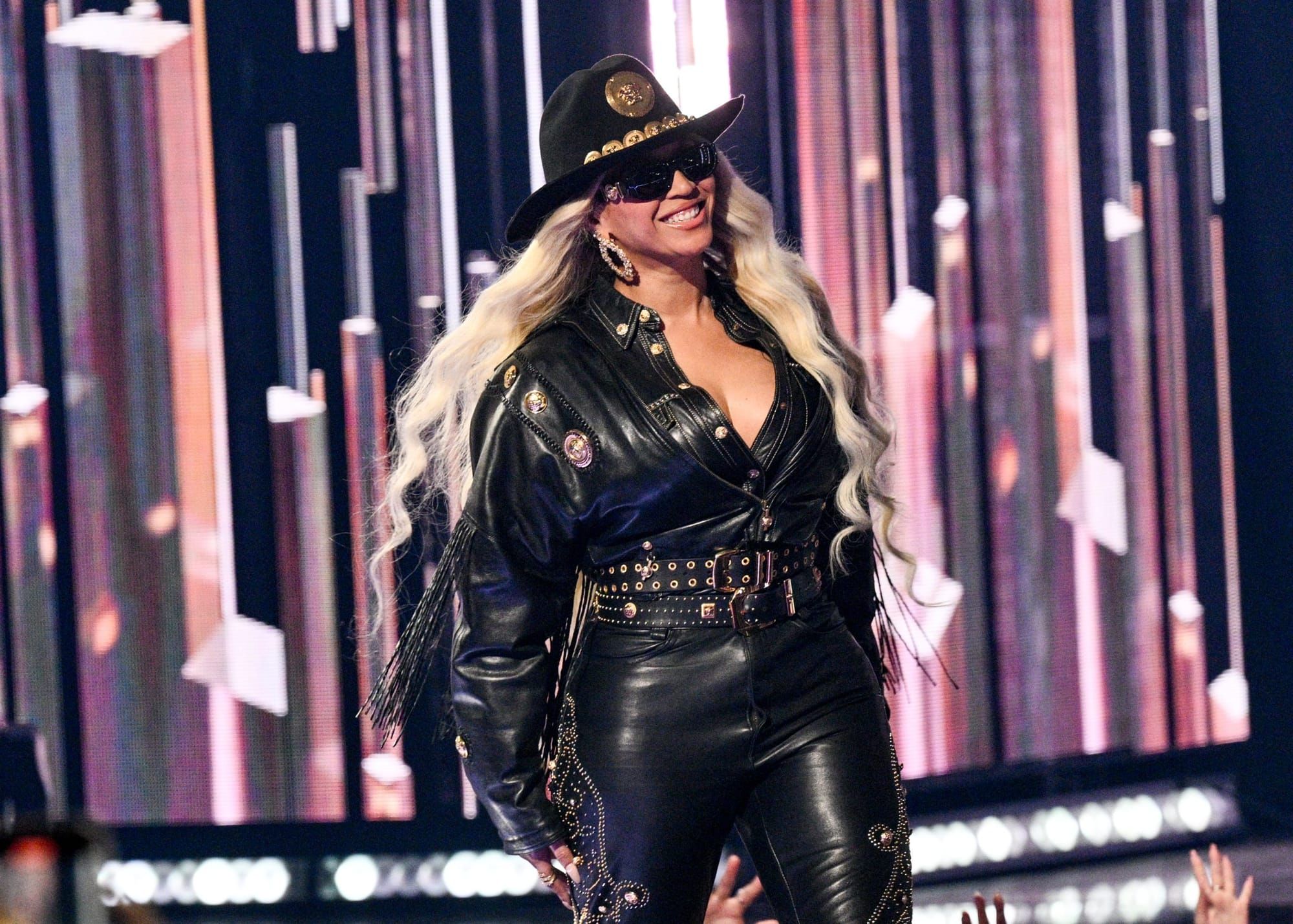
Today, images of different hues of Blackness coated with leather snakeskin cowboy boots, Daisy Dukes, and cowboy hats flood timelines, TV screens, and sidewalks.
This is important because if we do not know ourselves, then we have little chance of relating to anything else in the world.
Today, images of different hues of Blackness coated with leather snakeskin cowboy boots, Daisy Dukes, and cowboy hats flood timelines, TV screens, and sidewalks. Black country aesthetics are now front and center in pop culture thanks to our Afro-Texan auntie Beyoncé Knowles-Carter, and our cousin from the city, Megan Pete, also known as Megan Thee Stallion.
Yet, the rural Afro-Texan remains a distant memory while continuing to sustain the heritage and traditions of Black cowboy and country ways of life.
Folks are now trading their usual mocking jokes of Black country aesthetic for fetishization and co-optation. And many of those who grew up in the city or the suburbs have positioned themselves as spokespeople for “country folk,” while never visiting their country cousins in the backwoods near that gas station all Black people know to avoid.
We are arguably in one of the most consequential eras in American politics and history. I urge you to consider what keys to our collective pasts Black Afro-Texan ruralites hold and what wisdom can inform us. Black cowboys on sweat-drenched studs continue to grace magazine covers—yet the eyes of Texas and the broader country continue to be covered by a veil of deceit. When the fog of romanticism clears for Black folks in the “country,” will their voices be hoisted to the forefront? As traditions and heritage continue to fade like letters on an abandoned building, will there be justice for those who know that real cowboys don’t say “yeehaw”?
Beyond the stereotype
My grandfather said when he was young, he once rode a horse, fell off of it, and never got back on again.
That isn’t an uncommon story for the Black ruralite and the countless others who may have been too afraid, too poor, or too busy to mount their first stud. But, as many of us from the country know, it’s the land and generational bonds that connect us to cowboy culture—not riding on the back of a horse or sporting cowboy boots and a hat.
John Wayne and the Lone Ranger were both stolen identities of Black cowboys, yet all of the stereotypes that came with them continue to linger in the air like skunk spray. There’s a proclaimed “reclamation” of Black country aesthetic, but for many of us, it never left.
More than half of the 254 counties in Texas are considered rural, and the state has the largest population of ruralites in the country. The majority of Black folks living in rural areas are concentrated in East Texas, an area that historically contained the vast majority of enslaved people in the region.
Living the land
My family land in Lufkin—locally known as “The Hill”—was once a persimmon orchard that my great-great-grandmother bought with her siblings and kids. Around 1944, they moved our family from the Woodville area, and they spent months clearing the land by chopping the sprouts of baby persimmon trees. Soon after, my family erected one of their first homes on the property in 1945.
“I wish I could show you how this place used to be,” my grandfather told me. “You wouldn’t believe it.”
Until my grandfather was in sixth grade, our family used oil lamps for light and a wood stove heater in the winter. During the summers, a cardboard box was torn and fashioned into a handheld fan while resting on the porch. At night, the screened windows were opened to allow the breeze to whisk into the small home; there was no fear of break-ins because of carefully trained yard dogs and mutual trust in the area.
Children toted water from the nearby well. During heavy rains, the well would turn the color of the red clay dirt, prompting them to boil the water on the stove for sterilization. Afterward, the water was filtered through a pillowcase or sheet, turning the cloth red like mud.
The dirt was mineral-rich. People trusted the land. Neighbors came from around town to my family’s land to dig it up. They would dry the clay dirt on a sheet pan in the sun or in the oven to eat it and even put it on injuries, like a sprained ankle or a cut.
The land was rich and fertile, and it gave my family plenty of crops and nourished a slew of farm animals, including chickens, turkeys, guineas, three mules, ducks, geese, goats, and horses, according to my grandfather.
One of my grandfather’s many tasks on the land was to milk cows and churn the milk for buttermilk or butter.
“I wasn’t interested in no cows,” he chuckled in a voice reminiscent of Courage the Cowardly Dog. “I was interested in trying to play.”
My great-grandmother had seven children: two boys, four girls, and a nephew she raised like a son. My grandfather and his siblings would play with handmade toys like hand-carved wooden pistols, slingshots, stick horses, and bows and arrows. On birthdays, their gift was cake and ice cream with the occasional “soda water” since my great-grandmother was on welfare and had to be frugal.
The woods
Before moving on our family land in the mid-1940s, my grandfather’s family came from Chester, Texas, near Woodville, a town about an hour away from Lufkin. Chester is surrounded by the Big Thicket National Preserve. It’s the first preserve of its kind in the U.S.; nearby are Angelina National Forest, Martin Dies Jr. State Park, Davy Crockett National Forest, and the Sam Houston National Forest.
The thicket and the surrounding area is known as the “biological crossroads of North America.” There’s a mix of ecosystems, including pine forests, swamps, savannas, and prairies. The area is home to a quarter of the bird species found in the U.S., hundreds of tree species, and what seems like an endless number of mammals, reptiles, and plants.
Before colonizers and their namesakes, it was a mostly unsettled area that held some evidence of campsites from the Caddo, Bidai, Deadose, Patiri, and Akokisa Native American tribes who referenced the area as “Big Woods.”
Throughout the 19th century, Spanish colonizers lured folks to the area with land grants before it was later colonized by the U.S. For most of that time, it was known as a “lawless” area frequented by escaped slaves, Native American tribes, and outlaws because of the thick, jungle-like forests and impossible swamps.
For Black ruralites like myself and my grandfather, there’s an unspeakable reverence for everything on and within the land.
In the past, I’ve written about how my adventures with my grandfather solidified my relationship with the backwoods, a place I learned to “meditate, focus, and be mindful of life’s many journeys.” For Black ruralites like myself and my grandfather, there’s an unspeakable reverence for everything on and within the land.
My grandfather taught himself how to hunt, and he became quite good at it in his early teens. Beyond training the dogs to protect the yard, he taught his hounds and black mouth curs how to “tree” squirrels and raccoons, feeding them the guts after successful hunts.
He would eventually meet my grandmother—one of 14—after befriending and hunting with her brothers, who were also backwoodsmen.
Back then, my great-grandmother was afraid for my grandpa to go out into the woods. Even now, my grandparents recoil at the thought of me going camping or hiking alone with my dogs. The elders’ fears of bored white men, dangerous animals, and “haints” that haunt the forests still plague the area.
In East Texas, the trees talk. If you’re from the region, you understand. If you’re not, you soon will if you visit.
Much of my childhood was spent hearing folktales and ghost stories from my family. There’s a tale of treasure buried somewhere on my family land. According to another, my grandma’s dad showed my grandfather the cave that Bonnie and Clyde once hid in during their tour through Texas. In yet another, my grandfather swears he saw a black panther during one of his hunting trips—a story I’ve tried to disprove to no avail.
Losing land and people
After my great-great-grandmother passed away, my family divvied up the land. My great-grandmother didn’t want this, but to her disapproval, the family took two acres each in the mid-1980s. A stranger bought some of the remaining property and put three houses on it, according to my grandfather.
My great-grandmother and her brother kept their properties. When my uncle died, he passed the land onto my aunt. Tall pines and underbrush swallowed up the rest of the property that was once farmland.
Black landowners in the South have collectively lost around 12 million acres of farmland over the past century. Most of this loss occurred in the 1950s due to discriminatory lending practices, violence or intimidation, and tax sales.
In 1910, Black Americans owned approximately 16 to 19 million acres of land, but by the late 1990s, only 1.5 million acres remained under Black ownership—leading to a loss of $326 billion in wealth for Black farmers.
The total loss for Afro-Texans has yet to be fully calculated.
Lumber, railroad, and oil have left a smear on East Texas, influencing local politics, pitting Black and brown communities against one another, and causing ecological destruction.
East Texas is historically known for three major industries: lumber, railroad, and oil. These industries have left a smear on the area, influencing local politics, pitting Black and brown communities against one another, and causing ecological destruction.
East Texas first became a hotspot for the lumber industry during the late 19th and early 20th centuries, sprouting up lumber towns like Diboll and Kirbyville. Although fruitful for large tycoons, the industry led to rampant deforestation, especially from the 1880s to 1930s, known as the “Bonanza Era.”
In the late 19th century, the railroad industry—which led to the founding of towns like my hometown of Lufkin—allowed for the shipping of both lumber and oil. It also led to rapid industrialization.
In the 1930s, the East Texas Oil Field was the largest in the U.S. Although it led to an economic boom in the region, Black folks were overwhelmingly excluded or displaced.
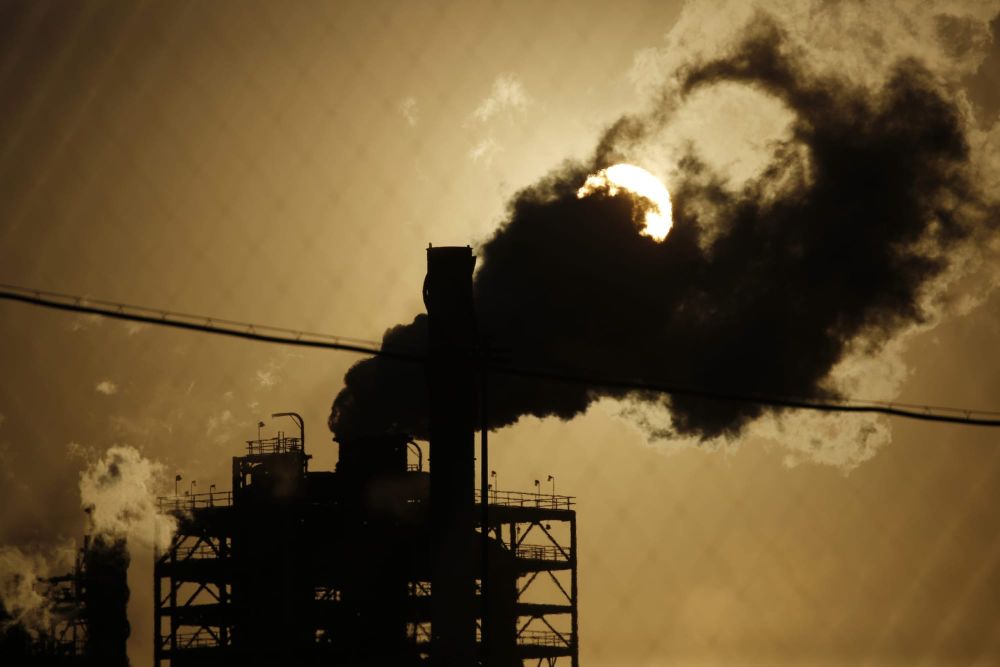
Less than a mile down the road from my grandfather’s home sits a petrochemical plant that he says was a chicken plant in the 1940s—though the clouds of black and gray smoke emanating from the facility each day seem to have been there forever.
In my grandfather’s 20s, one of the major employers in the area was the Southland Paper Mill, which paved the way for Southern paper production. My grandpa still remembers all the smoke that facility also blew into the air.
Another major company was Lufkin Industries, which produced oilfield pumping equipment and was founded by several lumbermen in 1902. For 40 years, my grandfather worked there. When he first began, he said the job required no hard hat or protective gear other than steel-toe boots.
He inhaled the raw chemicals from the pumping units he made. Men like my grandfather melted the iron in the mold and poured it until it cooled. When opening the mold and dragging the pumping unit over, fumes filled the air.
“I did that for years,” he told me.
He retired at the age of 63 because of how rheumatoid arthritis affected his 6-foot-7 build.
“I saw a whole lot of guys who didn’t even get old enough to retire,” he said. “We were all talking about retiring at 62, but some of them guys didn’t even get to 62.”
Who do we look to?
During my visits to the land, I often find my grandfather peering off into the distance. I think about the amount of life he’s lived and how much life has changed—how much the land has changed.
Sometimes, while talking, he veers off into a story he’s told me 20 times before. At other times, he calls me by my mother’s name—who I generously favor—before slowly correcting himself.
I’m reminded of the mortality of my grandparents, both of whom had a strong hand in raising me, my siblings, and my cousins—all of us either leaving home or completely abandoning the traditions of cultivating the land.
“Talking and writing, again and again, about this received wisdom is essential for those of us who not only want to remember the old ways, who want to integrate this wisdom from the past into our present as it remains life-sustaining even though many of the elder teachers are long gone,” hooks wrote.
Black people in urban areas have defined the mainstream experience of Blackness in this country. Telling the story of my grandfather and our family isn’t an attempt to curtail or erase the prominence of Black cowboy culture. It is my goal to shift focus onto the folks who maintain and harbor real stories about the tradition.
Lest you forget: It’s the renegade nature and the traditions of Black folks from the Blackwoods that can provide us with insight into our own personal sovereignty as we continue to heal ourselves and the land.
Author

T.D. Bailey aka DaLyah Jones is a eighth generation Deep East Texan who was born and raised behind the “Pine Curtain”. She serves as the program officer for Borealis Philanthropy’s Racial Equity in Jo
Sign up for Prism newsletters.
Stay up to date with curated collection of our top stories.