Violence deconstructed: Under abortion bans, the state is the abuser
Abusers and the U.S. government present a conjoined threat to pregnant people and survivors’ bodies and lives
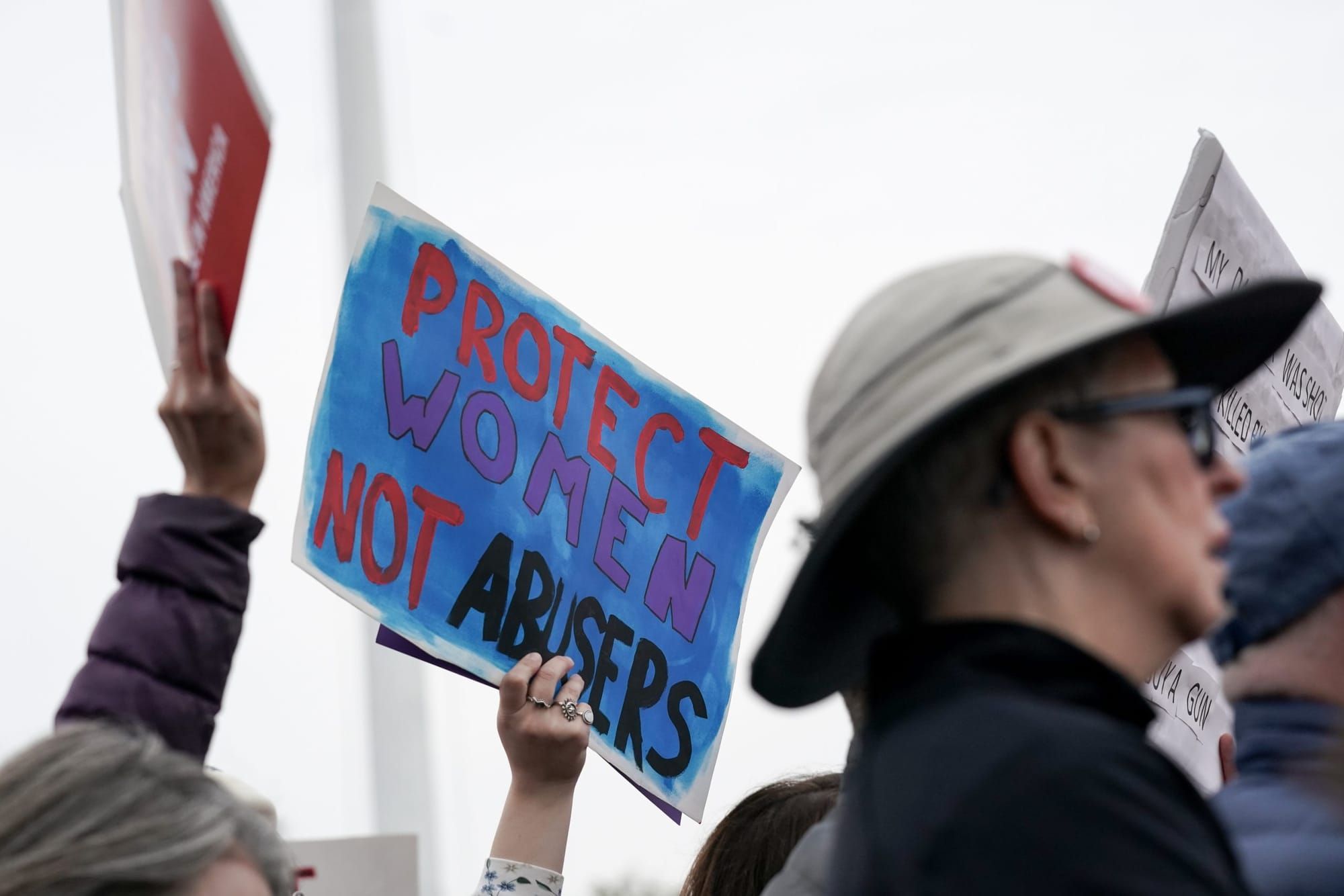
In February, Harold Thompson of Texas was sentenced to life in prison for the 2023 murder of his partner, Gabriella Gonzalez. Thompson fatally shot the 26-year-old mother of three after she traveled to Colorado to obtain an abortion. While I hoped the news would bring her family some measure of peace, I also immediately thought of other women and pregnant people who have been killed, pushed to the brink of death, or subjected to long-term health consequences from abortion bans. Their killer, their abuser, is the state. And under abortion bans, the lines between policymakers and abusive partners are increasingly blurred.
In November, Texas’ most powerful anti-abortion organization, Texas Right to Life, celebrated the reelection of President Donald Trump by smugly announcing a recruitment operation to find abusive partners willing to take legal action over their partners’ or ex-partners’ abortions. Since 2023, the influential anti-abortion attorney Jonathan Mitchell has helped several Texas men sue or take other legal action over their exes allegedly traveling out-of-state for abortions or allegedly taking abortion pills. Attorneys for one of the women warned in a 2024 court filing that if Mitchell has his way, “any scorned lover could harass or intimidate their ex … for simply receiving a false-positive pregnancy test.” Mitchell is also the architect behind several extreme anti-abortion laws, like Texas’ SB 8, a six-week abortion ban that allows Texans to sue anyone who allegedly helps someone have an abortion for at least $10,000.
In January, the Washington Post reported that Texas Attorney General Ken Paxton, too, is actively recruiting abusive partners to reveal their partners’ abortions if they obtained abortion pills from an out-of-state provider. The purpose of this alleged operation is to file lawsuits against these doctors and challenge liberal states’ shield laws or laws that protect doctors against legal threats from states that have banned abortion. The goal of anti-abortion lawmakers is to entirely trap residents under their states’ abortion bans—similar to how abusers rely on isolating their victims from anyone who might help entrap them.
The goal of anti-abortion lawmakers is to entirely trap residents under their states’ abortion bans—similar to how abusers rely on isolating their victims from anyone who might help entrap them.
In so many ways, this state entrapment is already happening under abortion bans: Doctors are too afraid of prosecution under criminal bans to treat pregnant people experiencing complications. Adults in some states are too afraid of facing felony “abortion trafficking” charges to help minors travel out-of-state for care. Alabama’s attorney general has threatened to charge anyone who helps someone travel out-of-state or helps pay for abortion care with a criminal conspiracy. Robin Marty, executive director of WAWC Healthcare, told the multimedia outlet The Meteor in October that this threat from Alabama is a means of “completely and utterly isolating the person who is pregnant because if you cut them off from information and any sort of assistance, then you have essentially isolated her and forced her to do what you want. … That’s what domestic abusers do: isolate and then abuse and force them into what you want.”
Paxton filed a lawsuit against Dr. Margaret Carpenter in New York in December for mailing the pills to a Dallas-area woman, sparking an ongoing legal battle that experts say is likely to reach the Supreme Court. Paxton reportedly found this case as part of his office’s recruitment effort. The state of Texas’ reported partnerships with men who are disgruntled by their partners’ or ex-partners’ abortions is, in many ways, the natural conclusion of Dobbs v. Jackson Women’s Health, wherein abortion bans are the ultimate collaboration between the state and abusive men to enact gender-based violence on women and pregnant people.
Intimate partner violence is likely to escalate or start for the first time when someone becomes pregnant. The leading cause of death for pregnant people in the U.S. is homicide. A study published in May showed a direct link between anti-abortion laws that shut down abortion clinics (called “TRAP” laws, for Targeted Regulation of Abortion Providers) and intimate partner violence-related homicide: From 2014 to 2020, the study estimates that 24 pregnant-capable people of reproductive age were victims of an intimate partner violence homicide associated with TRAP laws.
Denial of abortion access and domestic violence are fundamentally intertwined. The landmark “Turnaway Study” found that individuals who seek but are denied abortions face a substantially greater risk of long-term domestic violence. Sharing a child can tie someone to their abuser for the rest of their lives. And several states that enforce abortion bans simultaneously enforce laws that prohibit a divorce from being finalized if someone is pregnant.
In 2023, the National Domestic Violence Hotline reported that calls involving reproductive coercion doubled in the first year after Dobbs. Last year, the hotline published a survey of over 3,400 domestic violence victims and found that 5% (about 200) of respondents said their partners threatened to report them to law enforcement if they had abortions, and another 5% said their partners threatened to sue them if they sought abortions. While there’s a rising trend of people facing criminal charges for the outcome of their pregnancy, no abortion bans currently punish the patient.
Nevertheless, as yet another tool in their toolbox, abusers can sow confusion about these laws and who they criminalize for what behaviors.
Yet, at the same time, in a frustrating and ironic twist, anti-abortion activists have rallied around the narrative that abortion access itself is abuse, broadly portraying individuals who consume abortion pills as victims of coercion or medical malpractice. In January, Louisiana officials indicted Carpenter, the New York doctor, as well as a Louisiana mother for helping the mother’s teen daughter have a medication abortion. Without any evidence, Louisiana officials say the mother “coerced” her underage daughter to take the pills. Louisiana, in 2024, became the first state to criminalize possession of abortion pills for most people. The law’s authors justified it by citing the case of a man who fed his partner abortion pills without her consent. That singular, tragic story has since led to a handful of other states, like Texas, Indiana, Idaho, and Kentucky, introducing their versions of Louisiana’s law this legislative session.
Alarmingly, recruitment campaigns seeking abusive men to punish intimate partners for their abortions are the tip of the iceberg. This legislative session alone, a handful of states, including South Carolina, North Dakota, Indiana, and Oklahoma, have proposed bills that reclassify abortion as homicide, which, in some of those states, could qualify abortion patients for the death penalty. Other states like Missouri have introduced terrifying bills that drastically expand the already aggressive anti-abortion surveillance apparatus, proposing a state-run registry of potential abortion-seekers. All of this legislation closely mirrors the tactics of domestic abusers, from the threat of potentially killing abortion patients to the threat of heightened monitoring of pregnant people’s most private decisions.
In West Virginia, this year alone, anti-abortion lawmakers have introduced not one but three bills to eliminate the narrow rape exception in the state’s total abortion ban. Most state abortion bans lack rape exceptions. And if they do offer these exceptions, they’re rendered entirely ineffective if doctors and rape survivors are unsure of how to navigate these policies. They function almost solely to separate “good” abortions from frivolous ones rather than to help survivors. In February 2024, researchers estimated that in 14 states that banned abortion after Dobbs, 519,981 rapes were associated with 64,565 pregnancies.
In 2023, Tennessee lawmakers introduced a bill to add a rape exception to the state’s total ban—with the caveat that those who “lie” about being raped could face three years in prison. One South Carolina OB-GYN told NPR last year that her state’s ban causes her and patients who are rape victims to feel like “potential criminals.” Similar to how abuse victims who turn to law enforcement for help face victim-blaming, disbelief, and sometimes even criminal charges themselves, that is the toll of abortion bans: Victims and survivors are implicitly classified as criminals.
Almost two years after Gonzalez was killed by an intimate partner for having an abortion, the threats to pregnant people and survivors have only risen. This is the legal climate and political reality that abortion bans have created—one in which abusers and the U.S. government present a conjoined threat to pregnant people and survivors’ bodies and lives.
Editorial Team:
Lara Witt, Lead Editor
Carolyn Copeland, Top Editor
Rashmee Kumar, Copy Editor
Author

Kylie Cheung is a freelance writer reporting on politics and culture. She is the author of Survivor Injustice: State-Sanctioned Abuse, Domestic Violence, and the Fight for Bodily Autonomy.
Sign up for Prism newsletters.
Stay up to date with curated collection of our top stories.