People are paying for state abortion bans with their lives
Women are dying preventable deaths due to denied or delayed care, and doctors have started avoiding states with bans—restricting health care access for all
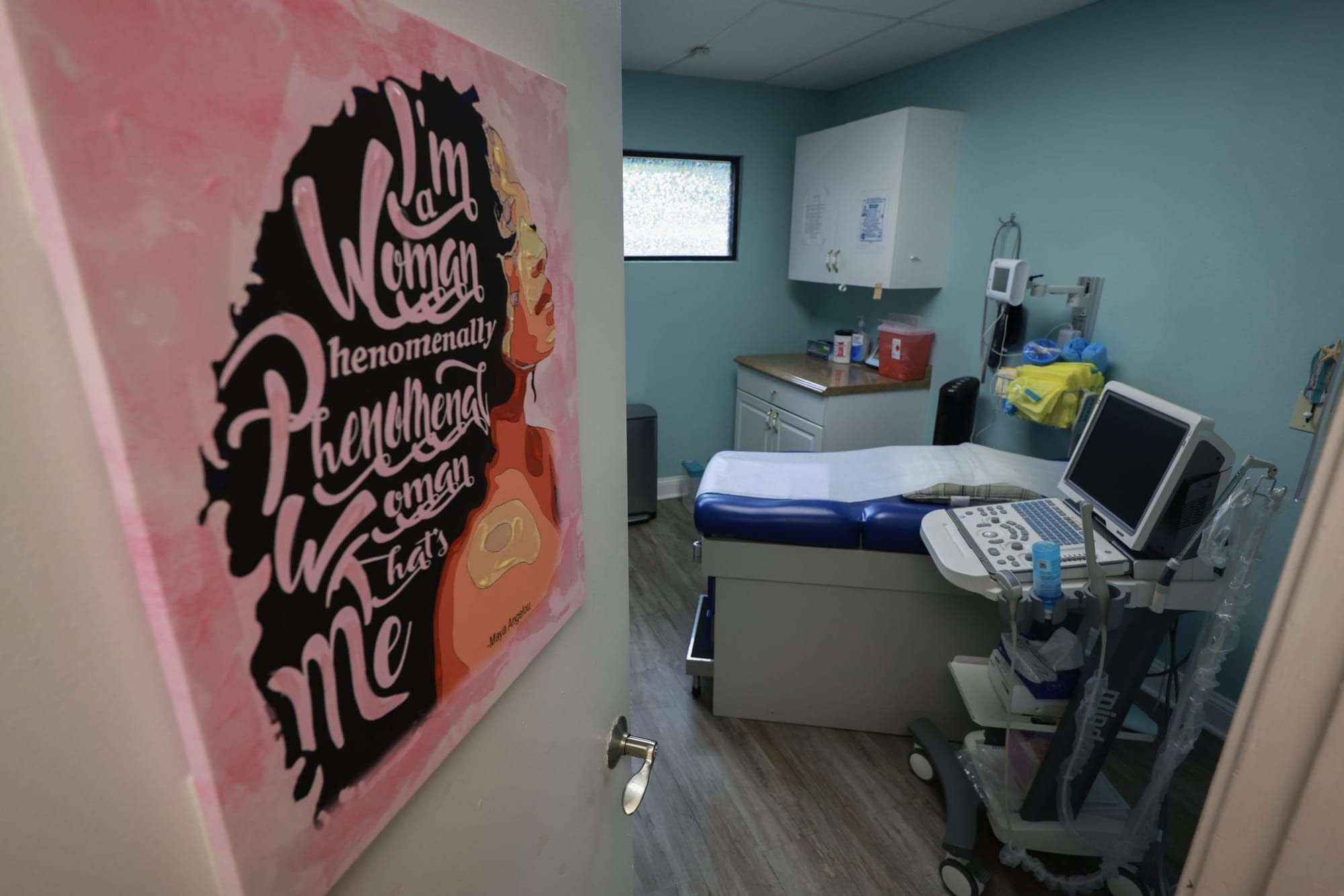
I had an ectopic pregnancy in 2014 while on the birth control pill. In an ectopic pregnancy, a fertilized egg develops in the fallopian tube. These pregnancies are never viable, and in every case, the condition is life-threatening to the pregnant person.
When this happened to me 11 years ago, I was 29, newly married, and privileged in many ways: white, educated, housed, and employed with health insurance. I was in rough shape when I was admitted to the hospital via the emergency room, where an ultrasound detected that my right fallopian tube had burst. I’d been bleeding internally for a week and was on the brink of turning septic. I was rushed into emergency surgery, where tissue and my fallopian tube were removed.
It was an awful situation, but I received the care I needed. Today, in 19 states, I might have died.
As a result of abortion bans that were either triggered into law or enacted after Roe v. Wade was overturned in 2022 in the Dobbs v. Jackson Women’s Health Organization Supreme Court case, people are being delayed or denied the standard health care I received. Now, at least five women have died: three in Texas, two in Georgia, and likely many more we don’t know about.
When I first learned of women dying because of abortion bans in their states, I was shocked. I didn’t realize care for miscarriages as well as nonviable pregnancies, such as ectopic and molar pregnancies, was banned. In molar pregnancies, an egg and sperm join incorrectly at fertilization and create a noncancerous tumor that cannot support a developing embryo. Some people have a miscarriage, while others require surgery.
Both ectopic and molar pregnancies present life-threatening complications if not treated promptly. Ectopic pregnancies account for almost 2% of pregnancies and are a leading cause of maternal death in the first trimester. Molar pregnancies account for 1% of pregnancies and present a significant maternal death risk.
Abortion bans contain blanket language so that any procedure that could be considered an abortion is illegal. In the event of ectopic or molar pregnancies, when the pregnancy is never viable, providing care is still illegal. Doctors can intervene, but only when the patient’s life is at risk. The same is true for miscarriages or pregnancy complications.
Dr. Charlotte Conturie, a maternal fetal medicine specialist in California, where abortion is legal, diagnoses fetal anomalies and cares for pregnant people who have medical conditions or complications during pregnancy.
“Part of my specialty is preventative care, and one of our major goals is to prevent maternal mortalities,” Conturie said. “We don’t want to wait for a patient to become critically ill before providing care because that could be too late.”
Dr. Carly Dahl, a maternal fetal medicine specialist in Utah, where there is an 18-week ban, added that young patients are healthy “until they are a couple of hours away from death.”
Our society and culture have strong opinions about pregnancy and abortion, but what I still find surprising is how much the average person doesn’t understand about reproductive health care.
“Pregnancy is the highest-risk time for a person of reproductive age,” Dahl explained. “Everyone expects pregnancy to be a very happy and seamless time in their life—and for many people, it is. But for a significant amount of people, it is riddled with complications or illnesses and threats to their long-term health, and that is very widely misunderstood.”
Worldwide, a person dies every two minutes from pregnancy or childbirth. According to the World Health Organization, the leading causes of maternal deaths are severe bleeding, high blood pressure, pregnancy-related infections, complications from unsafe abortion, and underlying conditions that can be aggravated by pregnancy. “These are all largely preventable and treatable with access to high-quality and respectful healthcare,” the organization notes. But for many, “high quality and respectful healthcare” is hard to come by.
Another commonly misunderstood impact of abortion bans is that care for miscarriages and pregnancy complications, including amniotic sac rupture, is also banned. The Mayo Clinic reports that 10% to 20% of all known pregnancies end in miscarriage, but the number is likely much higher because miscarriages also result before a person knows they are pregnant. In 3% of pregnancies, the amniotic sac breaks before 37 weeks, raising the risk of infection and maternal death.
The physicians I spoke with, three of whom are fellows with Physicians for Reproductive Health, said that these conditions are part of the danger of abortion bans because neatly categorizing patients is impossible.
“You cannot predict the outcome of a pregnancy. Abortions happen at all points of pregnancy for all sorts of reasons. People think of these laws as theoretical, not something that impacts people’s lives, but 1 in 4 women of reproductive age will have an abortion,” said Dr. Joi Spaulding, a family medicine physician in North Carolina, where there is a 12-week abortion ban.
Abortion bans also place severe penalties on doctors, pitting their liberty and livelihoods against the needs of their patients. Instead of receiving routine preventative care, patients are turned away from receiving any care until they are at death’s door. Some patients die. Others suffer for days or weeks and develop other severe conditions as a result.
Dr. Danielle Gershon, an obstetrician-gynecologist in Alabama, where there is a total ban, said that abortion bans restrict the ability of patients to access “the full spectrum” of health care and reproductive care, and it causes the well-being of the entire community to suffer.
Patients who cannot receive the care they need don’t have bodily autonomy. If they are mothers, that’s going to impact their family and in turn, the entire community.
Dr. Danielle Gershon, Alabama obstetrician-gynecologist
“Patients who cannot receive the care they need don’t have bodily autonomy,” Gershon said. “If they are mothers, that’s going to impact their family and in turn, the entire community.”
As communities suffer these impacts, some lawmakers who originally supported abortion bans are now walking back their support. In recent months, several states have passed exceptions in cases of rape and incest, and for ectopic and molar pregnancies and amniotic sac rupture. However, the doctors I spoke to said these efforts aren’t enough to make an impactful difference.
“All of the evidence and research suggest that when you try to regulate or legislate individual categories of who deserves an abortion or miscarriage management, people really suffer, get hurt, and die,” said Dr. Samuel Dickman, the chief medical officer director of Planned Parenthood of Montana, where voters recently voted to enshrine abortion rights in the state constitution. “It’s most vividly true in states with abortion bans that claim to have exceptions—there’s just no way to create an effective exception.”
“There will be huge numbers of patients who fall between the cracks; the cracks are wider than the planks. Nowhere is this truer than rape and incest,” Dickman continued. “Sexual violence is so common and so stigmatized that there’s no way to create an exception that actually provides meaningful abortion access for the vast majority of survivors of rape.”
While abortion bans primarily target pregnant people or people who may become pregnant, they also have a disproportionate impact on people who live in rural areas or lack financial resources.
Elisabeth Smith, the director of state policy and advocacy at the Center for Reproductive Rights, told Prism that abortion bans devastate entire communities by cutting off access to critical health care and placing the greatest burden on people with the least means and most limited access to resources, including low-income individuals, people of color, LGBTQIA+ communities, and those living in rural areas.
“Research shows that people denied abortion care are more likely to experience severe mental health challenges, including anxiety, depression, and even suicidal ideation by forcing individuals into impossible situations, often delaying or denying lifesaving care,” Smith explained in an emailed statement. “These policies are not just harmful; they are life-threatening. We see the human cost of these bans every day, and it’s clear that they’re creating a crisis in health care access that is both deeply inequitable and profoundly urgent to address.”
Many people in need of abortion care must now travel out of state for abortions. Studies have found that abortion-related travel has more than doubled in recent years, “adding financial and emotional strain for those already struggling,” Smith said.
When a state criminalizes the environment doctors work in, doctors leave—not just OB-GYNs but also anesthesiologists, cardiologists, and pediatricians. As a result, residents living in a state with an abortion ban may have to drive farther to receive care for their medical issue and once they arrive, qualified health care providers may not be there.
Further consequences of abortion bans likely won’t be felt until the next generation of doctors begins to practice. According to a report from the Association of American Medical Colleges, 7.1% fewer medical students applied to residencies in states with abortion bans. In Texas, OB-GYN resident applications dropped 16% last year. Talented, caring doctors of all specialties are not practicing in states with bans, and all people—not just women—lose by not having access to these providers.
It’s worth noting that most Americans support abortions. Conturie said she doesn’t know of any other medical specialty that has as much oversight from the government as reproductive health. Every physician I spoke to said the only people who should be making decisions about abortion care are the patient and their physician. “Laws can make medicine seem black and white, but it operates in shades of grey,” Conturie said. Gershon also referred to pregnancy as “a gray area,” and one in which laypeople and legislators “don’t understand the nuances of medicine.”
According to Dickman, one of the biggest obstacles to creating legal protections for abortion has to do with social stigma. “Patients find it difficult to speak up due to shame, secrecy, or being a victim of sexual assault,” Dickman said.
I’ve always felt deeply ashamed of my ectopic pregnancy, even though I did nothing wrong. I make my living as a writer, and I’ve never written about it until now. I’ve rarely even spoken about it and when I have, it’s only been to close friends and to offer solidarity as they experienced their own reproductive health issues.
Once I saw that people are dying from something I survived, I could no longer be silent.
But once I saw that people are dying from something I survived, I could no longer be silent. With a second Trump administration, there is also a renewed fear that abortion bans will be posed in every state or that there will be a federal abortion ban. If these fears come to fruition, health care in this country will only get worse.
“Abortion care is extremely common and safe, but it becomes not necessarily safe if it’s illegal,” Spaulding said. “People are not going to stop needing abortions, and they’re not going to stop having them.”
More restrictions may be looming, and now that the federal right to abortion has been stripped away and states have enacted abortion bans that worsen health care options, it’s time to reverse the script. The reality is that politicians don’t care about my or your access to health care. They are cynically focused on politics—even at the cost of their constituents’ health and lives. It sometimes feels like there is nothing these lawmakers would like more than to create a more fearful environment where people are scared into silence.
At first, I was afraid of sharing my experience, but once I began to speak openly, the fear of being judged dissipated, and my guilt and shame receded. I realized the more pressure people feel to stay silent about their experiences with miscarriage, pregnancy, and abortion, the easier it is for these common conditions to remain misunderstood.
Because of the health care that I received, I’ve been given a second chance. My dream of having a family came true, and I now have two children. However, the people in states with restricted access to health care due to abortion bans may not be so lucky.
Editorial Team:
Tina Vasquez, Lead Editor
Carolyn Copeland, Top Editor
Rashmee Kumar, Copy Editor
Author
Mina Manchester received her MFA from the Sewanee School of Letters, and her work has been featured in Electric Literature, The Evergreen Review, HuffPost, Columbia Journal, The Normal School, Inscape
Sign up for Prism newsletters.
Stay up to date with curated collection of our top stories.