State abortion bans are killing women
The devastating aftermath of Dobbs is unfolding in real-time, creating life-or-death circumstances for pregnant people across the U.S.

Two years after the Supreme Court’s decision in Dobbs v. Jackson Women’s Health Organization overturned Roe v. Wade, the brutal, deadly consequences of state-level abortion bans are becoming clearer.
These laws are not just abstract policies; they’re killing women.
Emergency abortion care is an essential, lifesaving right, a part of critical medical care that everyone deserves to access. But this fundamental right is slipping away, dismantled by the very systems meant to safeguard our health and lives.
The preventable deaths of Amber Nicole Thurman and Candi Miller in Georgia and Josseli Barnica and Nevaeh Crain in Texas should serve as a warning. These women didn’t receive the care they needed to survive their pregnancies. Instead, they were forced to suffer, to wait, and to worsen until they were “sick enough” to qualify for treatment. It’s the ultimate betrayal, and it’s exactly the kind of horror that restrictive abortion laws have wrought.
These bans are more than just inhumane. They are deeply racist, targeting communities already facing greater health disparities, including Black, Indigenous, and immigrant women. Decades of systemic racism have led to unacceptably high maternal mortality rates for Black women and consistently poor health outcomes for women of color. Abortion bans amplify this injustice by creating additional barriers to critical care. For Asian American and Pacific Islander (AAPI) women, cultural stigma, immigration status, and language barriers compound the difficulty of accessing reproductive health care.
We’re living in the aftermath of Dobbs, watching the devastating results unfold in real-time. The Supreme Court rejected an opportunity to affirm the duty to provide lifesaving emergency abortion care, choosing instead to delay a decision in Idaho v. United States and Moyle v. United States, cases centered on the Emergency Medical Treatment and Labor Act (EMTALA). This federal law has stood for nearly 40 years as a safeguard, guaranteeing stabilizing care in emergencies, regardless of condition or circumstance. It should be a nonnegotiable right, especially for pregnant people facing life-threatening complications. However, SCOTUS chose to sideline these critical cases, leaving countless people vulnerable to state laws that ignore their urgent medical needs.
Allowing state abortion bans to obstruct EMTALA is a direct assault on these rights and a cruel denial of care.
I’m outraged by the Supreme Court’s inaction on EMTALA. This law was established as a bedrock of patient rights in America, ensuring emergency care for anyone in critical need. Allowing state abortion bans to obstruct EMTALA is a direct assault on these rights and a cruel denial of care.
AAPI women and gender-expansive communities have fought for a better health care system for decades, calling for access to comprehensive reproductive care, including abortion. Yet the reality of state bans is stark: Over 6 million Asian American, Native Hawaiian, and Pacific Islander (AANHPI) women of reproductive age live in the U.S., and 1.3 million live in states with abortion restrictions or bans. For many of them, limited access to emergency care is often their only option, especially for immigrants relying on emergency services to detect and address health conditions. When access to even these services is threatened, it deepens existing health disparities and leaves women, particularly women of color, without recourse.
We will not passively accept this. Reproductive justice is not only about legal rights, but also about ensuring that every community has practical access to necessary care, no matter their ZIP code or income level. According to research by the Associated Press and leading research and policy organization AAPI Data, nearly 80% of AANHPI adults believe abortion should be legal in all or most cases, and 75% want Congress to pass a law protecting abortion access nationwide.
For someone facing life-or-death pregnancy complications, time is a luxury they don’t have. As reproductive justice advocates, we have a responsibility to fight back against these dangerous policies. We demand the power to decide if, when, and how to become parents and the ability to raise our children in safe, healthy environments. That includes the right to emergency care.
The road ahead is long, but we are unwavering in our commitment. We envision true reproductive and health freedom for AAPI women in America, and we won’t stop until our elected officials ensure that all reproductive health care, including abortion, is not just legal, but affordable, accessible, and free from stigma.
Author
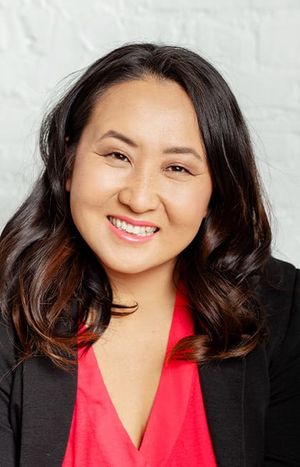
Sung Yeon Choimorrow is the executive director of the National Asian Pacific American Women’s Forum, the nation’s only organization dedicated to building power with Asian American and Pacific Islander
Sign up for Prism newsletters.
Stay up to date with curated collection of our top stories.