Abandoned by Western peers, Palestinian journalists remain committed to reporting on the genocide
Palestinian journalists around the world say the Israeli military’s targeting of journalists in Gaza—and Western media’s silence—has led them to think differently about their colleagues and their roles within the industry
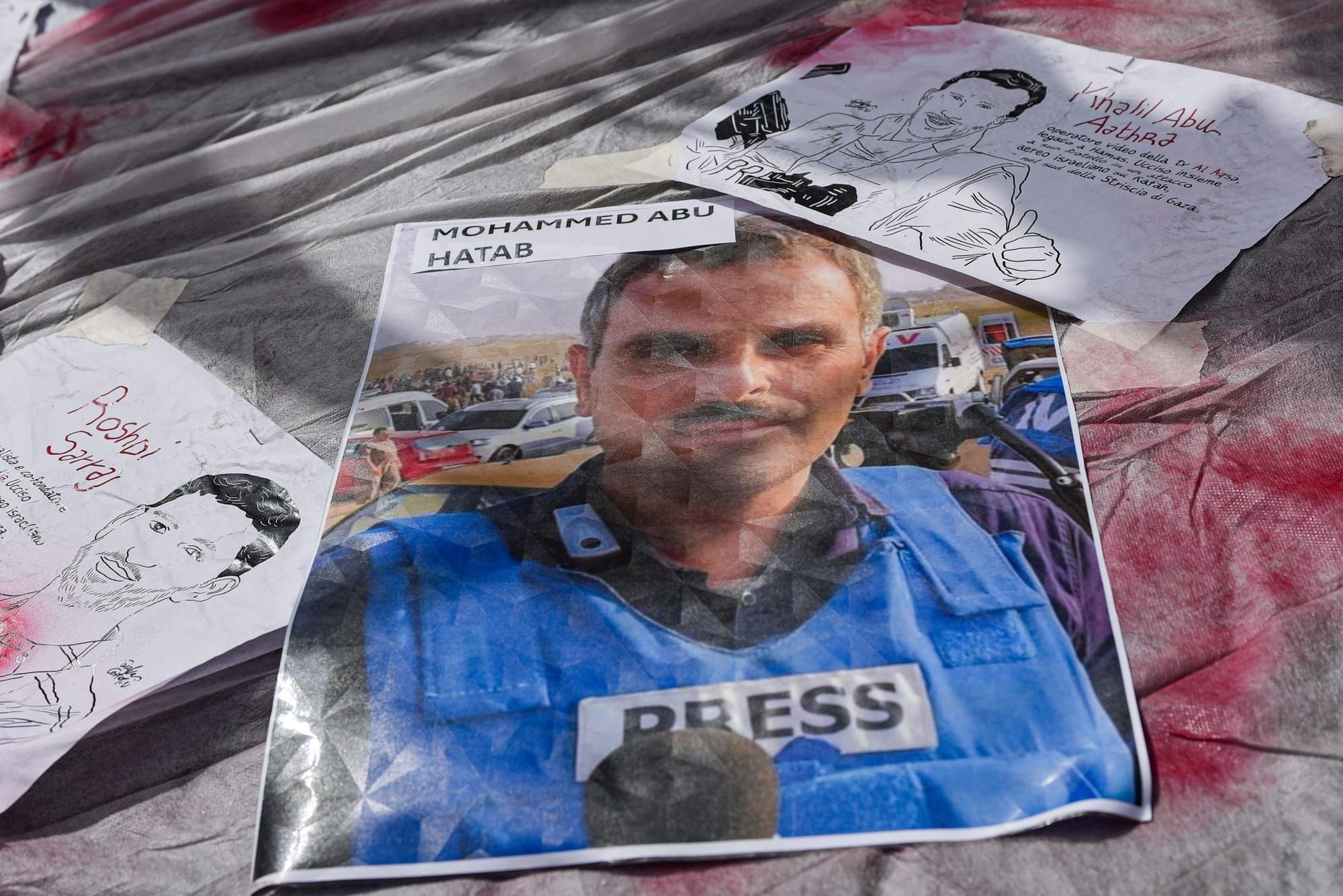
The world has failed Palestinian journalists in Gaza.
In the past two years, Israel has killed more than 278 media workers in Gaza. There has yet to be any accountability for the martyrdom of our peers and their families. Since I began writing this article in August, almost every week, a journalist that I followed since the beginning of this genocide has been killed by Israel in the most horrific ways imaginable. The grief is unbearable. I have often wondered: Where is the outrage? In what universe is it normal to be calm and measured and “objective” about the killings of people whose only job was to document the truth? How are these war crimes going unchecked? How many more prewritten wills do we have to read before Western journalists acknowledge our rage?
As a Palestinian reporter watching the genocide unfold from the U.S., I have never felt so ashamed of the journalism industry. For solace and to help make sense of the roles that we can play in the media, I sought advice from other Palestinian journalists on the ground and in the diaspora. I wanted to hear how they are coping with the failures of our supposed colleagues and their insight into how they are managing during these unprecedented and traumatic times.
“One of the martyrs”
“I’ll be honest with you. It’s very dark to say this, but it wasn’t a shock,” said Mohammad Alsaafin, a journalist at Al Jazeera’s AJ+, about the August killing of his colleague Anas Al-Sharif.
Weeks after Al-Sharif’s death, Alsaafin is finding strength in the words and actions of his martyred colleagues at Al Jazeera. He read Al-Sharif’s will and could not believe what a “remarkable young man” he was. The 28-year-old characterized being a journalist not as a job, but as a mission and a calling. Al-Sharif appeared to believe very strongly that he had a role to play in showing the world what was happening to Palestinian people and what was happening to Gaza, the place he loved.
“It’s very easy to say that you’re a journalist because you’re committed to the truth,” Alsaafin told Prism. “But how many people say that knowing that it’s going to cost them their lives? He knew that it was going to cost him his life, and he still did it. He spoke often about how he hoped that one day this is the massacre, or this is the report, or this is the footage that will finally compel the world to stop this genocide. I think he probably realized that was never going to happen, but he had this sense that he was put on this earth to be the voice for his people as they’re going through the darkest hour.”
Israeli forces began openly threatening Al-Sharif last year when they put him on a hit list. “These are the actions of gangsters, not of a state,” Alsaafin said. On July 20, Al-Sharif was filming in front of what remains of Al-Shifa Hospital when a woman beside him fainted from hunger. It was the first time since the beginning of the genocide that he broke down in tears.
Days later, the Israeli army’s Arabic spokesperson Avichay Adraee released a video on X mocking Al-Sharif’s tears, calling it “Hamas propaganda.” According to Alsaafin, like many other martyred Palestinian journalists in Gaza, Al-Sharif soon began to receive direct threats on his phone from Israeli intelligence services. Al-Sharif made a public appeal to his peers in the international media to help protect him because he feared his fate.
Of course, there was no intervention. No tangible protection was offered. As Al-Sharif predicted, he was swiftly killed just weeks later on Aug. 10.
Al-Sharif’s death was devastating. Just like Roshdi Sarraj, Samer Abu Daqqa, Ismail Al-Ghoul, and Hossam Shabat before him, Anas Al-Sharif’s name and face are forever seared into my memory.
As unbearable as these killings are from abroad, it is far worse for those on the ground. Palestinian journalist Ahmad Al-Batta, a correspondent for Al-Araby TV in Gaza, said losing colleagues is like losing family.
“Those that we lost, it’s as if we are losing a part of our organs and our bodies really,” Al-Batta explained. “And also the fear increases. It’s possible and very normal that you will be one of the martyrs in the near future with everything being targeted.” Al-Batta is from Khan Younis and like many journalists in Gaza, he’s lost several family members while reporting on the genocide. His mother, sister, nieces and nephews, and other loved ones were also martyred. Still, he continues his journalistic work.
“It would be heartbreaking and something that we can’t imagine, but I never had the time to pay condolences,” said Abubaker Abed, a journalist from Deir al-Balah who recently evacuated to Ireland. “I never had the time to grieve their losses. I never had the time to sit with myself and imagine what happened.” Two weeks after I spoke to Abed in August, news broke that his cameraman Rasmi Jihad Salem of Al-Manara Media Company was killed by an Israeli shelling in Gaza City. The grief continues even in exile.
Abed was originally a sports reporter, but when the genocide began, he quickly transitioned into being a war correspondent. He told me about reporting on the killings of his own family members on TV.
“I remember in one of my live reports, I had to talk about this tragedy—losing my cousins. After that, I went to the funeral, and went to the graveyard, and buried the corpse of my cousin. And then we had to pray the funeral prayers. And then I had to go back for another live report. And then life goes on,” Abed said.
“They do know better”
Across the diaspora, the struggles are incomparable, but still shattering.
While Alsaafin has lived in the U.K. and U.S., he was born in Gaza’s Khan Younis refugee camp, and he still has family there. Trying to maintain the level of detachment and so-called objectivity required by the journalism industry has been difficult. “But from a professional point of view, what’s been much more difficult and what makes me angry—I’m not shy about using that word—is the complicity, the lack of professionalism, and the complete abdication of journalistic rigour and ethics that we’re seeing from the vast majority of our peers in the Western media.”
Laura Albast, a Palestinian journalist, editor, and media analyst, agrees. After a monthslong Prism investigation in collaboration with Visualizing Palestine, she found that there was a significant pro-Israel bias at the leadership levels of mainstream U.S. newsrooms, which only intensified after Oct. 7, 2023. Not only is Israel killing journalists, Albast told me, it’s also working to destroy their reputations. “Whether it’s the memory of them or their actual existence,” Albast explained.
So you’re spending your energy while you’re absorbing trauma being in the middle of a genocide, and you’re trying to also defend yourselves and deny any claims that the Israeli Occupation Forces have or the regime has leveled against you.
Laura albast, Palestinian Journalist
Albast said that journalists in Gaza are not just begging for the Western world to care about the genocide; they are also actively being targeted in smear campaigns by Israel, which regularly accuses them of being members of militant groups or of fabricating stories.
“So you’re spending your energy while you’re absorbing trauma being in the middle of a genocide, and you’re trying to also defend yourselves and deny any claims that the Israeli Occupation Forces have or the regime has leveled against you,” Albast said. It’s worth noting that dozens of Palestinian journalists, including Ismail Al-Ghoul, Hossam Shabat, and Anas Al-Sharif, were placed on Israeli hit lists, and, once killed, members of the Israeli military usually celebrated on social media by stating that the reporter was “eliminated.”
While Israel kills journalists in Gaza for their work covering the genocide, mainstream Western media has made almost no effort to demand the protection of Palestinian reporters. Instead, the elite media’s primary focus has been on the demand that Israel let foreign journalists into Gaza.
Abed said foreign journalists should be free to cover Gaza from the ground. “But it won’t change anything, because when we were reporting, we were showing things live-streamed,” Abed said as a way of explaining that broadcasting Israel’s atrocities has done nothing to stop the genocide. If the West is looking for unedited, unfiltered journalism, Palestinian journalists have been providing it for two years, he said.
However, it’s clear that the West isn’t interested in the powerful media produced by Palestinian journalists on the ground. Mainstream media, especially in the U.S., has relied entirely on Israeli officials and framing when reporting on Gaza, and despite a United Nations commission declaring that Israel is committing genocide, they still refuse to use the word. Language is watered down, and atrocities are sanitized.
“We see Western media put Israeli journalists on the byline and journalists who have volunteered or served in the Israeli Occupation Forces on the byline,” Albast said. “No way in hell these people have been told ‘you’re too close to the story.’ But this has been said to Arab, Muslim, Palestinian journalists in the newsroom who were trying to cover Palestine or cover their own communities. They’ve been removed. They’ve been reassigned. I know this because I’ve covered it.”
Western journalism’s fixation on gaining their reporters access to Gaza—before sharing safety equipment with local reporters; before imposing sanctions on Israel; before divesting from Zionist media institutions; before refusing to embed with a genocidal army; and before apologizing for the atrocity propaganda they have published over the past two years—is a slap in the face to every Palestinian journalist who has remained steadfast in the face of this unimaginable horror.
“Those who demand that foreign media will possibly convey the message better are undermining the efforts of the Palestinian journalists who conveyed the worry of the war,” Al-Batta said. “They are doubting what we showed as the truth. As if more than 660 days of coverage was not there. … [It’s] insulting. Very insulting.”
According to Alsaafin, there’s been an “incredible lack” of solidarity.
“[And an] incredible kind of narcissism and racism when it comes to deciding how they should cover Gaza, and how they should work within the limitations that the Israelis have set,” Alsaafin said of mainstream Western media. “I don’t have to go over just how much our industry is falling short. Or how malicious it’s been. We tend to make excuses for these institutions and for many of these journalists, saying they don’t know better, but they have the same access to information that you and I do, and they do know better.”
“That disgusts me”
It seemed inevitable that my conversations with Palestinian reporters drifted to the Western media’s role in the genocide. Since Oct. 7, 2023, Al-Batta said Western media narratives have been far from the truth. The blame is often placed on the victim, not the killer.
“They just cover us in numbers, in politics, which just leads to numbness so the world cannot feel or see or touch the situation in which we have been suffering from in Gaza,” said my friend Haya, who is using a pseudonym for safety reasons. I first connected with her when the genocide began. We were both doing freelancing work, though I was in New York and Haya was in Gaza. Haya was recently evacuated from Gaza to attend a European university for her post-graduate studies, but she continues to write every day.
“I believe all of them will be haunted forever by what they’ve done,” Abed said of complicit Western journalists. “Two years into the genocide, and they’re still calling it the Israel-Hamas war and Israel’s war in Gaza. They’re still parroting Israel’s talking points in Zionist terms, [like] ‘Hamas run health ministry.’”
It’s irrelevant what Israel says. What’s relevant is what we see and what we know is happening. But everything is treated as if it’s actually a game of he said, she said
Mohammad Alsaafin, AJ+ journalist
Alsaafin believes one of the biggest problems in Western coverage today is that everything is treated like a case of competing narratives. “When someone says Israel attacked a school shelter and killed dozens of civilians, your BBC or ITV or CNN anchor might pop up and say, ‘Yes, but Israel would say that they don’t target civilians.’ It’s irrelevant what Israel says. What’s relevant is what we see and what we know is happening. But everything is treated as if it’s actually a game of he said, she said,” Alsaafin explained.
Alsaafin doesn’t necessarily consider Western journalists to be his peers. “If you have been someone who has helped spread the lies put out by the Israelis to justify genocide, to justify killing your own peers like Anas and others, we might belong to the same industry, but I think we view our profession in very, very different ways,” he said.
For Albast, it’s been difficult to work in the journalism industry while watching other reporters in the West treat the genocide as just another war on their docket. “There’s sort of a narcissism to Western journalism that exists, it’s extremely self-centered,” she said. “It’s about the awards that they’re going to win. The bylines they are going to get, their existence in the public domain more than the stories and the people that they are covering and presenting in their stories. And that disgusts me, to be honest.”
The journalist told Prism that she doesn’t see these kinds of journalists as her peers, in part because it’s clear to her that they don’t see her as a peer. It’s her belief that Western media is “absolutely, 100% complicit in the genocide in Gaza.” Alsaafin added that because the Israeli military doesn’t let foreign journalists go into Gaza, media outlets are under no obligation to reach out to the Israeli government for comment on every atrocity it commits, much less publish the government’s unfounded claims.
According to Albast’s own research, it is company policy in many newsrooms to devalue Palestinian stories and to prop up Israeli military narratives. Over the last two years, memos have leaked from media organizations revealing newsrooms’ internal policies for covering the genocide—notably, by banning reporters from calling it a genocide.
Albast has spoken to dozens of journalists in newsrooms that have adopted unethical and discriminatory policies on Palestine, in part because their fear of retaliation keeps them from pushing against newsroom leaders. Journalism is an honorable profession, Albast said, but it must be upheld as one.
“If you are unable to be in an honorable environment, you need to walk away,” she said—and this includes Palestinian journalists. While Albast understands reporters’ well-founded fears that they might be blacklisted or face retaliation, what she can’t understand is working each day in a newsroom that doesn’t see you as human.
Alsaafin told Prism that he can’t understand why more newsrooms don’t hire more Palestinian journalists in Gaza, the only journalists in the world who can provide readers with a real sense of what’s happening on the ground. This is better than “relying on pundits who don’t know what they’re talking about, or liars who are paid to lie on behalf of governments carrying out massacres,” he said. But hiring Palestinian journalists on the ground will also help elevate the status of these journalists across the industry.
“Unfortunately, there is a hierarchy of trust and of respect amongst Western journalists for those in Palestine and for non-Western journalists in general,” Alsaafin explained. “Israelis have no compunction about killing anyone, we know that, but you will at least give them pause. And perhaps that is enough to save these people’s lives.”
An archive of collective memory
As the genocide rages on, I am still struggling with how the term “journalist” is given both to those on the ground who have died reporting important stories and those who have been complicit in these atrocities.
Abed told me that he never considered hanging up his press vest and quitting entirely. “I didn’t have any problem with dying in Gaza,” he said. “But I had a problem if I harmed my family.” The fear that his family would be killed is the only reason he left Gaza.
Al-Batta told me that the idea of quitting crossed his mind a lot—especially the day he lost most of his relatives. Several of his loved ones approached him afterward and told him he should leave the profession. “They meant, ‘Look, it’s enough, everything you lost.’ But maybe this position reinforced the opposite for me, which is to stay in the profession, to carry on with the message and continue the work even with all the pressure,” he said.
Many reporters in the Gaza Strip became journalists almost overnight because they understood the severity and urgency of making the genocide visible to the world. For example, Al-Sharif had never planned to be an on-air correspondent; he was initially a cameraman and only took over reporting responsibilities in Gaza City after his predecessor, Wael Al-Dahdouh, had to evacuate to the south. This sudden sense of responsibility gave rise to “citizen journalism” in the rest of the Gaza Strip, where many young residents picked up their cellphones and documented the horrors they witnessed. There was no formal training for many of these reporters, but they lived up to the codes and ethics of journalism better than most of their peers in the West.
These journalists became our eyes and ears on the ground, and many of us have cared and worried for them just as we would our own family. Personally, young women reporters such as Hind Khoudary, Bayan Abu Sultan, and Maha Hussaini became my role models. I also fear for their safety. And when we lose someone like Mariam Abu Daqqa—a mother and protector; a doting daughter and friend; and a voice for her people—the grief threatens to swallow us whole. I cannot speak for others, but most of the time, I struggle to keep my head above water.
Despite the threats and pressure, Haya said she’s never once considered leaving the profession. She believes every Palestinian is an archive of collective memory and that their stories must continue to be told. “It’s an obligation as I bear witness to the genocide,” she said.
Alsaafin said he reckons with the industry all the time, but at the end of the day, he said it’s important to acknowledge that he lives in safety and security. “I have a home, and my neighborhood isn’t being blown up and my kids aren’t going hungry,” he said. “I have the freedom to travel and move and escape. The comparison between what we’re going through and what our families are going through is not even in the same kind of universe.”
One day, this genocide will end, and there will be halls in universities all across the world dedicated to our martyrs. There will be journalism scholarships at the most prestigious universities in honor of the reporters who lost their lives. There will be awards named after those who were targeted and killed for their work. However, I don’t know if any of these journalists would want to be honored in this way. More than anything, I’m sure they simply would have wanted to live to see their children grow up. To see their homes rebuilt and their land liberated. Post-mortem recognition—no matter how beautiful the vigil or plaque—falls flat when we could have stopped the killing in the first place.
“We, as Palestinian journalists, are not waiting for or expecting anything from the world. No praise or honor or anything,” Al-Batta said. “We are a reflection of people’s needs and their pains. And this is the ultimate goal of journalism.”
Editorial Team:
Tina Vasquez, Lead Editor
Carolyn Copeland, Top Editor
Stephanie Harris, Copy Editor
Author
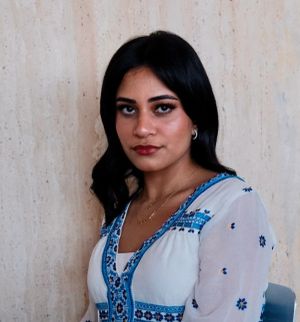
Samaa Khullar is a Palestinian investigative journalist and fact-checker based in New York City. Her writing examines war, mass displacement, free speech, mass mobilizations, and protests. Her work ha
Sign up for Prism newsletters.
Stay up to date with curated collection of our top stories.