10 years post-Ferguson, advocates seek prosecutor accountability
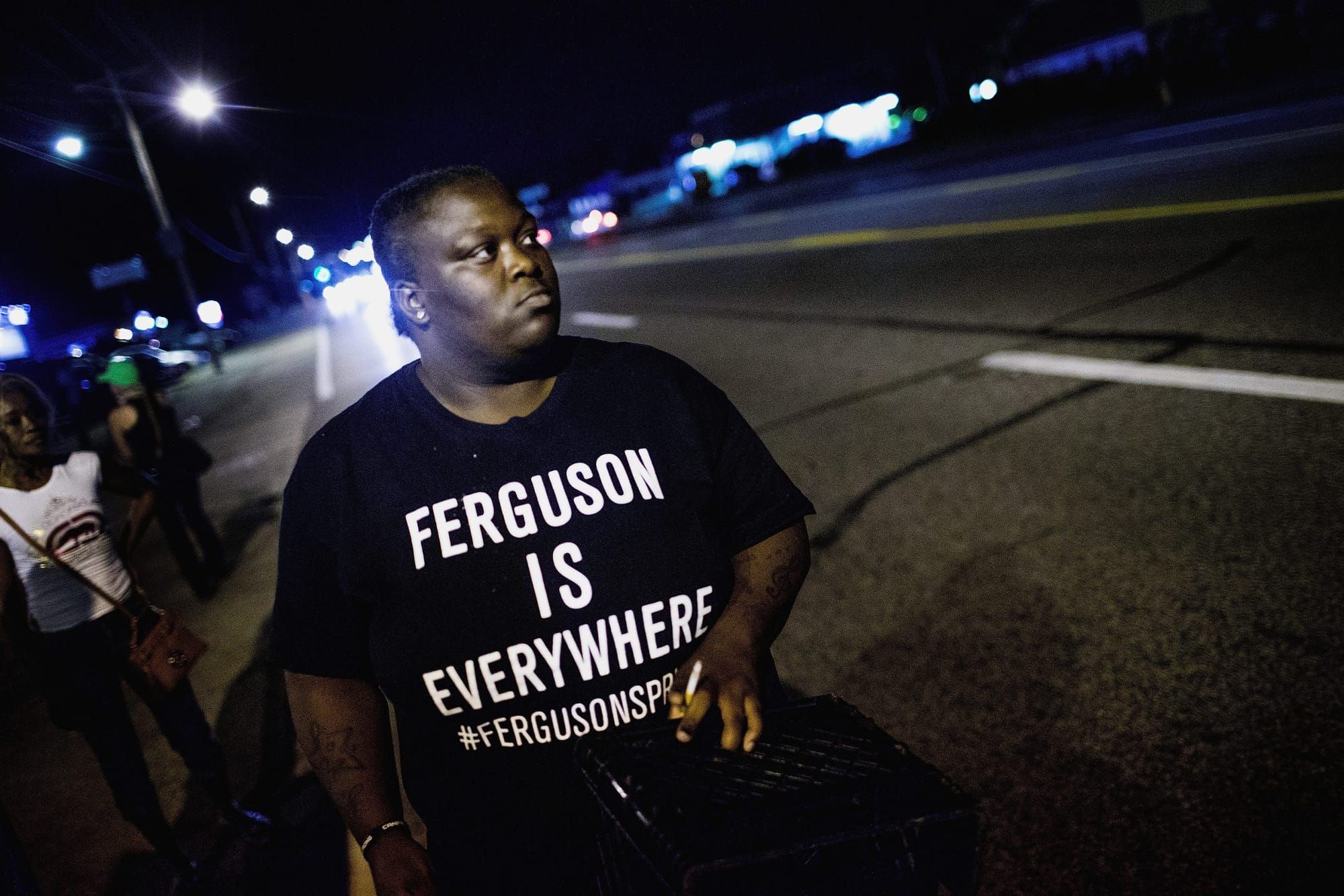
A coalition of racial justice advocacy groups in St. Louis has quietly issued the first in a series of “Prosecutor Watch” reports on the role and powers of the prosecutor and its function in the local criminal legal system. Prosecutors, the coalition contends, have staggering authority to enact violence on communities. The groups say prosecutors’ offices are structured to prize convictions over truth, and in their pursuit of convictions, “prosecutors regularly abuse their power.”
The introductory report gleans insights from more than three years of collective focus by the Prosecutor Organizing Table, which is made up of local decarceration leaders who spend the bulk of their working lives trying to free Black and poor people from the clutches of the carceral state: Action St. Louis, ArchCity Defenders, Forward through Ferguson, Freedom Community Center, MacArthur Justice Center, and Missourians to Abolish the Death Penalty.
Advocates told Prism there’s been little prosecutorial fervor to free wrongfully convicted St. Louisans, even innocence cases. Children, however, continue to be charged as adults, and poor people are still landing in jail for 200 days or more because they can’t afford cash bail. This human misery has been happening under the watch of “progressive prosecutors” carried to office with a reform mandate on the national wave after the 2014 uprising in Ferguson, Missouri.
To better understand these dynamics, reports evaluating the individual prosecutors’ offices are slated to follow. The next report will focus on Wesley Bell’s office in St. Louis County and the office of St. Louis Circuit Attorney Gabriel Gore. Specially appointed by Missouri’s governor, Gore assumed office on May 30, 2023, replacing Kim Gardner, who’d resigned under extreme pressure from state Republicans. Assessments of Bell’s and Gore’s offices will be based on five key metrics fleshed out in the report: transparency, charging decisions, pretrial detention, conviction and sentencing, and commitment to community-based alternatives.
Mike Milton leads Freedom Community Center, which advocates for transformative justice shaped, in part, by survivors of the criminal legal system like himself.
He told Prism convening the Prosecutor Organizing Table in 2020 and publishing the reports in 2024 are fruits of a long-term strategy born in the period between Gardner’s election as St. Louis circuit attorney in 2016 and Bell’s as St. Louis county prosecutor in 2018.
“It was a long strategy of ‘how do we fight mass incarceration’ as we came out of the hopes of Ferguson. Ferguson told us there has to be a different way of dealing with incarceration,” Milton said.
By the time the Prosecutor Organizing Table began convening, it was clear to Milton that regime changes alone would not move the needle.
“We were trying to reach out to him several times. [Bell] just would not respond to us,” Milton said. “He was taking credit for the jail population decrease, but it was actually The Bail Project, my [former] organization, that was posting bail and dropping the jail population, like 200 people a month.”
Milton became concerned his work was being undermined.
“Bell was still recommending cash bail at that time, and he knew better,” he said.
Michelle Smith, the co-director of Missourians to Abolish the Death Penalty (MADP), said her organization has barely recovered from the emotional upheaval of the April 9 execution of Brian Dorsey, and the state is already set to kill another Missouri man, David Hosier, on June 11.
Smith rejects any notion of disposable people.
“Right now, I know several people who are wrongfully convicted, not necessarily on death row, but who have strong innocence cases out of St. Louis County,” Smith said. But when family members ask about progress, they’re given pat answers: “‘We’re looking into that, we’ll let you know,’” she said, parroting them.
Smith said she expects the “report cards,” as she calls them, to move St. Louis toward prosecutorial accountability.
“We’re told to go vote,” she said, “but once we do, people don’t have any accountability.”
The moment in 2020 when Bell announced he would not pursue charges against Ferguson police officer Darren Wilson for the killing of Mike Brown is one example.
“Bell felt like he wouldn’t get a conviction, and that’s possibly true,” said Smith, who emphasized that Bell could have put more effort and compassion into informing the Brown family ahead of the press conference.
It would have been more respectful if he’d sat down with the Browns at their kitchen table, “like he did when he needed their support,” she said.
Blake Strode, executive director of ArchCity Defenders, told Prism his office is still finding “very high, very unaffordable bails being set for defendants across many different categories of charges.”
He sketched out the Prosecutor Organizing Table’s process for evaluating the St. Louis County prosecutor’s office, the subject of their upcoming report.
“We’re going to ask them questions; there’s no hiding the ball. We’re going to share their responses and our perspective on their responses. That’s what the report is going to be,” Strode said.
He’s already aware prosecutors don’t always track the data necessary to make evaluations on every metric meaningful.
“Part of the response tends to be, ‘We can’t possibly do all of this data gathering and sharing because we don’t have a budget to hire someone,’” he said, adding that prosecutors who value transparency will bake it into job descriptions in the first place.
Asked for his impressions on the Prosecutor Organizing Table’s metrics, Bell expressed in a note forwarded to Prism by his spokesman that if applied fairly and in full awareness of the limitations placed upon prosecutor’s offices by the Constitution, state law, and court rules, they should record positive outcomes. He also took the opportunity to lift up some accomplishments of his tenure so far, including developing alternatives to incarceration for people battling substance dependency, mental health issues, and poverty; clearing arrest warrants; declining to seek the death penalty; and reducing the county jail population for low-level offenders.
“Public officials deserve to be judged on their record,” Strode said. “There was a whole uprising about it. It’s not like we’re making this up out of thin air.”
Author
Frances Madeson is a freelance movement journalist, feature writer, and author of the comic novel "Cooperative Village."
Sign up for Prism newsletters.
Stay up to date with curated collection of our top stories.